
Renting a home in Vitoria-Gasteiz is increasingly difficult. There are hardly any properties available for under €700, and the vast majority of offers are for students or for periods shorter than a year. This trend is amplified in a city declared a 'tensioned zone', where landlords favor temporary rentals. May is a critical month as many students decide their future for the upcoming academic year.
A look at platforms like Idealista reveals that phrases such as "exclusively for students" or "seasonal rental only, not habitual residence" are constantly repeated. Other offers are aimed at companies or temporary workers.
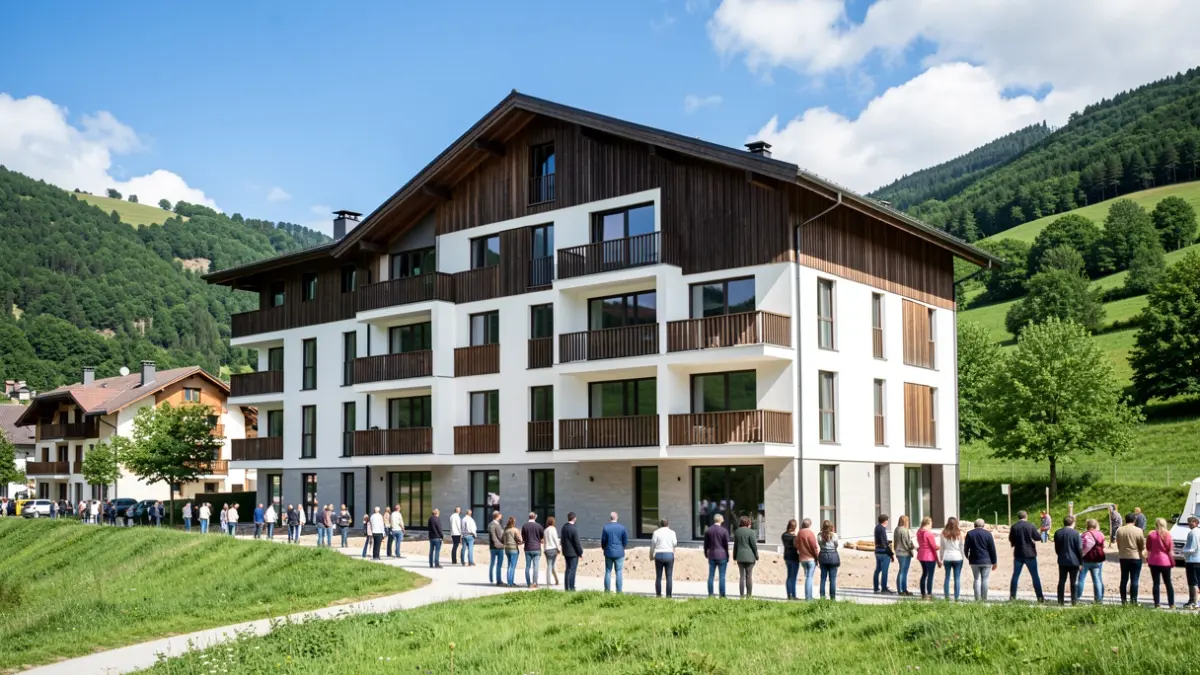
Out of 58 visible rental offers, nearly 40 are exclusively for seasonal rentals. These apartments are distributed throughout the city, although many are concentrated in areas like San Cristóbal or Adurtza. Notably, among the student offers, there is also a flat available in the new housing developments on Avenida de Olarizu.
Rentals for students and MIR residents: Many advertisements specify that they are only for students, indicating "from September to June". Others further restrict the offer: "Exclusively for healthcare personnel or temporary workers", states an ad in Lakua (Aramangelu). "For students or MIR residents", notes another in Arantzabela.
An advertisement in Castro Urdiales mentions the property is for companies or students. On Calle Gorbea, another flat is promoted as "ideal for MIR / EIR / PIR". Another property on the same street specifies "seasonal rental (max. 11 months)". It is common for the only contact method to be WhatsApp or message.
Among seasonal rentals, there are also those who rent out during the summer to maximize income during months when students are not present. "Only for the months of July and/or August 2026", "flat available in July and August".
There are very few offers available for long-term habitual rental housing. Some ads highlight this: "This apartment is ideal for a long-term family stay", claims an ad for a flat on Calle Logroño. Another flat in San Ildefonso reminds that "the contract will be signed for a period of two years plus extensions up to five years". In Castillo de Quejana, a "minimum stay of 6 months" is required.
Why rent to students? Renting to students has always been an ideal formula for many landlords to generate income from a property, despite potential noise issues. There is no regulation preventing landlords from renting exclusively to students; a landlord can rent their flat to whomever they wish.
In this case, renting to students is considered seasonal, with a specific and limited purpose, as they do not register their residency there. It is not considered habitual housing. However, if both parties agree, a habitual housing contract could be signed with different legal implications.
Seasonal rentals are not subject to 'tensioned zone' conditions. A rental contract can have a specific duration, shorter than legally mandated, if it has a concrete objective (temporary relocation for studies or work) and the tenant does not register residency. With seasonal rentals, properties are not subject to some legal limitations. Vitoria-Gasteiz is a tensioned zone, which regulates prices but also allows for automatic extensions.
Beyond the law, the student profile assures landlords that their stay will be temporary. Furthermore, students often have family support, which guarantees payment. For flats intended for MIR or healthcare professionals, the stay is longer, but they are backed by the income of these professionals.
It would be necessary to register the property in the Unique Registry of Temporary Rentals, although the Supreme Court recently annulled this registry, creating uncertainty about the next steps.