BC3, a climate change research centre, has presented a new image-processing tool designed to study ice microstructure. The presentation took place in Reykjavík, at the University of Iceland, from October 5th to 7th, during the second annual meeting of the European ICELINK project. This project is funded by the European Union's Horizon Europe programme and involves BC3.
The ICELINK project combines satellite observations, ice core analyses, and modeling to gain a better understanding of the evolution of the continental ice sheets of Greenland and Iceland in the face of climate change. BC3 researchers, Nicolás González-Santacruz and Sérgio H. Faria, participated in the project meeting to present this new image analysis tool. The information obtained will help improve the models used to predict the evolution of these large ice masses.
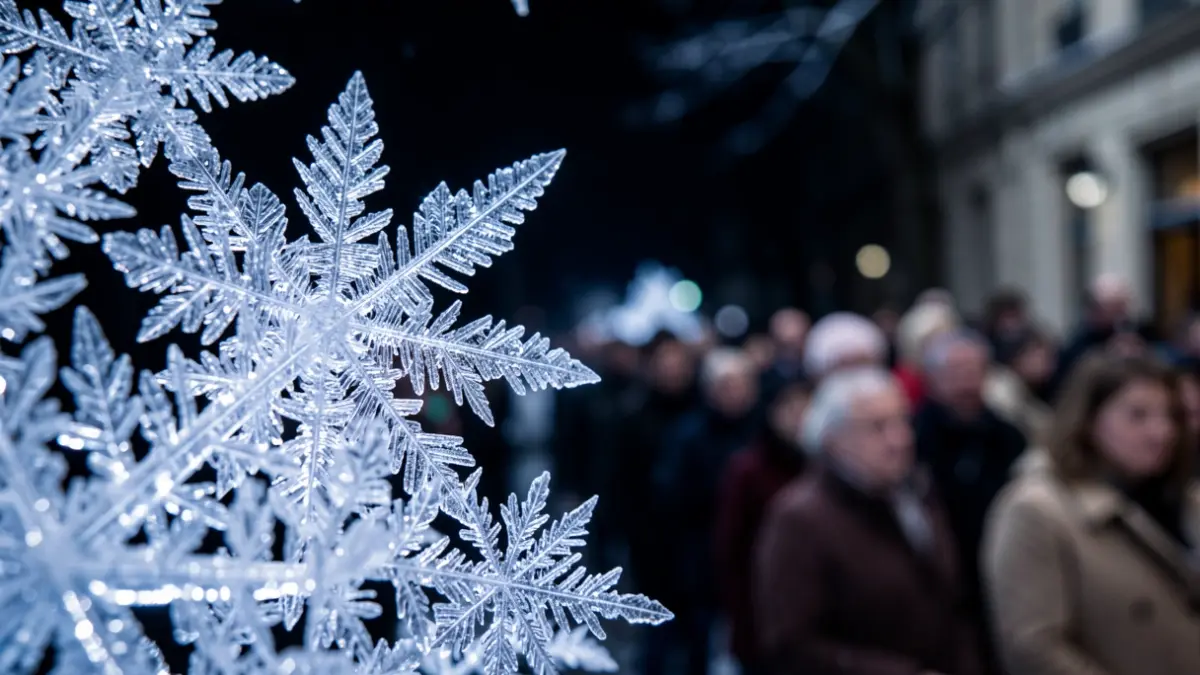
“As part of the ICELINK project, we will receive samples from Greenland and Iceland, with which we will apply this new tool. Ice is not a homogeneous block: its microstructure is made up of tiny crystals whose characteristics directly influence how these large masses of ice move and deform. Studying the microstructure in detail helps us to understand the processes that ice undergoes on a much larger scale,” explains Nicolás González-Santacruz.
The ICELINK meeting also concluded with a visit to the ice tunnels carved out of the Langjökull glacier. Additionally, the researchers attended the Arctic Circle Assembly (ACA), held from October 8th to 10th, also in Reykjavík. At this event, ICELINK participated in a session on changes in continental ice and on collaboration between the scientific community and local communities to strengthen their capacity to adapt.
“Attending the Arctic Circle Assembly allowed us to hear other perspectives and gain a better understanding of the context in which we work: the effects of climate change, geopolitical tensions, the situation facing communities, and the needs of the various stakeholders in the region. This helps us to situate our research at ICELINK within that reality and to understand what we can contribute through science,” emphasizes Nicolás González-Santacruz.
Furthermore, both researchers took part in the latest episode of Código Verde, a collaboration between BC3 and the Carne Cruda podcast, where they discussed the consequences of climate change on the cryosphere, the associated risks, and the research work carried out by BC3 on high-mountain glaciers and in polar regions, including the impact of these changes on the communities living in these regions.