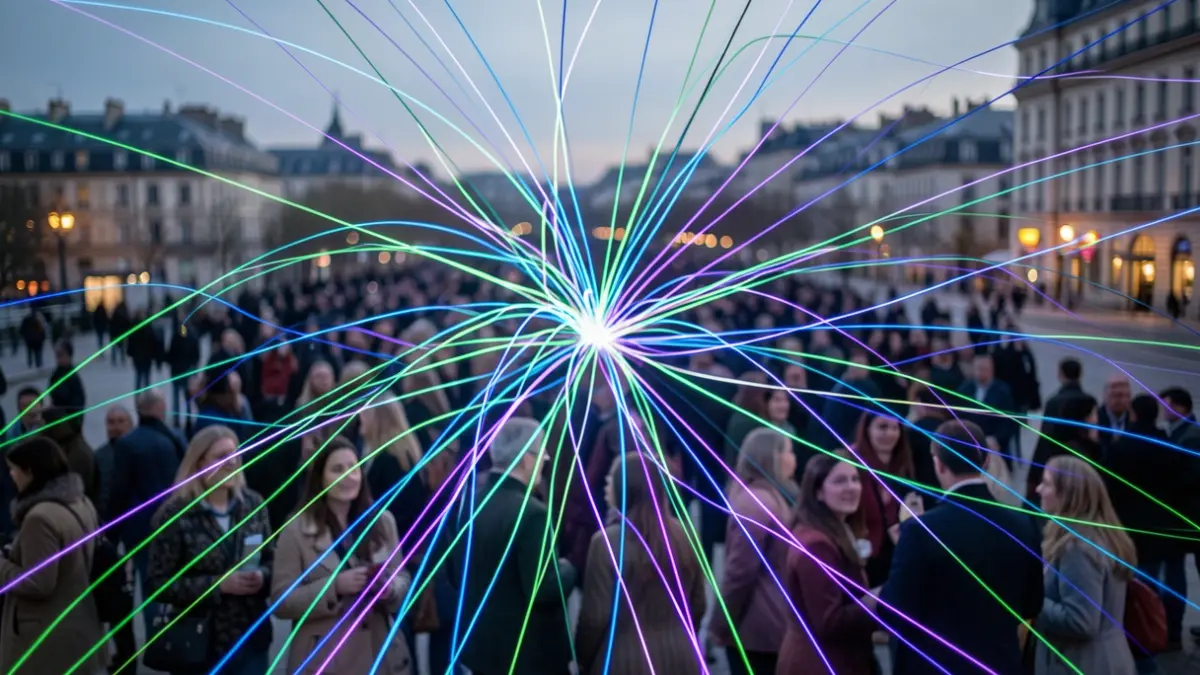
The International Relational Art Festival of Álava (FIAR) will celebrate its second edition from November 12 to 15 in Vitoria-Gasteiz and different municipalities in Álava. After a first edition dedicated to introducing relational art, the festival returns with an expanded community of artists, spaces, organizations, and projects, and with a proposal that delves into the possibilities of art as a space for encounter, participation, and collective construction.
FIAR starts from a conception of artistic practice that places relationships, and not solely the artwork, at the center of creation. The audience does not occupy the place of someone contemplating a finished proposal, but rather becomes part of experiences that can only fully exist through their presence and participation.
“"In the first edition, we needed to explain what relational art was. This year, we can take a step further: we are no longer just presenting a festival, but inviting people to become part of a community that continues to grow."
This evolution means the festival grows in this edition not only in the number of alliances and contexts but also internally. Alongside artistic experiences, FIAR incorporates new spaces to think about, analyze, and reflect on relational practices from different perspectives.
Among the main innovations are the first Conference on Aesthetics and Relational Practice, which will bring together contributions from aesthetics, curatorship, anthropology, and performance studies. Additionally, the ConFIARse call has been conceived to bring projects by artists and companies from Álava and Euskadi closer to international professionals. The informal space Tortilla Bueltatu, for its part, will foster collective reflection on some of the current concerns of the cultural sector.
Sonia Díaz de Corcuera, Councilor for Culture and Education of the Vitoria-Gasteiz City Council, highlighted FIAR's ability to connect artistic creation, citizenship, and urban space: “The festival proposes a way of experiencing culture that is closely linked to the identity of Vitoria-Gasteiz: a culture that is close, participatory, and capable of generating conversation between people, spaces, and communities. FIAR turns the city into a place for experimentation and encounter, and reminds us that cultural life is not built solely from facilities, but also from neighborhoods, relationships, and citizen involvement.”
The program will feature proposals from artists and cultural agents from Álava, Euskadi, Spain, Mexico, the United Kingdom, and Brazil. Through diverse formats, the initiatives will present experiences related to memory, care, citizen participation, territory, daily life, climate debate, grief, or community building. Beyond the diversity of languages and contexts, all of them share the intention of blurring the line between creator and observer.
For Arantxa Ibáñez de Opacua, director of Fundación Vital Fundazioa, “FIAR understands culture as a tool for relationship and social transformation. Its value lies in creating situations where people are not just recipients but active participants in a shared experience. Supporting this festival means contributing to a culture that is closer, more permeable, and more connected to people's lives, and also supporting those who research new ways of meeting and building community through art.”
The second edition also reinforces its territorial dimension. Although a significant part of the activity will take place in Vitoria-Gasteiz, FIAR will also reach Agurain, Elciego, and various points in the Alavese rural environment, establishing links with diverse cultural, social, and community spaces. The festival thus configures itself as a network in which administrations, entities, independent projects, and cultural agents of different natures collaborate.
Sustainability is also part of how FIAR is conceived and developed. In this second edition, the festival has defined its own Sustainability Commitment, under the idea of ‘Our way of inhabiting the festival,’ which integrates respect for the environment, people's well-being, economic responsibility, and the value of culture as a space for encounter and transformation. This commitment is translated into the organization of the festival through conscious decisions aimed at reducing its environmental footprint, favoring the local economy, and strengthening ties with the territory and its communities.
Ana del Val, Provincial Deputy for Culture and Sport, noted that “FIAR fits into an open, participatory, and decentralized cultural model, capable of connecting contemporary creation with different realities of the territory.” “Its ability to build bridges is especially valuable: between Vitoria-Gasteiz and the rest of Álava, between local artists and international professionals, between reflection and practice, and between the cultural sector and citizens.”
The complete program includes schedules, venues, characteristics of each proposal, and participation conditions. Tickets and updated information are available through the festival's channels.