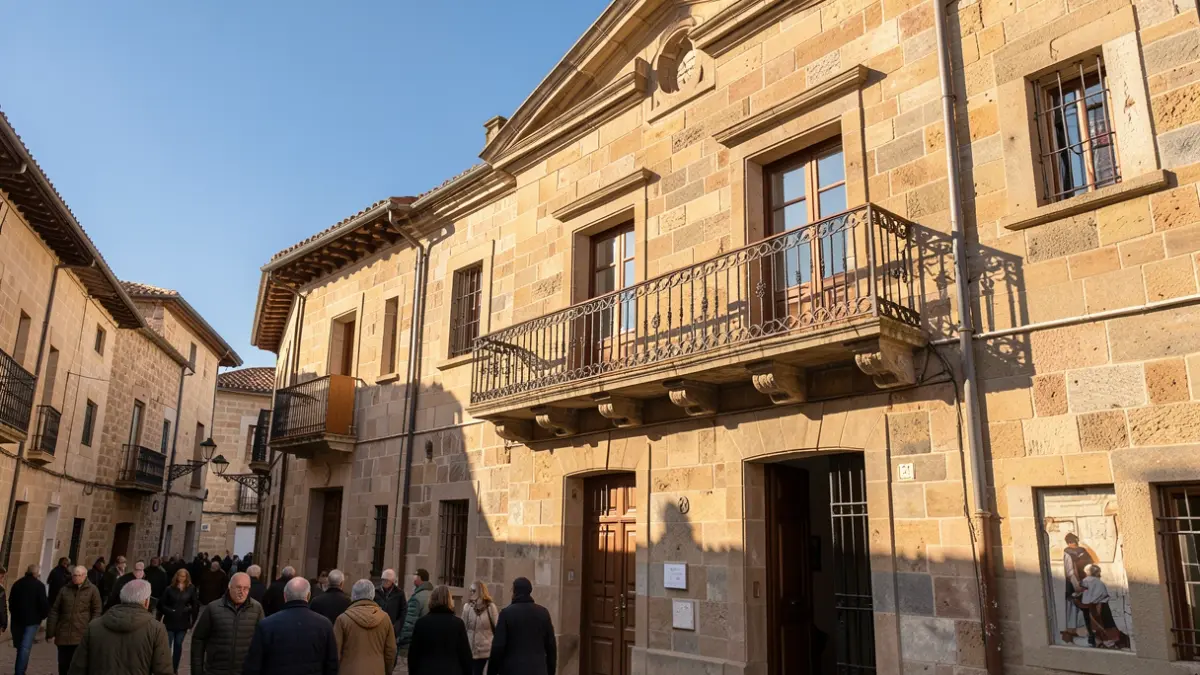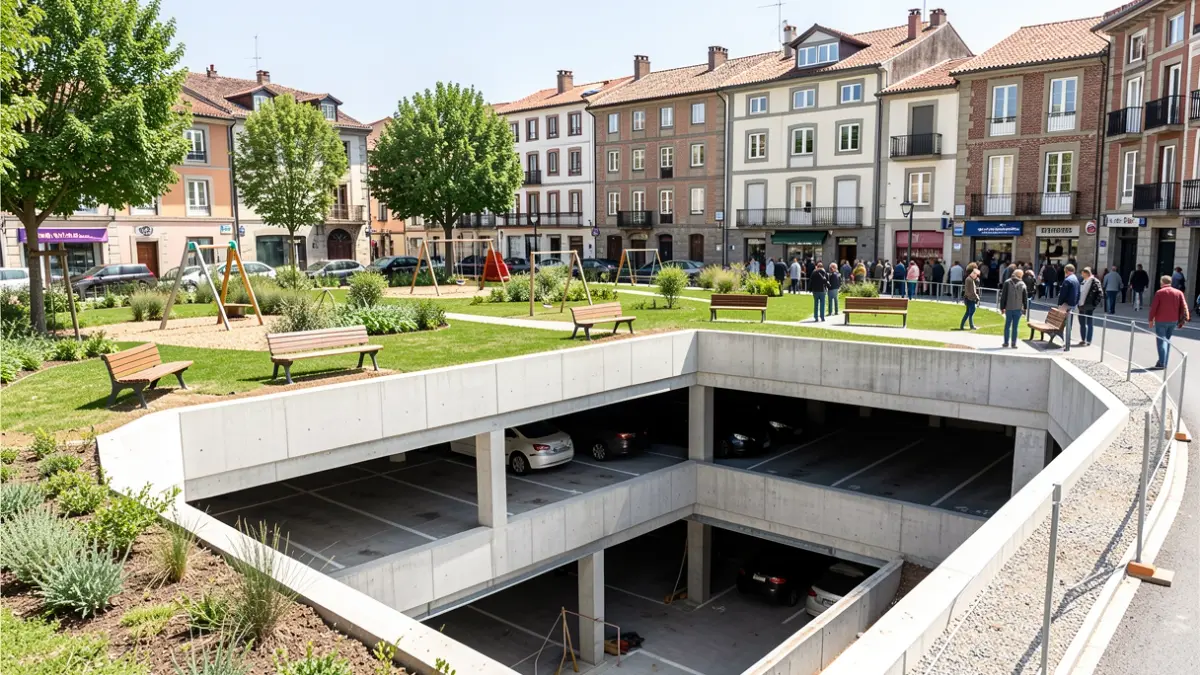
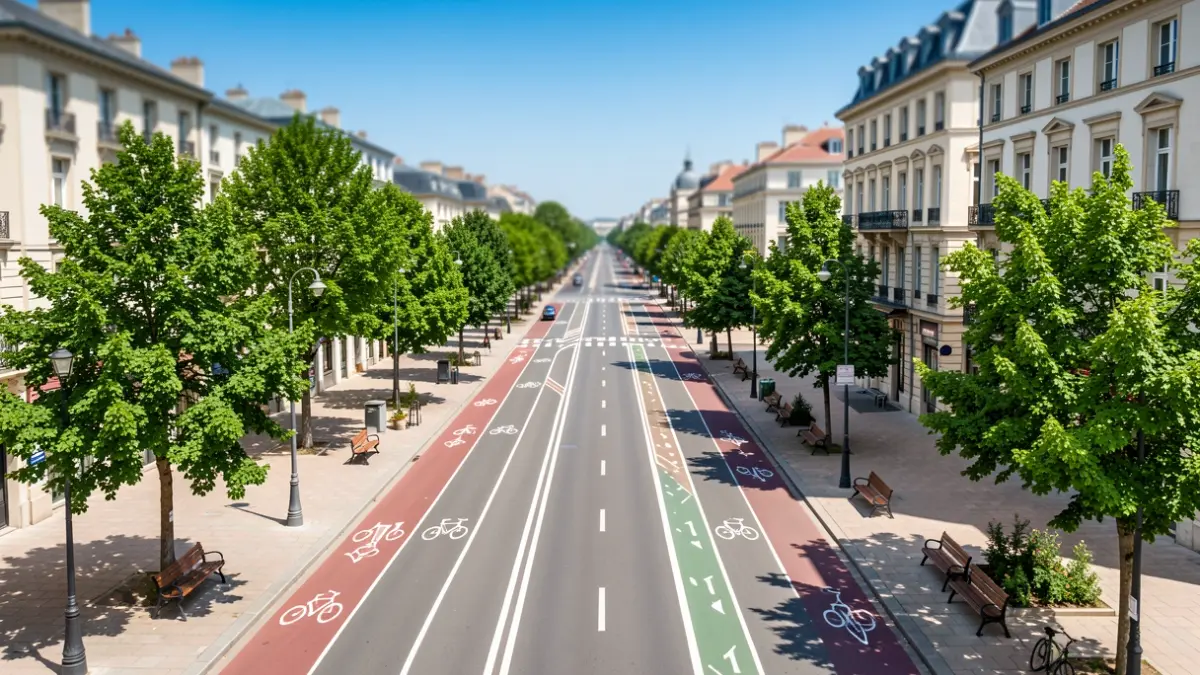
Vitoria-Gasteiz has unveiled its new Sustainable Mobility and Public Space Plan, which will define the city's mobility and public space policies for the next five years. The plan includes 77 actions and an investment of 95.8 million euros, aiming to reduce car dependency and promote more sustainable, accessible, and safe mobility.
Mayor Maider Etxebarria emphasized that this plan will continue the strategy that has helped make Vitoria-Gasteiz a benchmark in sustainable mobility, urban quality, and public space recovery. However, she noted that challenges are evolving and progress must continue, highlighting a "stagnation" in active mobility and a resurgence of private vehicle use, alongside the need to adapt to climate change, ensure universal accessibility, and decarbonize transport.
“"We are proposing a healthier, more accessible, safer, more inclusive city with less dependence on cars. A city where walking, cycling, or using public transport remains the most convenient, efficient, and attractive option. A city that continues to place people at the center of urban policies."
To achieve these goals, the Plan incorporates 77 actions organized into 11 action programs. The projected scenario indicates "about 7,500 fewer daily trips by private vehicle and nearly 5,000 more trips by public transport", compared to the projected trend if no measures were taken.
Miren Fernández de Landa, Councilor for Public Space and Neighborhoods, highlighted that the new plan builds on two decades of accumulated experience and adapts the mobility model to the city's current needs. "We have spent twenty years working to improve how we move and experience our streets. We have made significant progress, but we have also learned that each neighborhood has its own characteristics and solutions must adapt to that reality. We want a more comfortable, safer, and accessible city where everyone can move autonomously and enjoy public spaces."
Among the key innovations, Fernández de Landa pointed out the redefinition of the super-block model, to be applied more flexibly according to each area's characteristics, and the proposal to progressively advance towards a "City 30" Vitoria-Gasteiz. The Plan also includes improvements to pedestrian and cycling routes, the removal of accessibility barriers, actions in school environments, and the incorporation of more shade and vegetation to adapt streets to climate change.
Regarding public transport, the document proposes a comprehensive network study to enhance coordination between TUVISA and the tram, analyze new connections, and adapt services to the city's evolution. It also includes the progressive expansion of the OTA (regulated parking) to inner-city neighborhoods still lacking regulation, after analyzing its effects on adjacent areas. Furthermore, it incorporates the mobility strategy for industrial estates presented in 2025, aimed at improving the commutes of the approximately 40,000 people who access these zones daily.
The councilor also emphasized citizen participation, which has accompanied the document's development and will continue through its processing and implementation. The new Plan updates the guiding principles of mobility, reinforcing accessibility, equal opportunities, inter-neighborhood cohesion, health, and environmental sustainability. "No one knows the difficulties of a street better than those who walk it every day. That's why we want to keep listening, evaluating actions, and making necessary improvements. It is as important to approve a Plan as it is to ensure its measures translate into real improvements in people's lives," concluded Fernández de Landa.
Regarding the next steps, the Plan will be presented tomorrow at the Mobility Elkargune and sent to the Provincial Council of Álava for a mandatory report, prior to its initial approval by the Local Government Board. Subsequently, a public exhibition period of 45 days will open, and if all goes as planned, the final step will be its definitive approval by the City Council.