Children and adolescents in Zumaia voiced their opinion to the City Council that the town's parks were “boring and all the same.” In response, the Council aims to transform these spaces from mere plastic blocks into hubs for play, learning, and coexistence. To achieve this, they have presented a comprehensive park renovation plan, a roadmap for the next three to four years, developed from a diagnostic assessment conducted with the educational community and the young people themselves.
Iñaki Ostolaza, mayor of Zumaia, and Argi Yeregi, Councillor for Urban Planning, have detailed a plan that seeks to restore the streets as spaces for active and creative play for the 1,582 children and adolescents living in the town. An analysis was conducted on the 14 existing parks or play areas in Zumaia: Amaia, Basadi, Kantauri, Arrangoleta, Patxita, Odieta, Puntanoeta, Bidabeazpia, Bonbillo, Gautxori, Marianton, Narrondo, Artadi, and Oikia. The total budget for the project is 1,701,750 euros, with the largest investment, 1,060,000 euros, allocated to the Marianton park.
“"It is common sense that, before starting works in each neighborhood, we take into account those who live there."
The technical analysis confirms the perception of the younger users. Most of these spaces exhibit a clear uniformity, offering the same basic types of games, often limited to a slide and a swing, without proposing challenges that stimulate motor development or imagination. The study also identified deficiencies in soil conservation and a lack of connection with natural elements, issues that the new plan aims to address immediately.
This transformation phase has already begun in stages to ensure that Zumaia does not lose all its parks simultaneously. Basadi was the first to undergo intervention and reopened last week after its paving was completely renovated. The Kantauri park is currently undergoing similar works to improve its safety and aesthetics. The design of the Marianton park began two and a half years ago within the Haurren Kontseilua, and the City Council has already put the construction works out to tender. The goal is for all parks in the coastal municipality to complete this transformation process within three to four years.
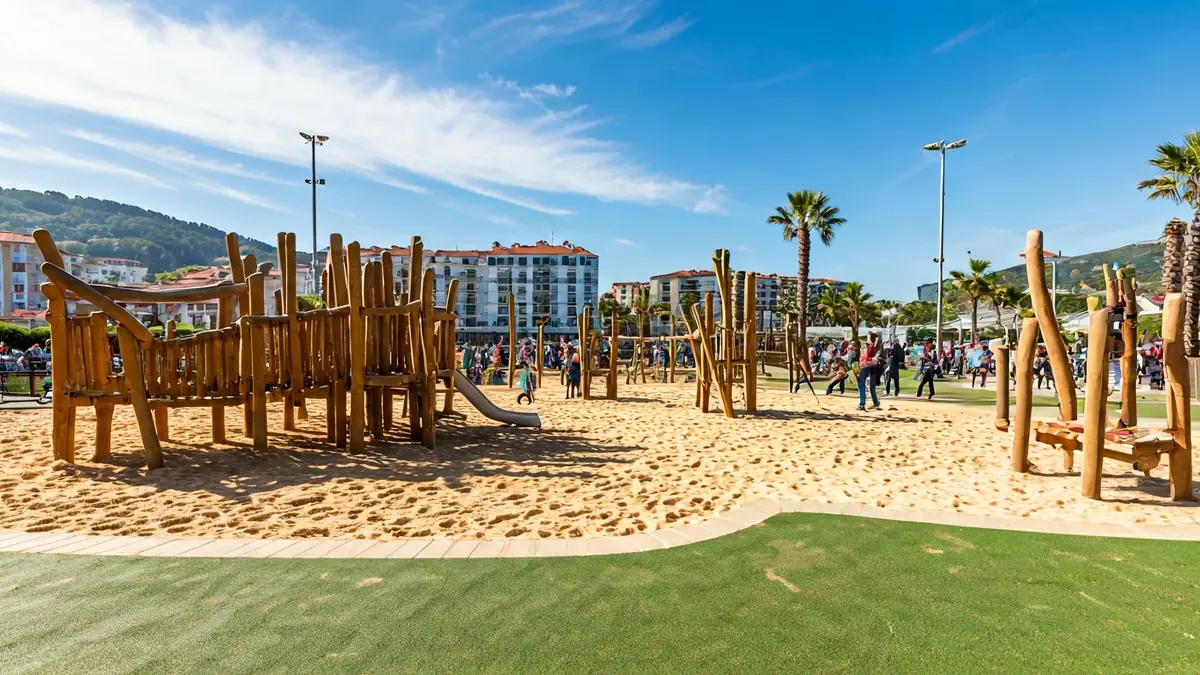
The new plan moves away from the standard model to embrace what they call a “living park,” based on four pillars: contact with nature (introducing natural elements like wood, sand, and vegetation), symbolic play and imagination (creating structures that don't dictate how to play), physical challenge and diversity (offering different difficulty levels for various ages and ensuring inclusion for children with different abilities), and making urban furniture playable. Councillor Yeregi emphasized that while the document outlines guidelines based on demographic and technical data, it is a “living and participatory plan,” and Zumaia's City Council remains open to receiving contributions from residents.