Heatwaves, increasingly frequent and severe due to climate change, have a direct impact on urban habitability. In response, the SAREN (Sustainable And Resilient built ENvironment) research group at UPV/EHU, with contributions from researchers Irantzu Álvarez and Laura Quesada, has created a tool to assess the vulnerability of buildings and open public spaces. This research is part of the OLADAPT project, funded by the Ministry of Science and Innovation.
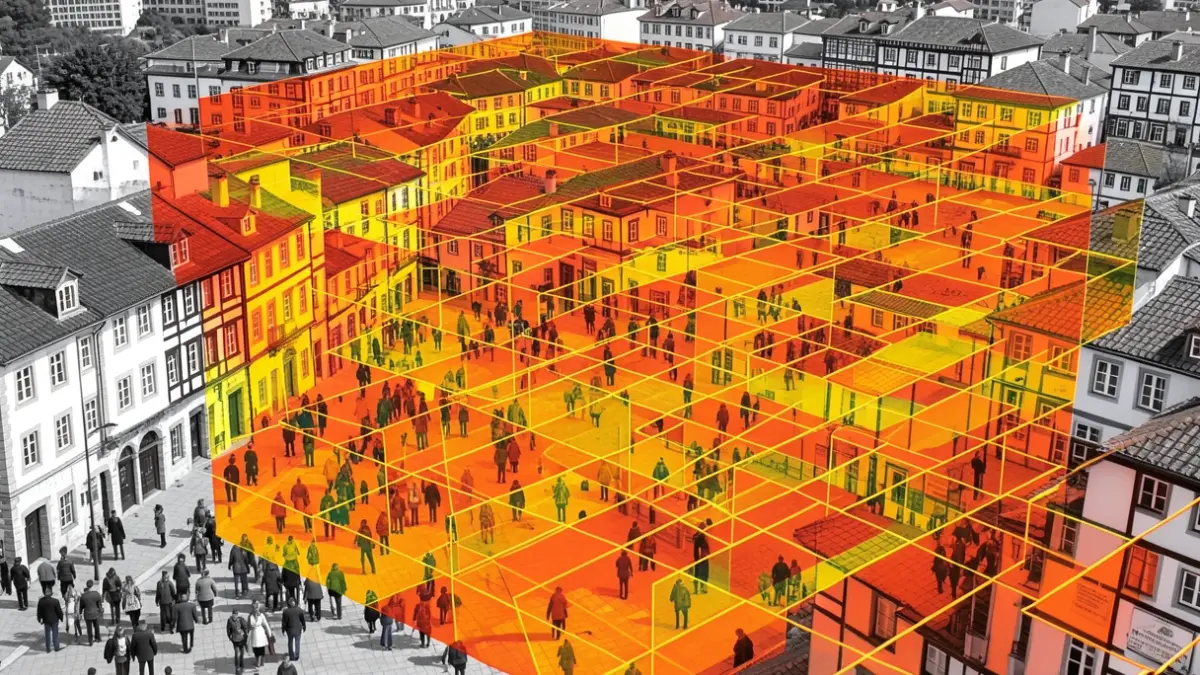
Irantzu Álvarez explains that risk is not measured solely by temperature but is multidimensional: "We are analyzing how to conduct a multiscale and multicriteria assessment of heatwave risk at the urban level," she notes. Laura Quesada adds, "We have measured the vulnerability of each building and open space in the city, in Bilbao, Madrid, and Cáceres." The methodology generates vulnerability maps to help decide where to prioritize adaptation measures.
The research highlights the significant influence of socioeconomic variables and urban fabric characteristics on vulnerability. "People with low incomes, the elderly, etc., are much more vulnerable," state the researchers. The relationship between a building and its surroundings has also been analyzed; for instance, considering whether buildings are heat-sensitive but their inhabitants have the economic capacity to protect themselves, or if the environment offers green spaces and shade.
This methodology, according to the UPV/EHU SAREN team, is "fully replicable; it can be used anywhere" and they emphasize it is a "truly useful" tool for municipalities and cities. It helps determine which buildings or types of buildings should be renovated or adapted first, thus enabling more efficient application of adaptation measures.