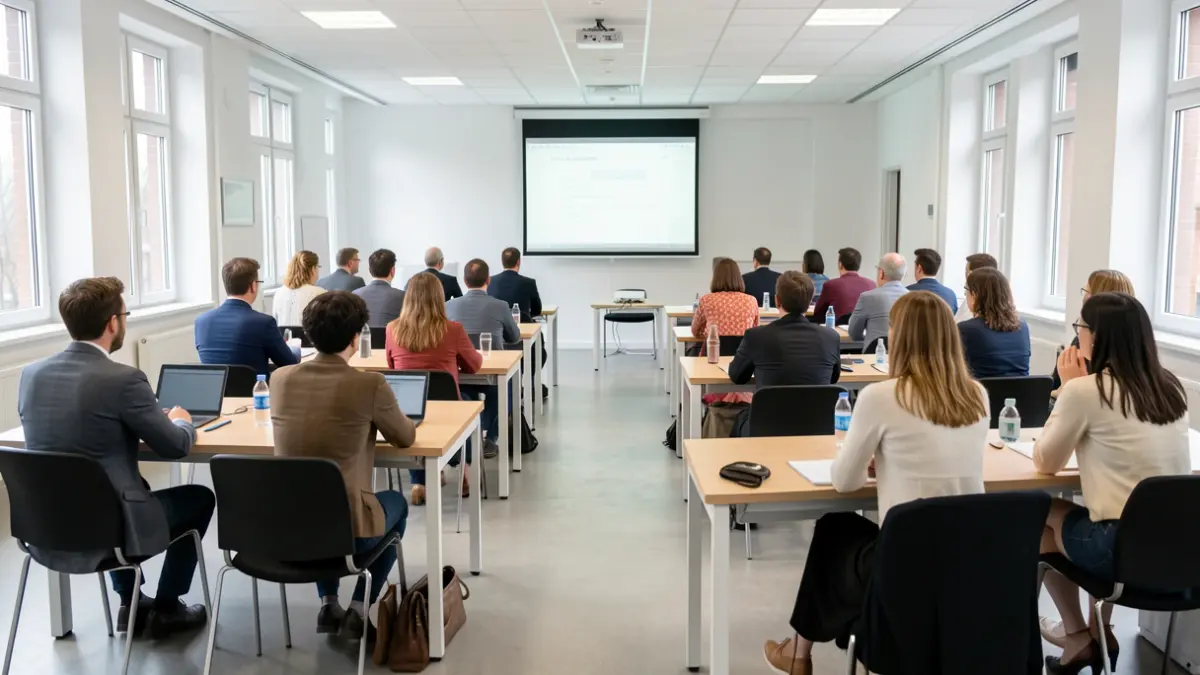
Aretxabaleta Vocational School, Mondragon University, Arizmendi Ikastola, and Bailara Elkartea held a breakfast discussion at ALE's facilities. Representatives from educational institutions and companies gathered, and iTlent, the Basque Institute for Talent in Vocational Training, facilitated the event.
Ergiñe Urzelaik, a member of iTlent, explained that the meeting's objective was to reflect on the profile of future workers. "What we want is to reflect on the profile of the future worker; what kind of workers we want, to promote what we are working on in educational centers, what companies demand and what their needs are, what kind of workers they foresee being needed," she stated.
Urzelaik highlighted the importance of such initiatives: "We believe it is necessary to have this point of reflection in different institutions, as well as to create these small gatherings for it." Participants discussed the ETHAZI learning model of Vocational Training and the development of its transversal competencies.
However, the iTlent member emphasized the issue of values: "We have also put values on the table, because transversal competencies are not enough without values. We have reached a reflection on these common values; the values of society, of the school, and of companies." Urzelaik acknowledged that it is a profound topic that will need to be addressed in the future, "it is not easy, it is a profound topic, and it is advisable to take further steps. Ultimately, that is what matters most to all of us; to teachers, to business leaders, and to society as a whole. We want people with ethical values by our side, and that is where we are heading."
Shortly after the breakfast concluded, Urzelaik gave a positive assessment of the initiative, although she noted it felt too short. "It went very well. It feels like it was too short, and some topics were left unresolved. We have left them to be addressed in the next session." She believes formats like the breakfast discussion are enriching: "We have divided into small groups, and with that, we increase participation, not just listening to what someone else says. Personal reflection develops on its own, but in this case, we guide it through questions. Furthermore, the reflection does not remain personal; we share it, both in small and large groups, and that is much more enriching for everyone."