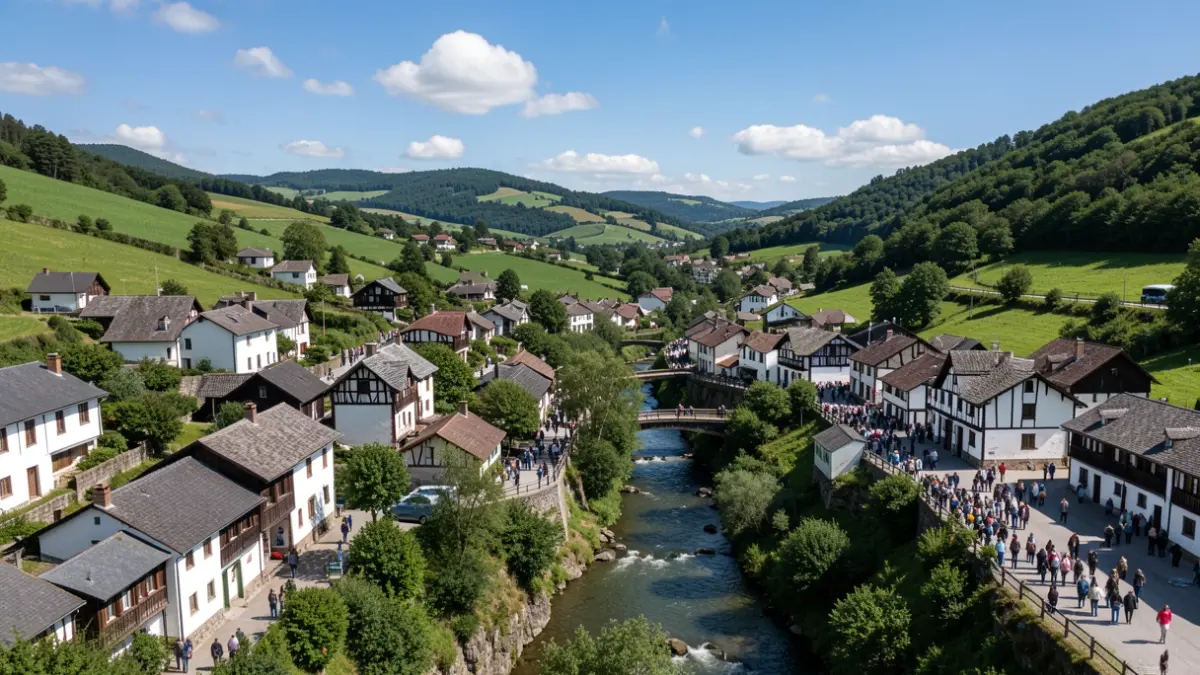
Bergara is prioritizing affordable housing by focusing on protected rental. The municipality will construct 739 new protected homes and mobilize 790 vacant properties to control rental prices and expand supply. These measures are part of an action plan for 2026-2028, set to be officially published in the BOE soon.
The town joins the list of 21 'stressed' residential market zones in Euskadi, alongside Sopela and Urduliz. This designation impacts over 55% of the Basque population, totaling 1,198,000 people. Additionally, fourteen other municipalities have pending applications.
Regarding housing matters, the Deputy Minister of Housing, Miguel de los Toyos, met with Mayor Gorka Artola and Urban Planning Councilor Markel Azkargorta. They visited several plots, including the municipal plot A17.1 Artzamendi (for 20 VPO), areas around the Miguel Altuna institute, and the Urteaga and former Algodonera zones.
Current data indicates a 21.5% increase in average rental prices over the last five years. Etxebide has 470 active applications, with 86.6% seeking rental housing. Protected and public housing constitutes 6.4% of the total stock.
De los Toyos emphasized the need to increase supply and meet rental demand by combining new protected housing construction with the mobilization of existing properties. Mayor Artola highlighted that access to decent housing is a primary concern and a priority for the City Council, aiming to create real opportunities for those wishing to live in Bergara.
The new urban planning framework includes 1,123 new homes, with 739 designated as protected. The plan also identifies 790 vacant properties, and measures for their rehabilitation or market integration, such as a potential increase in the IBI surcharge, will be explored.
Rehabilitation is another key focus, with initiatives to improve building accessibility and efficiency, and support for homeowners' associations. Options for converting commercial premises into housing, and for dividing farmhouses and large homes, will also be investigated.
The plan is structured around four pillars: expanding and mobilizing supply; rehabilitating and utilizing existing stock; addressing demand and vulnerability; and institutional coordination. The timeline spans 2026-2028, focusing on vacant housing, the Bizigune program, rehabilitation, and demand support.