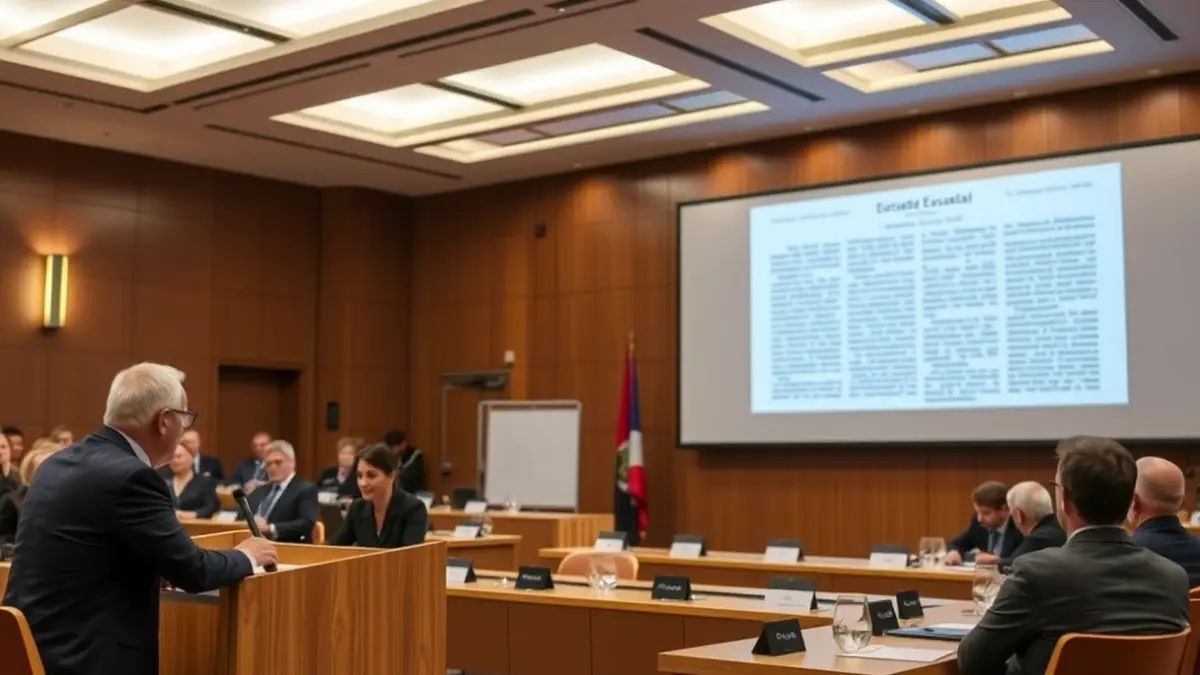
The XVI Ituna Congress concluded yesterday in the Baroja room of Bizkaia Aretoa, following three days of intense academic debate. The event brought together authoritative voices who spoke about the Economic Agreement and Historical Law. Commemorating the impact of the New Charter of 1526, which marks its half-millennium, the congress gathered an exceptional roster of research, law, and public management professionals who analyzed the evolution of Bizkaia from the Middle Ages to the present day.
The closing ceremony of the congress featured a former negotiator of the Economic Agreement, the vice-rector of the Bizkaia campus of the EHU, and the general deputy of Bizkaia. The general deputy emphasized the consensual nature of that charter from 500 years ago, highlighting the agreements between different territorial blocks for their integration into a unified Bizkaia, as well as pacts between towns and the flatlands to coexist within the same framework, and among different social groups to seek the common good.
“"It has not endured by inertia, but by its capacity for adaptation, because it has known how to transform itself without losing its essential core and respond to crises, regime changes, and new economic and social realities."
In addition to the vitality of the charter, all interventions highlighted the fundamental importance of the Economic Agreement for the progress of the territory and the well-being of its people. A former negotiator of the Economic Agreement stated that this system has helped make society one of the most egalitarian in the world.
In previous conferences, a tax advisor analyzed current foral practice; another expert detailed private succession law; and a professor along with a researcher addressed the role of political elites and the evolution of the General Assemblies. Subsequently, two other specialists contextualized foral instruments within the European framework. The final round table brought together the general director of Finance of the Foral Council of Bizkaia and the vice-counselor of Finance of the Basque Government.