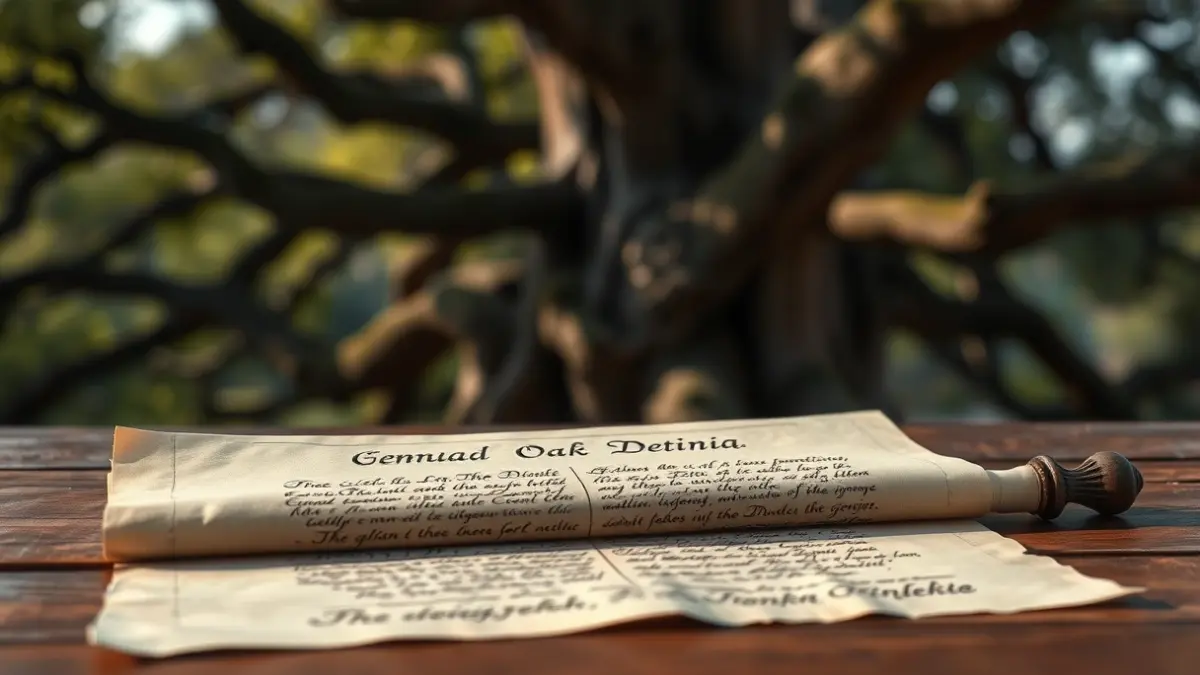
This 2026 is not just any year for Bizkaia. This year marks the 500th anniversary of the New Fuero, a legal and social milestone that remains very present in how the territory understands itself. It is not merely an ancient document, but a set of norms that, since 1526, have contributed to forging a distinct identity in Bizkaia, a way of organizing coexistence, and a differentiated sense of community.
The New Fuero of Bizkaia emerged at a pivotal moment in history, when communities sought ways to organize their collective life. Its approval was not just a compilation of laws: it was an affirmation of a way of understanding freedom and justice. Under the symbolic Tree of Gernika, principles were consolidated that still seem surprisingly modern for those times.
Among these principles are ideas that, centuries later, would become pillars of contemporary democracies, such as the values of equality before the law, freedom of trade, freedom in the distribution of inheritances, the capacity for collective decision-making, and the management of public funds. All this occurred at a time when these concepts were not even common in Europe. Therefore, the New Fuero can be considered a precursor to the great declarations of rights that would arrive at the end of the 18th century.
The commemoration of this V centenary aims precisely to bring the New Fuero closer to the citizenry. Promoted by the Provincial Council of Bizkaia and the General Assemblies of Bizkaia, the program includes a dual exhibition designed for different audiences, but with the same objective: to understand the past to comprehend the present. Thus, on one hand, the Provincial Library hosts a more scientific exhibition where the original copy of the Fuero of 1526 can be viewed alongside other historical editions. Undoubtedly, a unique opportunity for those who wish to delve into its legal and historical dimension. On the other hand, a traveling exhibition tours the streets and various municipalities with a more visual and accessible format, bringing this heritage to a wider and more diverse public.
This same exhibition will also be displayed in several Metro Bilbao stations, and after its passage through the capital, the exhibition will visit Balmaseda, Bermeo, Portugalete, and Galdakao as part of this program, which will also include an institutional event on May 18 in Gernika alongside the lehendakari.
This entire initiative responds to the idea that knowing the past only makes sense if it is shared in the present. In other words, remembering history in such a way that it becomes understandable for all of society. In this exercise, the New Fuero ceases to be an ancient text and becomes a living tool that helps us understand who we are.
Furthermore, the commemoration focuses on equally relevant aspects, such as the role of women in the Fuero, universal nobility, or guarantees against arbitrary detentions. These elements help to understand the depth and complexity of a text that also reflected a particular vision of society.
The New Fuero of Bizkaia is currently in the process of being recognized by Unesco within the program known as Memory of the World, a step that underscores its value not only locally but also universally. Because, although it originated in a specific context, its principles connect with debates and aspirations that remain relevant worldwide. Five centuries later, the Fuero continues to invite us to be read, understood, and felt as our own. It is not just a historical heritage, but a living expression of a territory that has known how to maintain its values over time.