
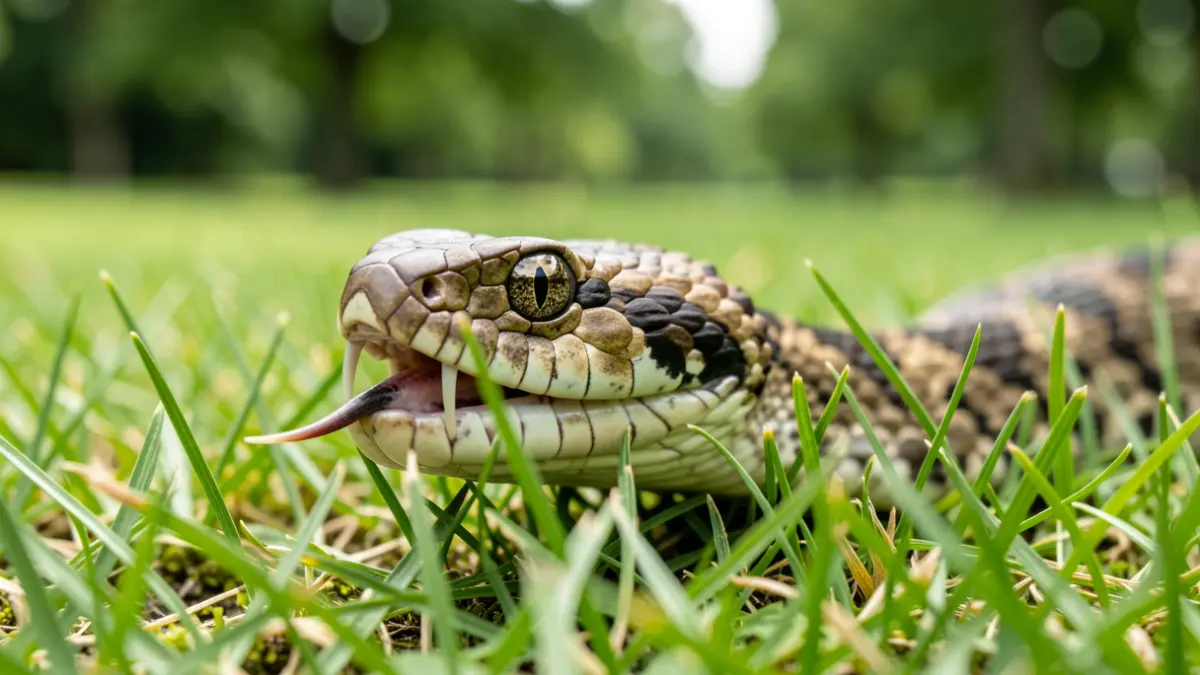
The arrival of warmer spring weather in Vitoria-Gasteiz not only means longer days for outdoor activities but also introduces new risks for pets. Alongside common threats like fleas and ticks, venomous vipers are re-emerging, posing a particular danger in areas with lush vegetation.
Veterinarians in Álava have noted a rise in dog bite incidents this year, with a notable increase observed during the Easter and early May holidays, coinciding with prolonged periods of high temperatures following winter.
Marisol Cuenca, vice-president of the Official College of Veterinarians of Álava, clarifies that "Vitoria-Gasteiz is an endemic area. It's not that the vipers have only just arrived"; rather, "we have built in areas like Salburua or Zabalgana, which were already known viper habitats."
Vipers spend the winter hidden but emerge when several sunny days and temperatures above 20 degrees Celsius occur. "They wake up very hungry," Cuenca explains, often leading to encounters with dogs.
Contrary to what might be expected, younger vipers are often the most dangerous during this season. Adult vipers tend to conserve their venom for hunting, whereas juveniles are more impulsive and "attack immediately" at the slightest disturbance. Although they carry less venom, they tend to inject almost all of it.
Dogs exploring their surroundings may approach unusual noises or movements, resulting in bites, particularly to the snout and paws. Animals typically yelp or whimper at the moment of the bite, followed by noticeable swelling that is hard and painful. Sometimes, two small bleeding puncture marks from the fangs are visible.
If a bite is suspected, the primary advice is to "go to the vet immediately" for anti-inflammatory and pain relief medication, as well as antibiotics to prevent infections. Some dogs may require hospitalization with intravenous fluids to protect organs like the kidneys, which can be affected by the venom.
While death from venom is possible, it is "not the most common outcome." Most dogs recover well within a week. However, the risk is higher for small dogs and for bites to the neck or throat, which can impede breathing. Severe allergic reactions from the dog's own immune system can also be dangerous.