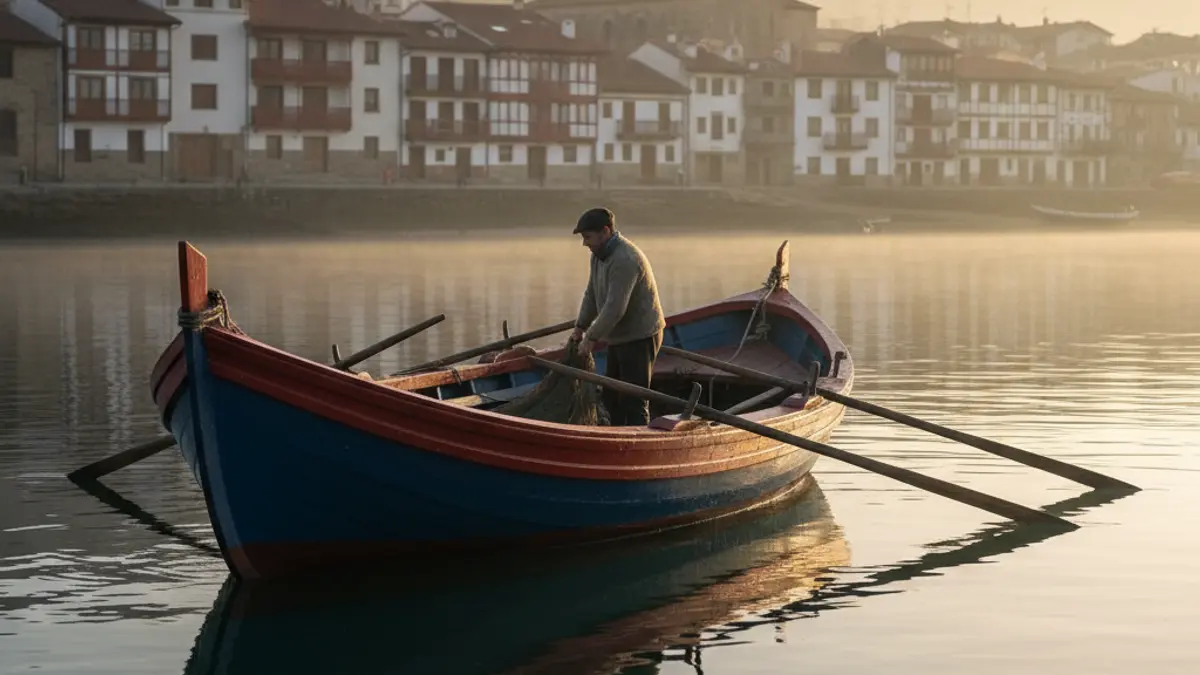
As part of the events leading up to Whale Day, celebrated on May 14, the final lecture in the series will be held tomorrow afternoon, starting at 7:00 PM, in the zimitorio. This talk, titled “Sardinatan edo antxoatan ari ziren” (They were fishing for sardines or anchovies), will delve into fishing and daily life in Orio at the dawn of the 20th century.
Two local residents, in collaboration with the San Nikolas fishermen's guild, are researching the fishing industry and way of life in Orio during the 20th century. The lecture will focus on the early decades of that century, a period when inshore fishing gained prominence and the town's future began to reorganize around the sea.
“"Most writers of the time agreed: a fisherman's life in Orio would be impossible unless the entrance and exit of the sandbar were fixed. But the arrival of the whale on May 14, 1901, caught fishermen Olaizola, Loidi, Atxega, Manterola, and Uranga with the sardines. As had not happened in a long time, almost 100 citizens found a place in the town's traineras and steamships; and as many women worked as net menders, fishmongers, net makers, and in salting factories."
The whale of May 14, 1901, was the last, and in the same year, the first Kontxako Bandera was won. In that decade, the first steamships, salting factories, the renovation of the San Nikolas guild, and the Dendarikoa square guild, among others, emerged in Orio. These early years of the 20th century laid some of the main foundations for a town that would eventually boast nearly 30 steamships.