
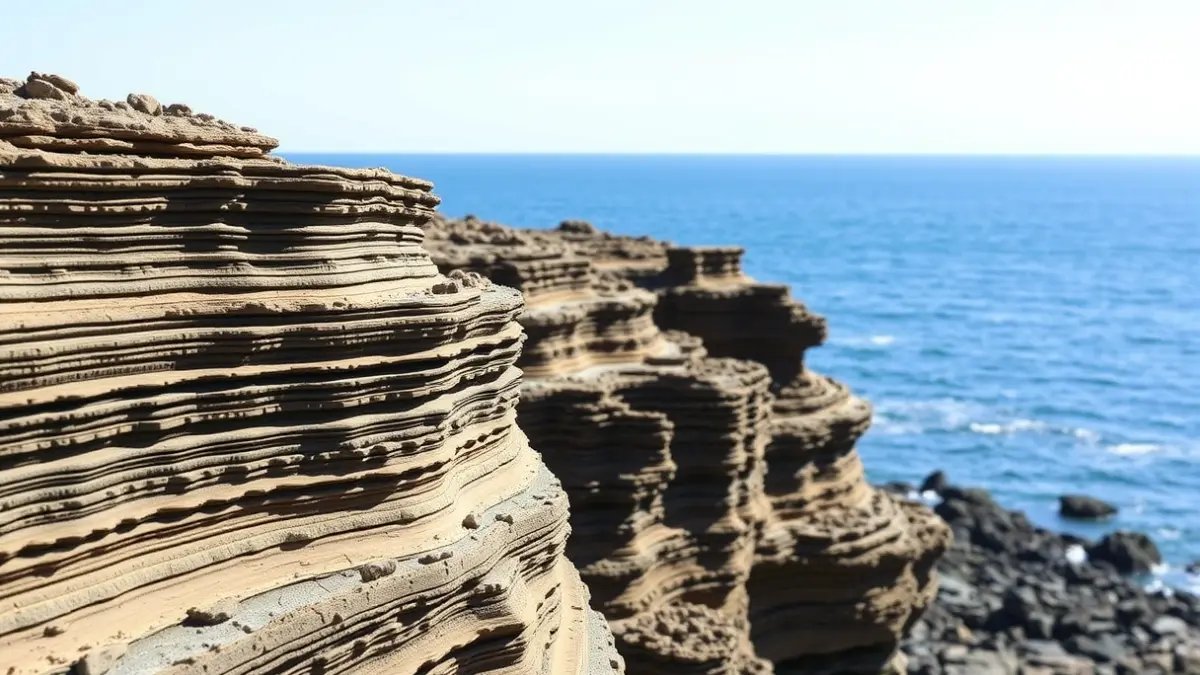
Around 110 million years ago, a tropical sea with vast coral reefs covered part of our coastline. The accumulation of limestone, marl, and sandstone layers, followed by the collision of the Iberian and Eurasian tectonic plates, ultimately formed the impressive geological structures that now comprise the Basque Coast Geopark. This unique natural area was declared a protected biotope in 2009 and designated a UNESCO Global Geopark in 2015, becoming a significant tourist attraction in recent years.
The filming of part of the seventh season of the acclaimed series Game of Thrones in October 2016, with Itzurun beach transformed into Dragonstone for Daenerys Targaryen's landing, helped popularize the flysch beyond national borders.
Each year, approximately 250,000 people visit the Basque Coast Geopark, which includes the municipalities of Zumaia, Deba, and Mutriku. Some explore independently, while others participate in activities organized by Geoparkea, such as guided tours, boat trips, or school group visits. This figure is comparable to other major attractions on the Iberian Peninsula, such as the Cares route in Asturias (220,000 visitors annually), the Playa de las Catedrales in Lugo (300,000), or the Bardenas Reales in Navarre (350,000 annual visits).
While most visitors are respectful of the environment, there are always some who disregard the rules established in this special conservation area, regulated by a provincial order since 2021. Consequently, the Provincial Council has issued a total of 39 fines over the past three years, 17 of which occurred in 2025. These are minor infractions, penalized with 200 euros, for “the circulation, transit, or parking of motor vehicles within a natural heritage area outside designated routes and unauthorized cases.”
Furthermore, the San Telmo-Algorri route experiences crowd surges approximately 30 days per year, while an average of 20 days annually see unauthorized educational center access to the intertidal zone. Occasionally, tent camping is also detected within the protected natural area.
The number of visitors to the flysch has remained stable in recent years. The counter installed between the San Telmo hermitage and Algorri recorded 212,815 visitors in 2025 (compared to 216,248 in 2022, 207,619 in 2023, and 220,759 in 2024). Guided tours organized by the Geopark attracted an additional 9,946 participants (8,254 by boat, 1,034 on foot, and 658 by other means); 9,750 schoolchildren visited the Algorri interpretation center; and 17,165 chose guided tours organized by the company Begi Bistan.
Spring and autumn traditionally concentrate the most school visits, with between 1,300 and 1,500 students per month in March, April, May, October, and November.
Visits through tourism companies, meanwhile, significantly increase their demand during the summer months. For example, in August 2025, 4,274 boat trips were recorded, compared to 2,321 in July, 2,311 in June, 1,694 in May, 1,299 in September, and a symbolic six trips in January.
Regarding walking routes, spring sees the highest concentration of participants: 400 in April, 500 in May, or 346 in June, compared to 200 in July or 100 in August.
The flysch of Zumaia is a unique but not risk-free area. Perhaps due to lack of knowledge or sheer daring, numerous individuals are trapped each year by the rising tide after accessing the intertidal zone on foot. This is when the Ertzaintza Surveillance and Rescue Unit intervenes, having to rescue many excursionists every summer.
This occurred, for instance, on June 25, when seven people became trapped in a rocky area after being caught by the rising water. Around four in the afternoon, a private citizen alerted 112 to the presence of several individuals trapped in a rocky area of the flysch, struggling to exit. Emergency services mobilized a helicopter, which rescued the excursionists and transported them to a safe location.
Three months earlier, on March 30, another twelve tourists, mostly French, were caught in a similar situation in a rocky area between Algorri and Sakoneta. On this occasion, it took more than four hours to bring them to safety. The Ertzaintza helicopter rescued them one by one and transported them to a nearby field.
Most of these interventions end well. However, to avoid incidents, it is recommended to consult tide schedules before venturing on foot into rocky areas and to calculate the necessary time to return to a safe space before the water rises.


