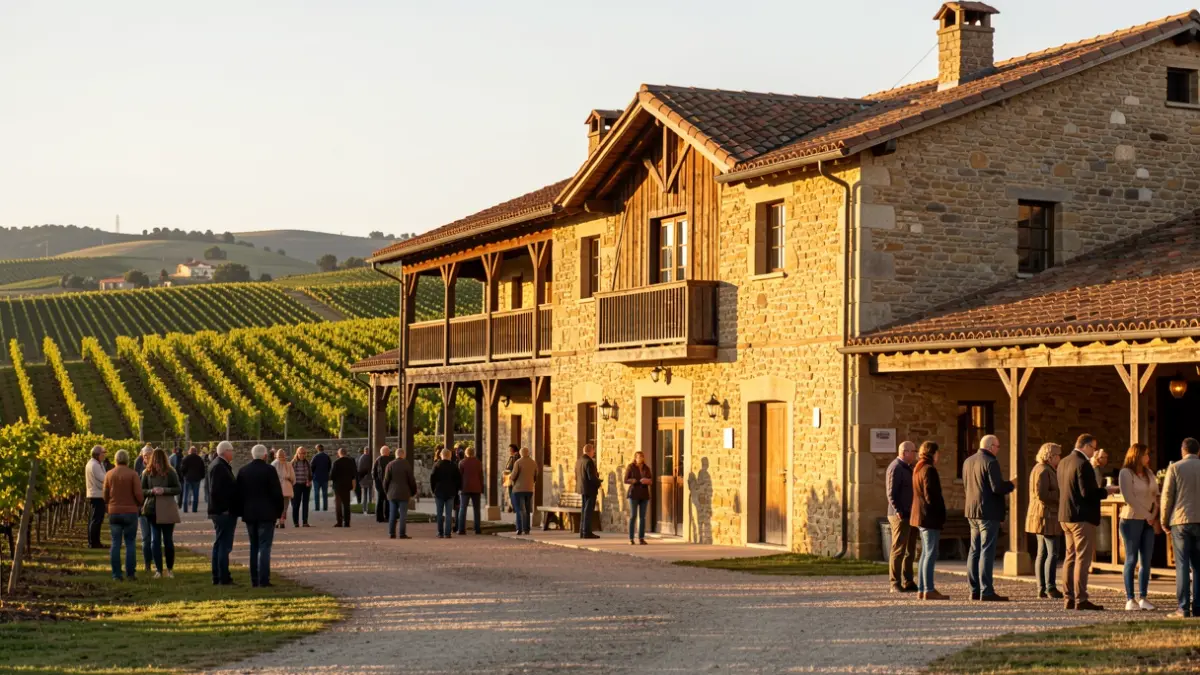
The Vital Foundation will establish a new facility dedicated to the wine culture and enotourism of Rioja Alavesa in the town of Elciego. The project will be situated at the former Antion winery, boasting an investment of 12.2 million euros, with an anticipated public opening in the first quarter of 2028.
Jon Urresti, president of Vital Fundazioa, has overseen the presentation of the project. The entity envisions this space as a cultural and tourist hub designed to elucidate the significance of wine in the history, landscape, economy, and social life of Rioja Alavesa.
The total investment will amount to 12.2 million euros: 1.8 million for the property acquisition and 10.4 million for the construction and renovation of the complex. Initial work has already commenced, and according to the timeline, the renovation will be completed by the end of 2027, with public opening in early 2028.
The new center will span 11,000 square meters, with 5,200 square meters allocated to exhibition areas. The offering will integrate educational content, immersive experiences, cultural activities, and services related to wine tourism.
The aim is for visitors to understand Rioja Alavesa beyond just the winery or a glass of wine. The center will explore the origins of wine, vineyard work, production processes, its connection with gastronomy, and the importance of the wine landscape.
Fundación Vital intends for the space to be valuable for both those familiar with the region and first-time visitors to Rioja Alavesa. Consequently, the project will blend information, technology, and tourist experience within a journey tailored for diverse audiences.
The project includes the rehabilitation of the old Antion winery. The visitor's journey will be organized by floors, each featuring distinct content.
The ground floor will house the reception area, which will also serve as an enotourism information point for the region. This level will also include an immersive space and a workshop area.
The first floor will be dedicated to the origins of wine, the vineyard landscape, and viticulture in Rioja Alavesa. It will also cover the grape harvest and the initial stages of the winemaking process.
The second floor will address grape varieties and the global expansion of wine. Processes such as alcoholic fermentation, racking, and pressing will be explained here. This area will also feature a barrel room with an immersive projection.
The third floor will focus on the climate of Álava, vineyard soil, the history of wine in Rioja Alavesa, and phases like aging, racking, and malolactic fermentation.
The fourth floor will be dedicated to the relationship between wine and gastronomy. The center will feature a large interactive table for exploring pairings, trends, and processes through projections and touch screens.
The center will offer immersive tastings, a showroom for wineries, and an interactive map of Rioja Alavesa. This map will allow visitors to consult the location, history, and wines of the area's wineries.
The tour will conclude at a wine bar and a specialized shop. Both spaces will feature wines from Rioja Alavesa, aiming to maintain a direct connection between visitors and the region's wineries.
The exteriors will also play a significant role in the project. An interpretive viewpoint is planned for understanding the vineyard landscape, along with parking areas and visitor services.
Market studies cited by the foundation estimate that, within ten years, the center could attract 145,000 annual visitors. These projections also anticipate revenues of 8.8 million euros and the creation of over 45 direct jobs.