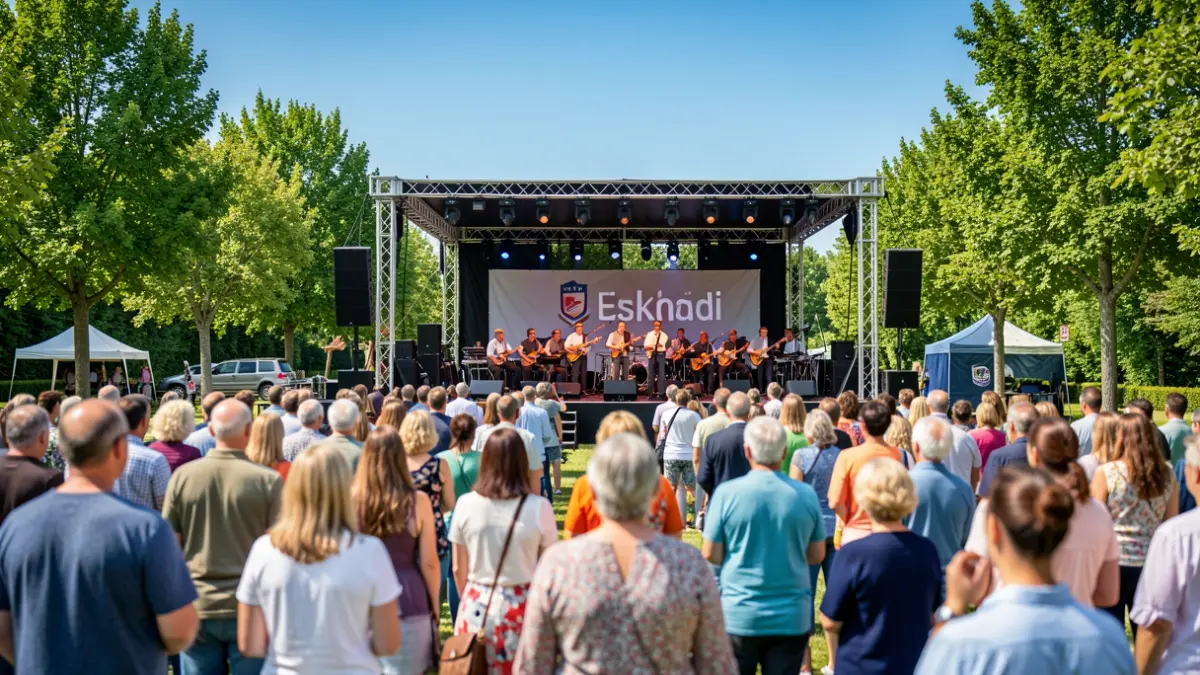
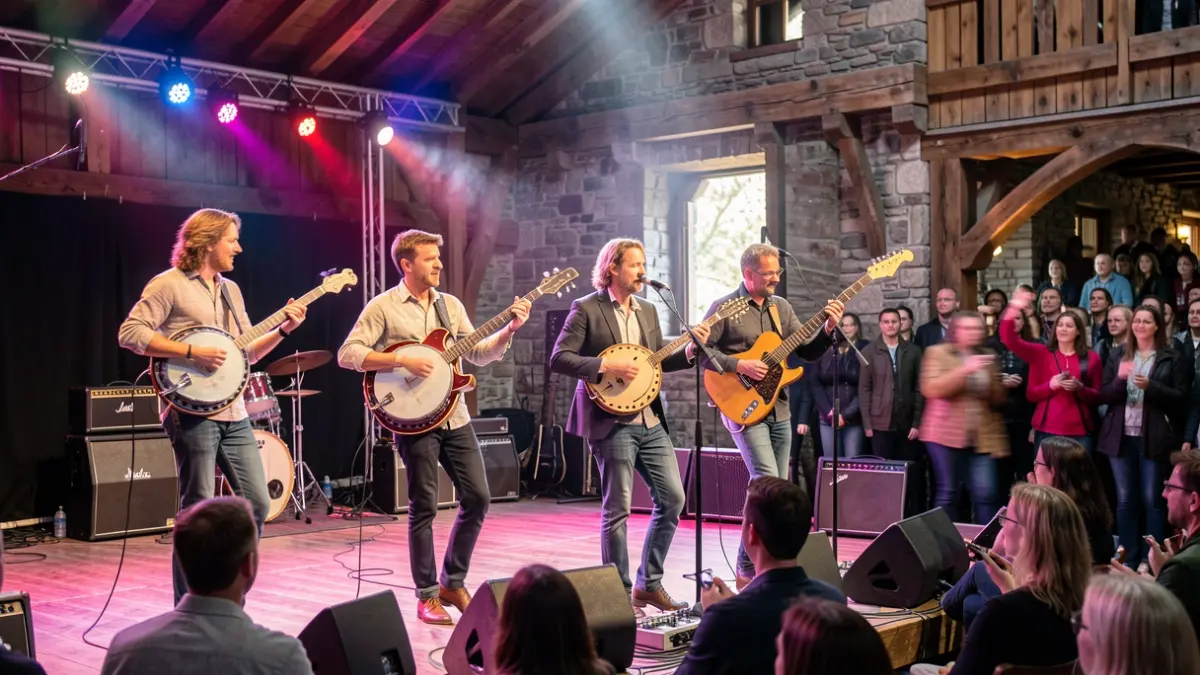
Moonshine Wagon, an Alava-based group, is celebrating 12 years of their career by combining bluegrass, country, and rock 'n' roll influences. According to Goiatz Dutto, the lead singer and main songwriter, they started in 2013 on the streets of Vitoria-Gasteiz, as enthusiasts of American folk music, playing at "lightning speed" with exotic instruments like the banjo, mandolin, and bouzouki. Their songs used to celebrate party nights.
The band has released four studio albums and is a regular fixture in venues and festivals across Spain and Europe. Recently, they have slowed down the pace of some tracks but have "ramped up" others even further, according to Goiatz. "There's more variety and compositional complexity," he adds. The lyrics are now "much more worked out, they have a purpose." Moonshine Wagon has spent the year immersed in the tour for their compilation album 12 Years Aged and, concurrently, is finalizing new songs for their upcoming work.
To mark this anniversary, the band has released a whisky, in collaboration with the Basque Moonshiners distillery in Vitoria, coinciding with the 12 Years Aged compilation. "What happens with whiskies is that after 12 years they acquire greater complexity and maturity," explains Dutto, "we wanted to reflect the same with our music, as a small tribute to musical and alcoholic pairings." The band also admits to having a "heavy" sound, although they sometimes play slower, as in their cover of Sorotan Bele's Mariñelaren zain.
The group's early lyrics, primarily focused on party nights and "shenanigans," have matured over time. "Writing lyrics at 20 is not the same as writing them 13 or 15 years later," notes Goiatz. The album Self-Destruction (2022), composed during the pandemic, served as therapy for him. "Obviously, it has nothing to do with what I wrote on the first albums," he adds. "Now we create songs that align with our current situation." He describes their music, influenced by bluegrass and neofolk, as a "chimera."
Dutto highlights the rich folk tradition of Alava and the Basque Country as a whole, recalling that bluegrass is the result of global migrations. "Ultimately, everything is connected and mixed, but each place maintains its own characteristics." The band deviates from the standards of "almost all styles" to create "something quite curious."