The Consorcio de Aguas Bilbao Bizkaia has completed the expansion and improvement project for the wastewater treatment plant (EDAR) in Bakio, which has been operational since 1993. The project, involving an investment of nearly 7 million euros, primarily aimed to increase the plant's treatment capacity to manage wastewater from a population that quadruples during the summer months. During June, July, and August, the tourist town's population swells to approximately 12,000, up from the registered 2,816 residents.
The works, which began in early 2023, faced the added challenge of keeping the facility operational at all times while ensuring the treated water met required quality standards, considering the significant seasonal variations in incoming flow. The plant is designed to treat urban and industrial wastewater for 5,400 inhabitants, with the capacity to reach up to 15,960 if necessary, according to the consortium's officials.
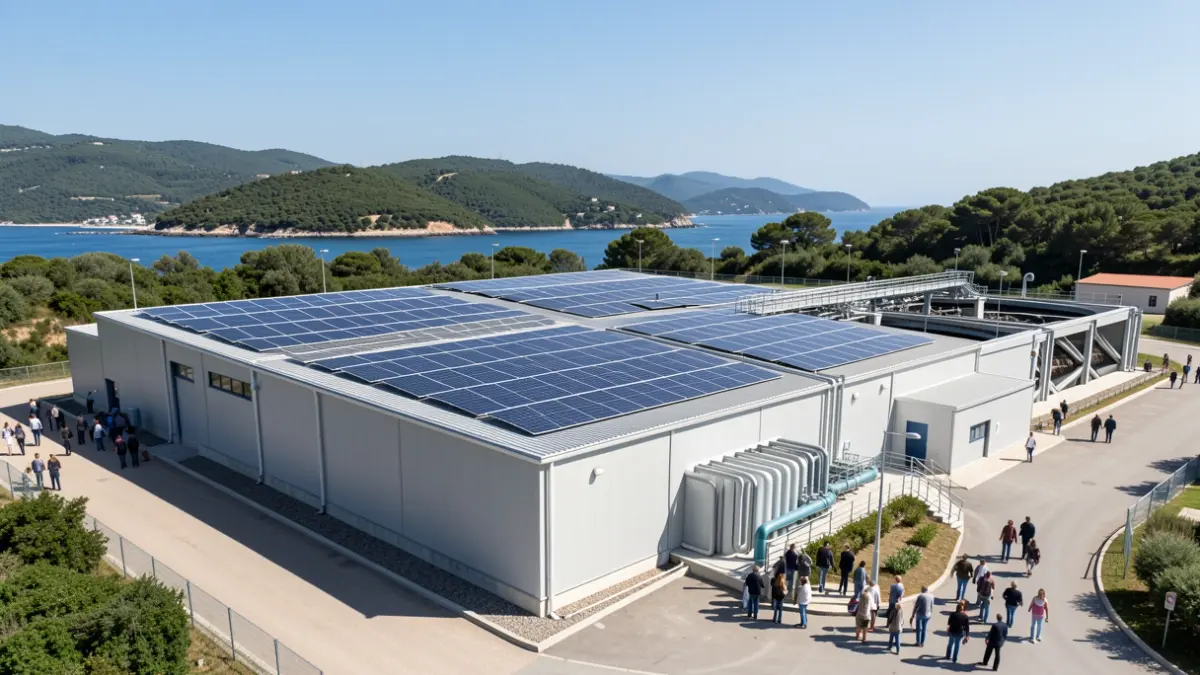
Kepa Odriozola, president of the Consorcio de Aguas Bilbao Bizkaia, accompanied by Arantxa Sánchez, technical director, and Amets Jauregizar, the mayor of Bakio, personally inspected the completed works. These works, spanning nearly three years, have enhanced the treatment capacity of the plant – for both water and sludge lines – particularly during the summer, in addition to modernizing the facilities and equipping them with a new control system.
Following the upgrades, the plant can now treat an average flow of 95 cubic meters per hour, with the ability to handle peak flows of 190 cubic meters per hour, ensuring compliance with water quality regulations. Furthermore, it can perform pre-treatment for flows of up to 300 cubic meters in emergencies, thereby increasing environmental protection during heavy rainfall events.
Additionally, the biological treatment process has been completely revamped. Two new circular secondary clarifiers have been installed, doubling the capacity of the previous ones. A new pre-treatment system and a ventilation and deodorization system have also been implemented, covering all processes except decantation.
The overall appearance of the plant has also been addressed. Exterior materials were chosen to blend with the environment and withstand the saline conditions near the coast. The sustainability of the equipment is further ensured by the increased efficiency of the biological treatment process and the installation of 58 photovoltaic panels on the roofs of the three buildings.
The Bakio EDAR now also features a modern control system, enabling remote and on-site supervision and management.
“"Always guided by technical criteria, we analyze the specific situation of the member municipalities to ensure they have robust, resilient facilities for both supply and sanitation, committed to environmental protection."