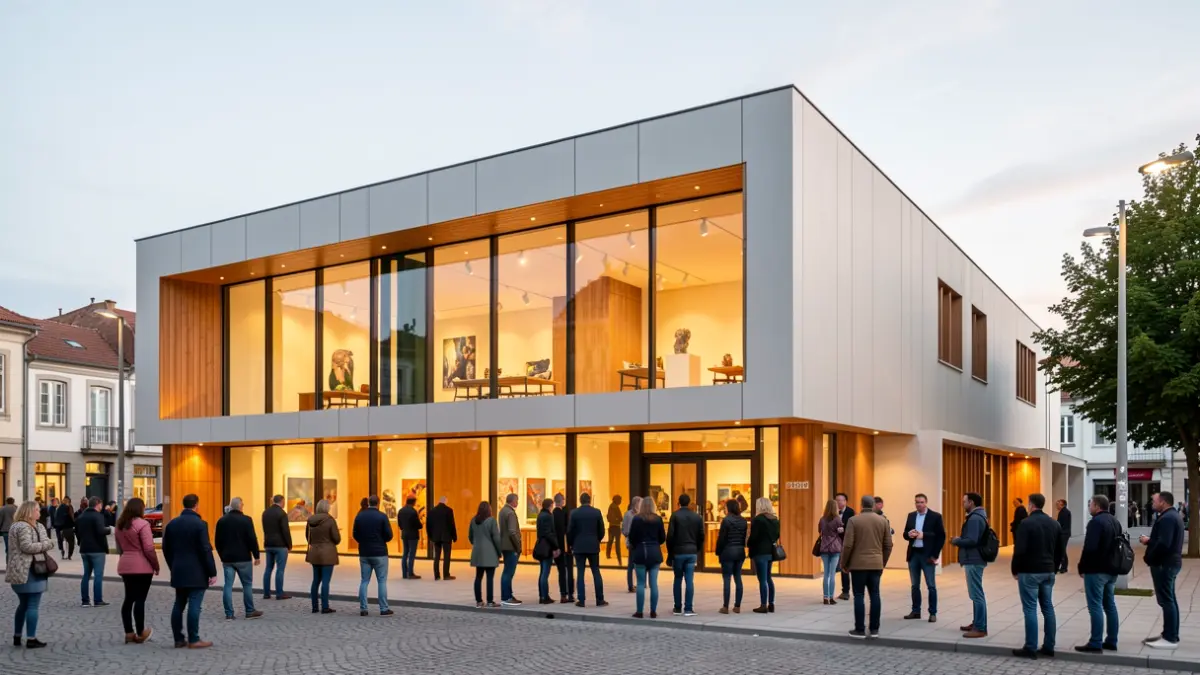
The contribution of Zitek, launched in Portugalete in 2000, extends beyond its excellent figures. Since then, the initiative, sponsored by the Provincial Council of Bizkaia, BEAZ, and the EHU, has expanded its reach in terms of locations - now operating beyond Portugalete, Leioa, and Bilbao - and in successful projects. The supporting data highlights the numerous work experiences generated and its contribution to the industrial development of Bizkaia.
For instance, the ten companies recognized at this 25th anniversary have created over 300 jobs and surpassed 30 million euros in revenue. Beneath this surface lies more: more projects, more employment, more wealth, more innovation, and more competitiveness. In total, approximately 150 companies have been established, hundreds of projects supported, and thousands of professionals have learned and taught in its 'nurseries', centers designed to foster the birth of businesses and help them grow.
By location, Portugalete leads in company creation with 66 initiatives, followed by Leioa (31), Bilbao (17), and other locations (35). Added to these figures are 67 projects that, while not forming companies, were part of the Entrepreneurship Classrooms, a key space for developing early-stage ideas.
Zitek has earned a place in the ranking of advanced incubators in the State, recognized for offering a wide range of high-quality services. Gotzone Barandika, Vice-Rector for Transfer and Internationalization at the EHU, emphasized that "the University of the Basque Country is among the leading institutions in creating spin-off companies, frequently ranking high in its environment."
This sustained commitment to entrepreneurial culture has become a crucial element in transferring knowledge to the economy, solidifying its role as a real link between the university and the productive sector. This was defended by the supporting institutions during the anniversary event.
The names of some companies born from this program are now part of Bizkaia's economic history. Histocell is a prime example of this transfer of university knowledge to the business fabric. Founded in 2006 by histology professors Ana Alonso and Teodoro Palomares from the Faculty of Medicine and Nursing, along with two researchers, "the company has successfully consolidated a robust model based on regenerative medicine over two decades."
Currently, it employs around 50 highly qualified professionals in fields such as medicine, biochemistry, and biology, distributed across its sites in Zamudio and Larrabetzu. "The greatest satisfaction is contributing to society through innovation and generating skilled employment," stated Ana Alonso, founder and professor at the EHU's Faculty of Medicine and Nursing.
"Beyond the numbers, the impact of these startups is measured by their ability to generate economic value and retain qualified talent," they summarized. Companies emerging from the Zitek program have helped revitalize strategic sectors and consolidate an innovative ecosystem in the territory. This is the case for Nemergent Solutions, an engineering firm founded in 2017 by faculty from the EHU's School of Engineering in Bilbao.
Born from a university research group, the company has experienced significant growth in just a few years: it has offices in Erandio and Gasteiz, a staff of 55 professionals, and a turnover close to 3 million euros. It specializes in critical communication solutions, developing voice, data, and video services for sectors such as emergency services, public safety, rail transport, and industry.
Furthermore, it maintains intense international activity, with a presence in markets including the United Kingdom, Mexico, Finland, Switzerland, and Austria. "This growth rate allows us to anticipate exceeding 100 employees in the next two years," highlighted Óscar Fajardo, the company's founder.
Looking ahead, Zitek directs its projects towards fields such as biotechnology, quantum technologies, the 'green economy', and artificial intelligence. The company ZYLK, created in 2004 by five physics students from the EHU, has established itself as an example of innovation applied to the industrial sector, specializing in open-source software and artificial intelligence to help other companies advance their digitalization.
It currently has 62 employees and a turnover of nearly 4 million euros, working with major industrial groups such as Gestamp, Volkswagen, and ArcelorMittal. "At ZYLK, we work to improve connectivity in factories and move beyond Industry 4.0 towards autonomous manufacturing models," illustrated David Olmos, CEO and co-founder of the Bilbao-based company.
Currently, Zytek operates on various fronts, with companies driven by both teaching and research staff, as well as students. Added to this is the dynamic role of its programs and awards, which have helped consolidate an entrepreneurial culture on campus. The Think Big competition has held 16 editions, the Handira Jo awards have involved 43 participants, and the Abiatu awards have gathered 81 participants.