
The Spanish Government gave the green light on Tuesday to a new Royal Decree that modifies regulations concerning the rights and freedoms of foreigners in Spain and their social integration. This regulation aims to facilitate the social inclusion of migrants and their families in the medium and long term, adapting to new migratory realities.
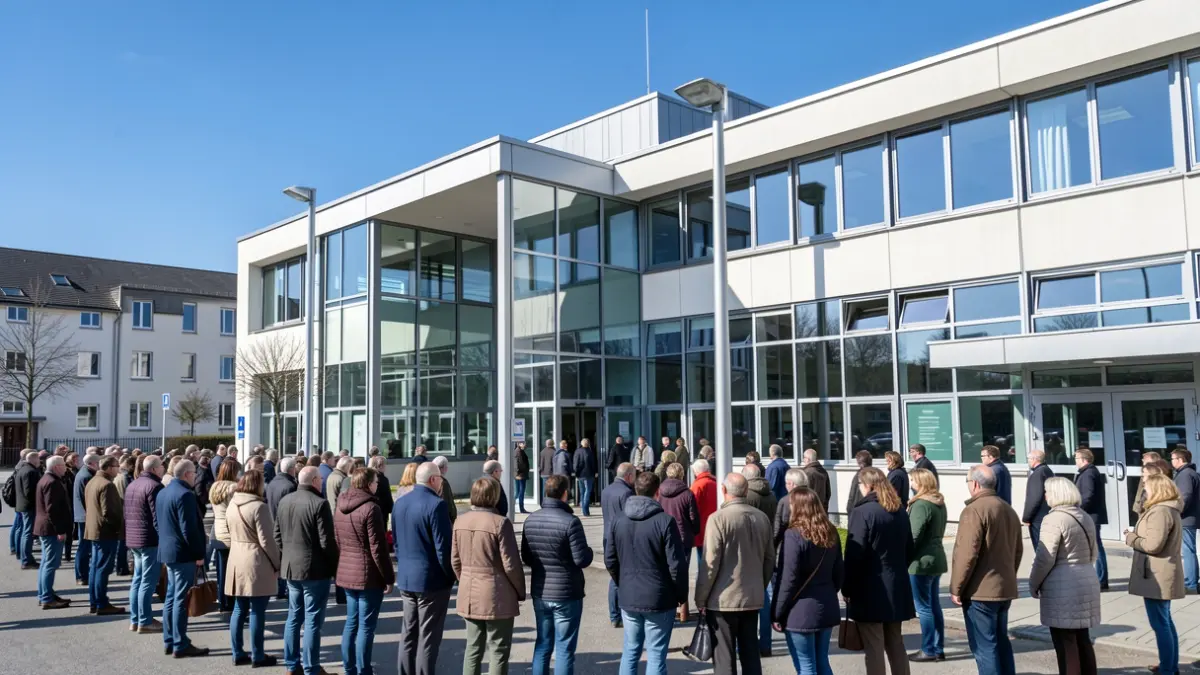
The text requires individuals to have no criminal record and «not pose a threat to public order or security». Consequently, a large number of people have approached consulates to obtain this certificate. A family from Gijón, for instance, reported waking up at five in the morning to be attended at the Moroccan consulate.
This is one of the most important consulates in Bilbao, serving as a reference for tens of thousands of migrants residing across the north, from Galicia to Navarre, as well as Castilla y León and La Rioja. Louiza arrived with her husband and niece to obtain the certificate. Although her family has lived in Spain for a long time, she arrived three years ago seeking a better future. Her niece, Yasma, commented that «this is the third time we've been here for the same issue. Sometimes the process is a bit complicated».
“"I want to change my life, have a better one, and be able to work."
This reform will allow the extraordinary regularization of over 500,000 immigrants already in national territory but without legal status. In Euskadi, approximately 26,000 foreign residents from countries such as Colombia, Morocco, Nicaragua, and Venezuela are expected to benefit from this measure. Residence and work permits will be available telematically starting tomorrow, and in person by appointment from April 20.
Also waiting in line were Jalal and Mohamed, aged 22 and 27 respectively, who came from Pamplona and Vitoria for the same reason. Mohamed explained that «once I have the necessary papers, I will start looking for job opportunities. Here in Spain, the procedures are simpler than in the rest of Europe». Ildemaro, who arrived from San Sebastián, has been in Spain for seven years and, after a complicated process, has managed to regularize his situation and now has an indefinite contract repairing chimneys.
The Bilbao City Council has reported an increase in applications in the Vizcayan capital. «418 applications have been submitted so far this year requesting criminal record certificates or sexual offense certificates». Queues were also observed at the Venezuelan consulate, where a group of immigrants sought to obtain dual nationality. Roxana, who attended with her young daughter, noted that «it used to be more complicated to do paperwork, but now everything has been streamlined».