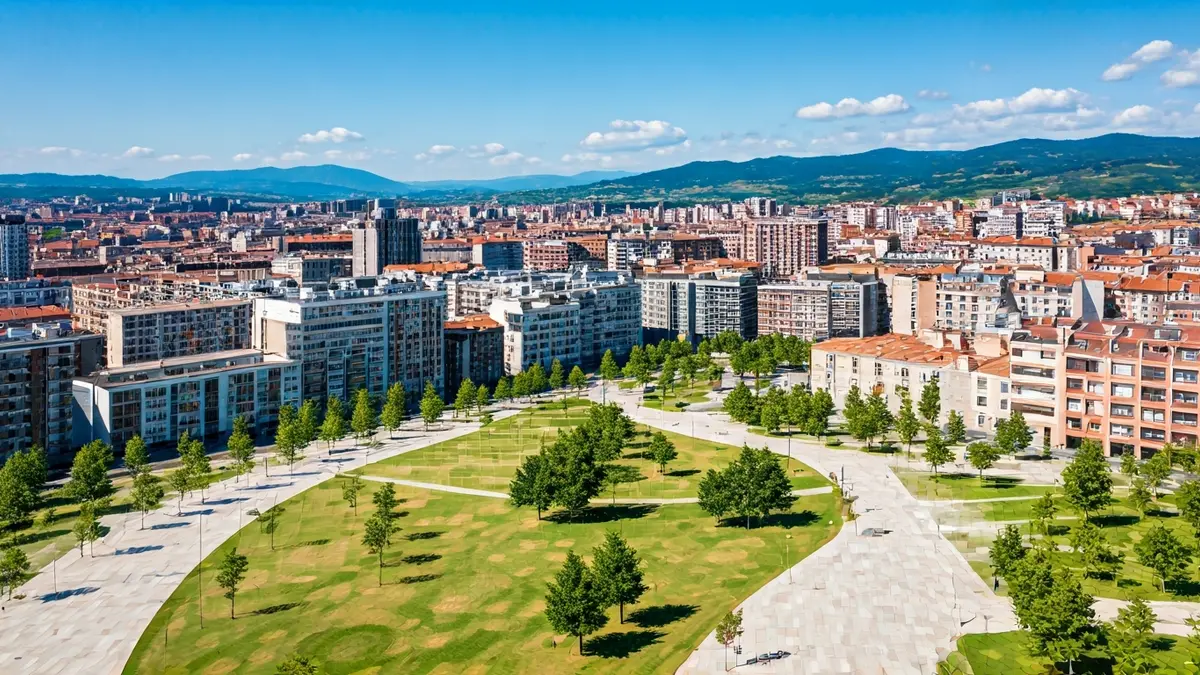
Bilbao's climate has changed significantly, with the average temperature rising by one degree since 1990. This has led to more frequent days exceeding 35 degrees Celsius, and experts predict longer summers and more intense heatwaves. In urban environments, the 'heat island' effect caused by pavement and concrete can increase temperatures by up to an additional 2.5 degrees, a situation exacerbated by the lack of trees.
The Bilbao City Council's Sustainability Department commissioned an analysis to identify the city's most critical areas, where temperatures exceed the risk threshold of 29.5 degrees Celsius during summer days. These areas include the esplanade of San Mamés, Moyua, the eastern sector of Zorrozaurre, and southern Deusto, where high temperatures persist for at least five hours.
These are areas of opportunity to implement natural solutions.
The study suggests that, without intervention, 61% of the city's streets and squares would experience temperatures above 29.5 degrees Celsius for at least one hour, and 8% for at least five hours daily. However, with moderate emission reductions and the expansion of green spaces, Bilbao could cool many of its warm areas. The proposals include up to 162,000 square meters of new parks and an additional 16,600 trees.
Víctor Trimiño, director of the Sustainability Department, emphasized the need to "proceed with the naturalization of spaces" to combat warming. The Paces (Sustainable Energy and Climate Action Plan) allocates an investment of 27.7 million euros until 2030 for these actions. These include creating 58,000 square meters of green areas in Punta Zorroza, implementing nature-based solutions in Otxarkoaga and on the roof of the future Abando station, and developing ecological corridors that transform hard streets into tree-lined avenues.
Furthermore, Bilbao has approved a heat plan that includes protocols for municipal and contractor workers during heatwaves, recommendation guides for those working with vulnerable groups, and a plan to adapt nurseries, schools, and social services. Pilot tests for shade solutions and reflective pavements will also be conducted for future wider implementation.