Borja Otaola has returned from the European Kettlebell Sport Championship, held a few weeks ago in York, with two new gold medals. Otaola, who was already crowned World Champion in Lyon in 2022, further expands his collection. Meanwhile, Vanesa Moreno has earned a commendable bronze medal in her first international competition.
Although Otaola already had athletic habits, he did not start in this discipline until 2020, when the closure of establishments due to the COVID-19 pandemic forced him to improvise: “With the goal of staying in shape, I found this tool. In terms of material investment, time commitment, and space, I believe it's the best for maintaining good health. You work everything together: cardio, endurance, strength, coordination, breathing…”, he explains.
Moreno, while familiar with Kettlebells, began her sports practice later and in just “seven or eight months,” as the Bilbao native acknowledges, she has achieved this feat.
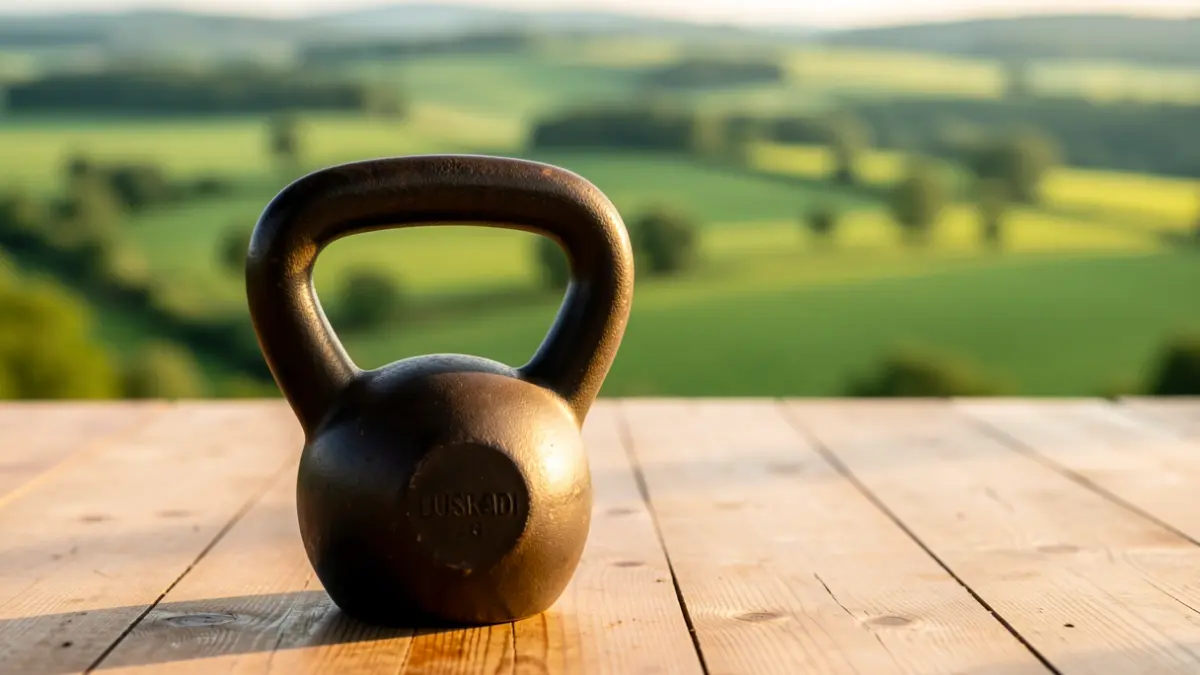
Kettlebell Sport is a discipline that involves performing the maximum number of repetitions of a specific movement within a set time. Its main distinction from weightlifting, as explained by the Bilbao athlete, is that it is much more endurance-focused: “You cannot release the Kettlebell during the test, which can last 10 or 12 minutes. Here, you do repetitions until you drop it.” The winner is the participant who completes the most repetitions during that period.
While Kettlebell Sport is the globally adopted American term, the historical name for this discipline originating in Eastern countries is Girevoy Sport. “Many Russian, Ukrainian, Lithuanian athletes… emigrated worldwide. Eventually, in the United States, the round ball was likened to the union of a kettle and a bell. Hence the name Kettlebell,” Otaola explains.
Its origins can be compared to traditional rural practices. "In Russian shops' scales, one end held food and the other held figures called puds, which was the unit used in the country to indicate measure and weight. When the commercial transaction ended, they would lift them."
Although the popularity of this sport has increased in countries like Italy, England, France, Brazil, or Canada, Borja Otaola notes that in his environment, it remains a minority and little-known sport. To address this, he and other colleagues have promoted various systems: “We have created a national club and, in collaboration with clubs from other areas, we organize about four or five in-person championships. There, under an accredited international judge, we can select athletes for international competitions. Simultaneously, we have an online league with a test every two months. Following a protocol, athletes record a video at home, their box, or gym, and judges validate them.”
Beyond its athletic facet, Kettlebell is a modality with significant health benefits. “Only a very few elite athletes in Russia or highly experienced individuals who teach and have many practitioners live off this. But beyond competition, it is a sport where consistency can yield interesting health results. You can practice it throughout your life, the injury ratio is minimal, and with little time and space, you work the essentials. People, either because they don't know about it or because there aren't many specialized trainers, don't practice it,” concludes the Bilbao athlete.