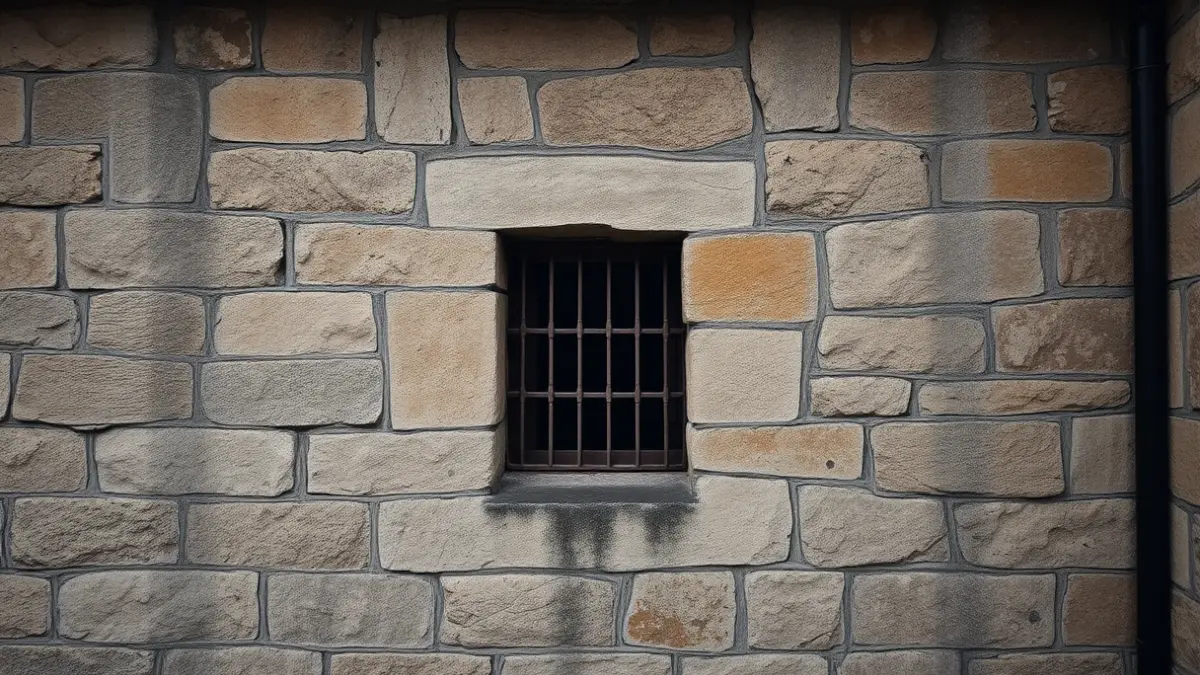
Since its opening in 1948, Martutene Prison has housed thousands of inmates within its cells. Initially constructed as a repressive core of the Francoist regime, it fulfilled this role until Franco's death. Its history, however, extends further, coexisting with the violence of the Basque conflict and the transition, as well as with prisoner dispersion policies, eventually becoming a common prison in recent years.
After nearly a century of operation, the penitentiary center will close its doors this June, with prisoners being transferred to the new Zubieta prison. Prior to this, on May 4, the Basque Government will receive the transfer of the Zubieta prison from the Central Government, following the completion of construction work.
Research conducted by the Aranzadi Science Society and memorial associations has detailed the prison's history as a central hub of Francoist repression, as well as a witness and exacerbator of torture and other forms of state violence. The first stone was laid on September 7, 1944, and by the spring of 1948, though still unfinished, it began to house prisoners.
A representative from the Historical Memory Area of the Anthropology Department at the Aranzadi Science Society highlighted that the prison was built during the Franco regime, and its primary function was to carry out repression. Political prisoners from the war were the first to be incarcerated there, and the prison itself was constructed by republican prisoners through forced labor, illustrating the methods of Francoist Spain.
In the 1960s, as the anti-Francoist movement began to mobilize, direct and severe repression intensified. Torture, deaths in confrontations and demonstrations, and raids related to states of emergency multiplied, overcrowding the prison with political prisoners. This period saw the beginning of hunger strikes, escapes, and the first fatalities.
Currently, the prison houses inmates primarily involved in crimes related to abuse and drug use and trafficking. Given its historical significance over nearly a century, initiatives by memorial associations to declare Martutene Prison a place of memory are supported. The aim is to remember what happened and prevent similar events from recurring in the future.