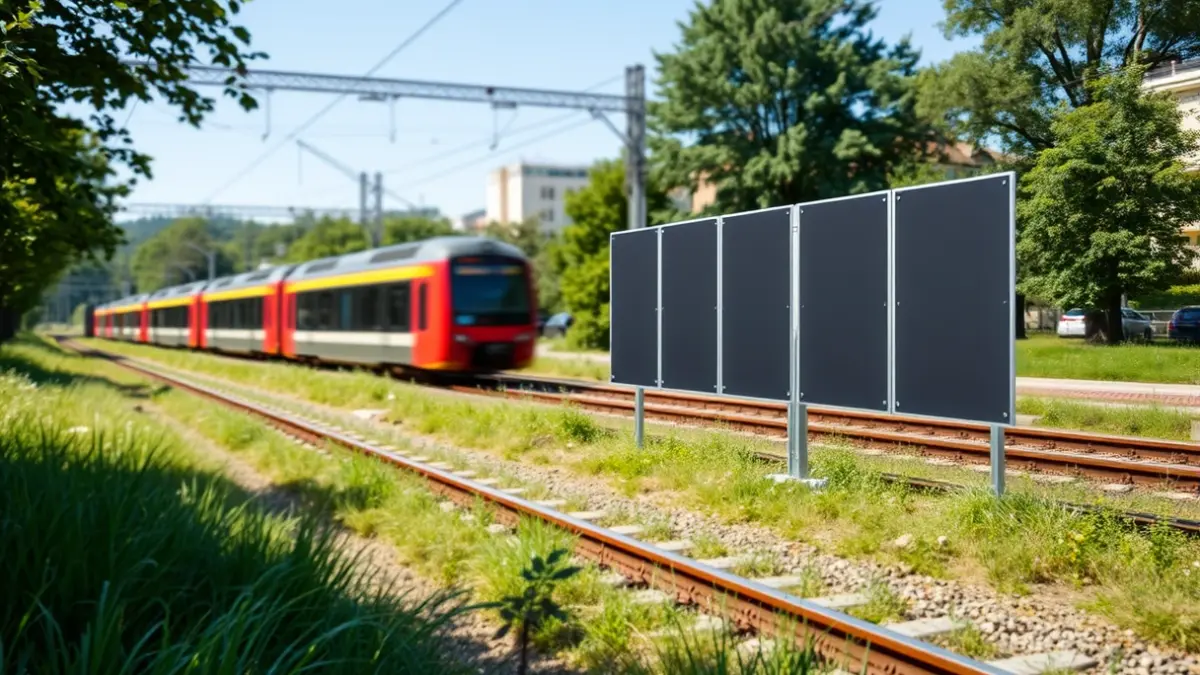
Adif is set to install noise barriers along the Joseba Rezola promenade in Ordizia. This initiative aims to reduce the acoustic pollution caused by trains in urban areas. The work will commence after the completion of the train station's construction, with the primary goal of minimizing noise impact.
The construction will be carried out in various phases, with some tasks scheduled for nighttime to avoid disrupting railway traffic. The scope of work includes preliminary ground preparation, environmental measures, drainage adjustments, restoration of affected services, and the actual installation of the acoustic screens.
This action is part of Adif's Action Plan Against Noise, currently being implemented across the Basque Autonomous Community. The project is based on railway axes and aims to comply with the 2003 Noise Law. Its main objective is to decrease the population exposed to noise levels exceeding the Acoustic Quality Objectives (AQO) established by Royal Decree.
The public entity announced a year ago that it had contracted the deployment of acoustic screens on sections of conventional, high-speed, and metric-gauge railway lines passing through towns in Gipuzkoa, Bizkaia, Palencia, Zaragoza, and Santander. This is intended to enhance the integration of the railway into these urban centers. The project involves installing a total of 50 screens, 34 of which will be placed in Gipuzkoa, along the conventional line between Zumárraga and Irun, which serves Gipuzkoa's commuter and medium- and long-distance services. Some locations, such as Andoain, have already seen installations earlier this year.
Adif emphasizes that the deployment of acoustic screens, like those to be installed in Ordizia, contributes to the integration of the railway into both urban and rural landscapes. This initiative stems from the strategic noise maps of major railway axes, as mandated by the Noise Law. Furthermore, they indicate that this action supports Sustainable Development Goals (SDGs) number 9 (fostering reliable, sustainable, and quality infrastructure), 7 (sustainability), and 11 (inclusive cities with access to sustainable transport).