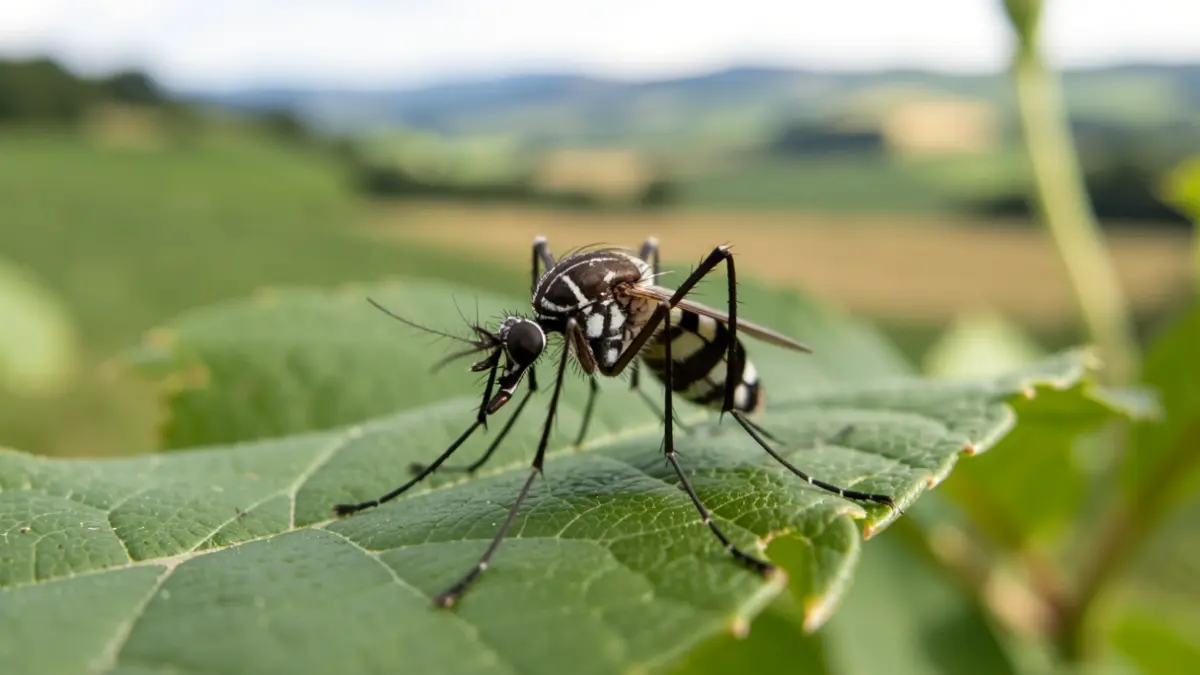
The summer in Gipuzkoa is increasingly accompanied by the tiger mosquito, an approximately nine-millimeter-long insect that has become a common sight since its arrival in 2014. It has now been detected in 37 municipalities within the province, and the Basque Government has implemented preventive actions against this invasive species in 50 locations, 16 of which are in Gipuzkoa.
Originating from Southeast Asia, the Aedes albopictus species has spread globally through international trade. It first appeared in Europe in 1979 and was detected in Spain in 2004. In the Basque Country, it was first sighted in 2014 thanks to an invasive mosquito surveillance program, and its presence has significantly increased since then, particularly in Gipuzkoa and Bizkaia.
This insect typically inhabits urban areas and requires stagnant water for its larval development, favoring breeding sites like containers, tires, plant pots, or barrels. According to environmental health technicians from the Basque Government, 80% of the mosquito's breeding grounds are found on private property, in stagnant water around homes.
“"They lay eggs in stagnant water in plant pots or animal water bowls we have at home, and within a week, they complete their life cycle."
Leire Mendikute emphasizes the importance of public awareness and adherence to recommendations to interrupt the mosquito's life cycle, primarily by removing stagnant water from containers. She notes that the insect is "starting to be a nuisance to quality of life" and is "very widespread in Gipuzkoa".
It tends to bite during the day, typically on the legs, due to its low flight pattern and lack of audible noise, making it difficult to detect. While it has the capacity to transmit diseases such as dengue, zika, and chikungunya, the probability of local transmission is considered "very low" and not a cause for significant concern.
If bitten, Mendikute advises to "wash the wound, apply cold, and avoid scratching".