
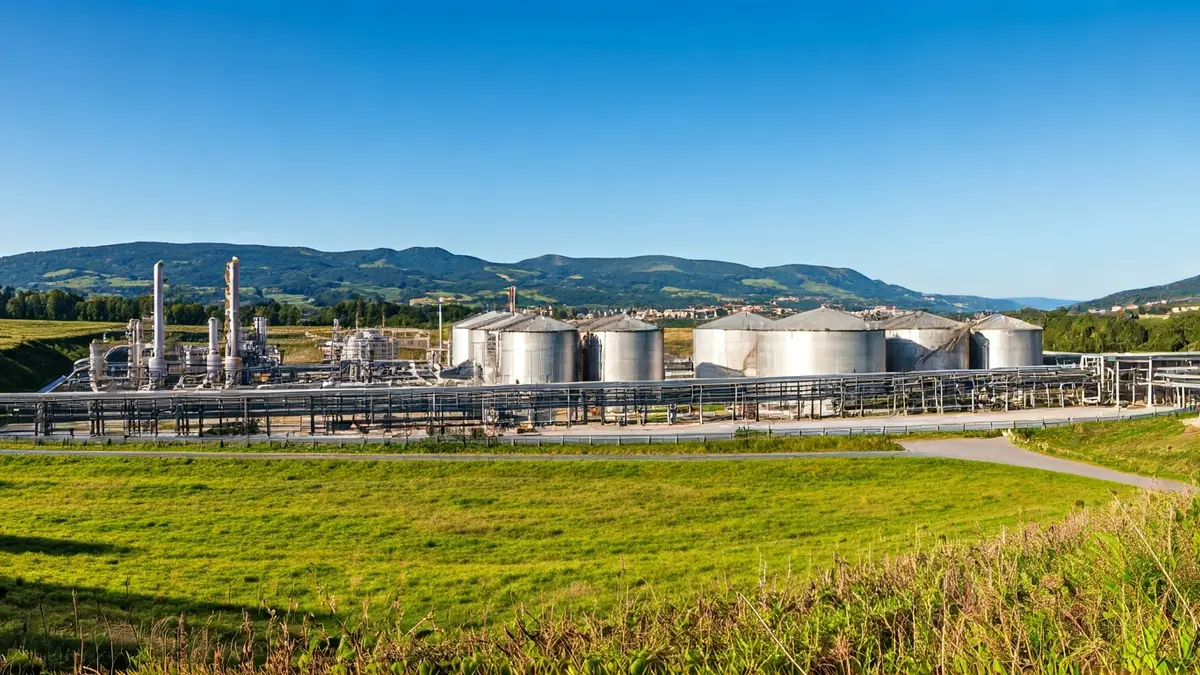
This project, although not all its details have been made public yet, would represent a significant step in the decarbonization processes of both companies. The new facility is expected to meet a portion of their energy consumption, aligning with objectives promoted by European Union regulations.
According to information published by El Diario Vasco in December 2025, this plant has the potential to become one of the largest biometanization facilities in Spain. A technical committee is being formed to analyze the project, and the Goieki Goierri development agency and the Gipuzkoa Provincial Council are also involved.
Although the specific details of the project are not yet fully known, information released by both companies indicates that the biometanization plant would have the capacity to treat 400,000 tons of waste annually, generating 200 GWh of energy. This would allow CAF to reduce its emissions by 55% by 2030, and Arcelor by 25%.
Waste management poses a significant challenge. During a conference on biometanization given by the Navarrese environmental association Sustrai Erakuntza in Olaberria on March 26, questions arose about whether there would be enough livestock waste throughout Gipuzkoa to feed the plant. According to Eustat data, in 2020 there were 51,000 cows in Gipuzkoa. Apparently, discussions have taken place with dairy producer Kaiku, which could offer 150,000 tons of slurry per year. For the transport of this slurry and other organic waste (urban, from treatment plants, etc.), a daily movement of about 75 trucks is estimated, in addition to those needed to return the pelletized digestate (around 105,000 tons annually) to farms.
The facilities would be built on a plot owned by Arcelor, next to the Olaberria swimming pools, covering three hectares and requiring an investment of tens of millions of euros. Further details of the project are awaited, as it has generated concern among local residents.