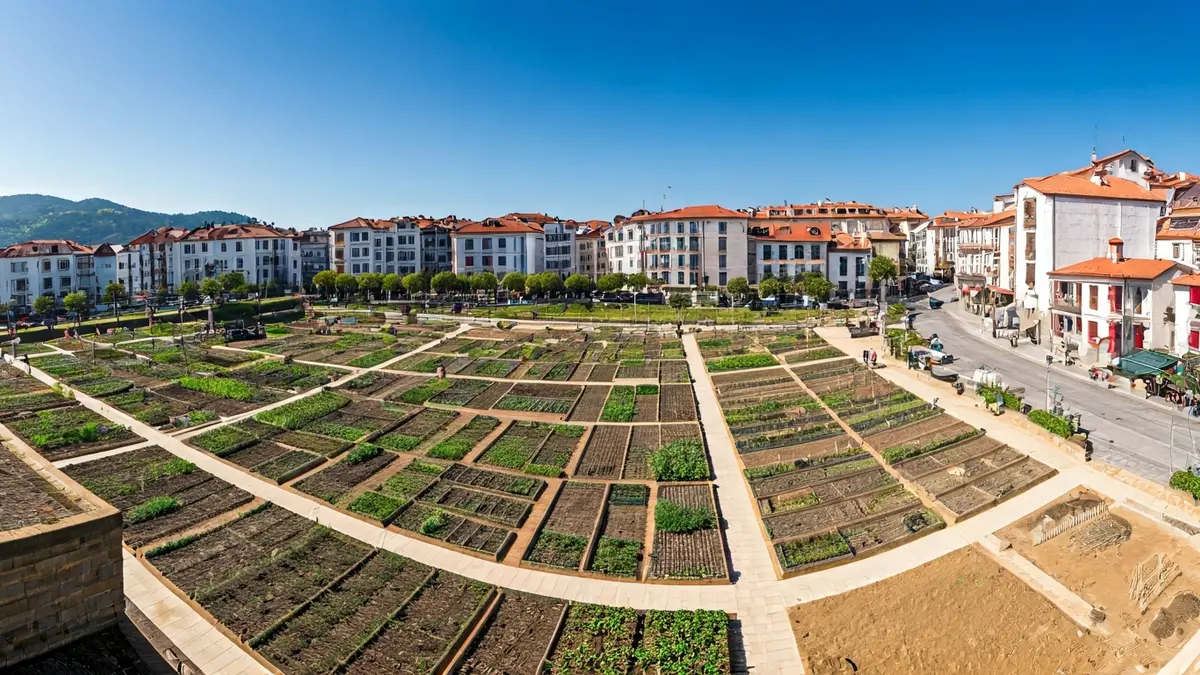
With the completion of this initial phase, the council has regenerated the western area of Azkuene Goia, creating a new space accessible from the urban core. This will allow residents to enjoy the natural environment, promote healthy habits, and improve their quality of life.
Work began in August 2025 with a comprehensive cleanup of the site, a particularly complex operation due to years of accumulated waste, including asbestos-containing materials. In compliance with current regulations, these tasks were carried out by a specialized company registered in the Register of Companies Exposed to Asbestos.
The cost of this phase amounted to 42,600 euros, of which 15,000 euros were funded through a grant from the Gipuzkoa Provincial Council. In total, 56.72 tons of waste were removed and managed. After the cleanup, in September 2025, work began on preparing the allotments, with an investment slightly exceeding 120,000 euros (VAT included). Although initially scheduled for completion in December, the intervention was extended after the need to ensure ground stability was detected.
To address this, a geological report was requested, leading to the incorporation of additional measures such as rainwater channeling, slope adjustment towards the interior of the terraces, stabilization of embankments with willow vegetation, and the implementation of sustainable urban drainage systems. The project also received a 75,000 euro grant from the Environmental Sustainability Department of the Basque Government for the execution of this first phase.
The municipal forecast is that the allotments can begin to be used next spring, once the regulatory and allocation process is completed. Looking ahead, the City Council is already working on updating the second phase project, scheduled to start in the summer. Concurrently, the Council will draft an ordinance by the end of 2026 to regulate both the allocation procedure for the allotments and their conditions of use. The first draft of this regulation will be released during April, with the aim of gathering citizen input before its final approval.
“"It represents a commitment to food sovereignty, local production, and responsible consumption."