The Eibar City Council has positively assessed the proposal to modify the ordinance regulating the urban waste fee, developed in collaboration with the Debabarrena Consortium. The objective is to address the needs identified during the implementation of the new system and adapt its operation to the reality of the city's families and establishments.
The modification maintains the model's philosophy, based on a simple principle: those who recycle more should benefit. However, the experience gained in recent months has allowed for the identification of situations requiring revision. Therefore, the City Council and the Consortium have worked together to introduce improvements that will advance towards a more flexible, balanced, and adapted system to the different circumstances of the citizens.
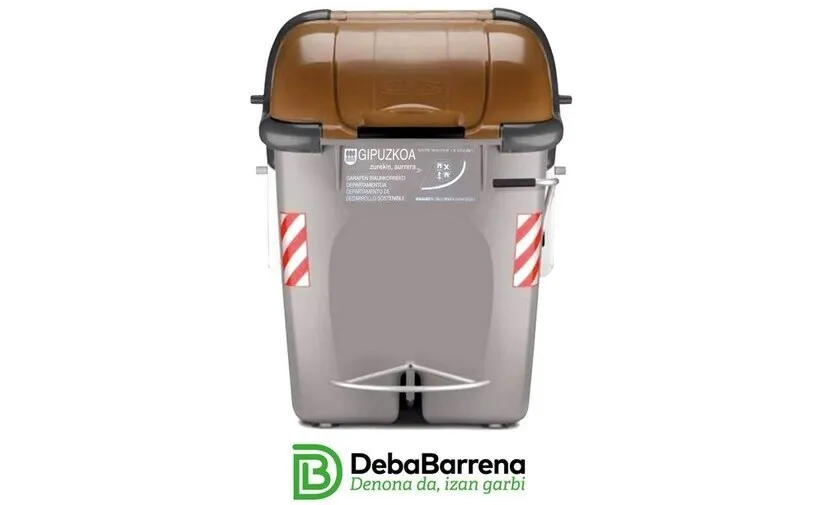
One of the main changes will be the replacement of the current monthly control of the brown bin with an annual count. Thus, the obligation to reach a certain number of openings each month disappears, and a minimum of 25 uses per year is established to access the so-called fair fee.
This change will allow for greater flexibility in considering the different circumstances of households. Holiday periods, prolonged absences, changes in waste generation habits, or specific family situations can be better managed by not being subject to a monthly requirement.
Experience has also shown that not all households generate the same amount of organic waste. The needs of a household occupied by a single person differ from those of a home where three, four, or more people live together.
For this reason, both the Consortium and the City Council consider it necessary to continue studying possible improvements to move towards a system that takes into account the characteristics of each household. The 25 annual openings included in the proposal represent a first step in this process of continuous adaptation and improvement.
The modification comes after analyzing the claims and particular cases collected during the implementation of the new model. This work has allowed for firsthand knowledge of the difficulties encountered by some individuals and the identification of aspects of the ordinance that could be improved.
In this regard, the grounds for exception are also expanded and clarified to address specific situations related, among other issues, to reduced mobility, health reasons, ownership of multiple properties, or duly accredited absences.
Likewise, the proposal includes measures to prevent the application of the differentiated fee from causing economic hardship for certain households or activities. Individuals or establishments that do not reach the established threshold and must pay this fee may request payment installments, in accordance with the conditions set forth in the tax regulations.
The proposal contemplates the application of the new count in 2026 and 2027, with a minimum of 25 openings throughout the year in both fiscal years, once its processing and approval are completed. In parallel, work will continue on studying possible improvements to adapt the system to the different realities of households.
The City Council emphasizes that the objective of the fee is not to collect revenue or to sanction, but to incentivize the correct separation of waste and to advance towards a model where recycling efforts are reflected in the fee paid by each person.
“"We have listened to the citizens and learned from experience. The system had to fulfill a legal obligation and, at the same time, promote recycling, but it also had to respond to a criterion of justice. Behind every data point there is a different family reality, and we must take it into account."
Iraola has defended the importance of "continuing to adapt the system to the needs of households" and has stressed that the change to an annual count of 25 openings represents "a first step towards making the fee more flexible and better adjusting it to the reality of Eibar." "We want to maintain our commitment to recycling and the environment, but we also want citizens to understand the system and consider it reasonable. That is why we will continue working to ensure it evolves and adapts ever better to the characteristics and circumstances of each home," he added.
“"From the Consortium, we have worked in close collaboration with the Eibar City Council, making our technical resources available and always maintaining an open attitude to study and make municipal proposals viable. The shared objective has been to respond to the needs of the citizens and continue improving the service."