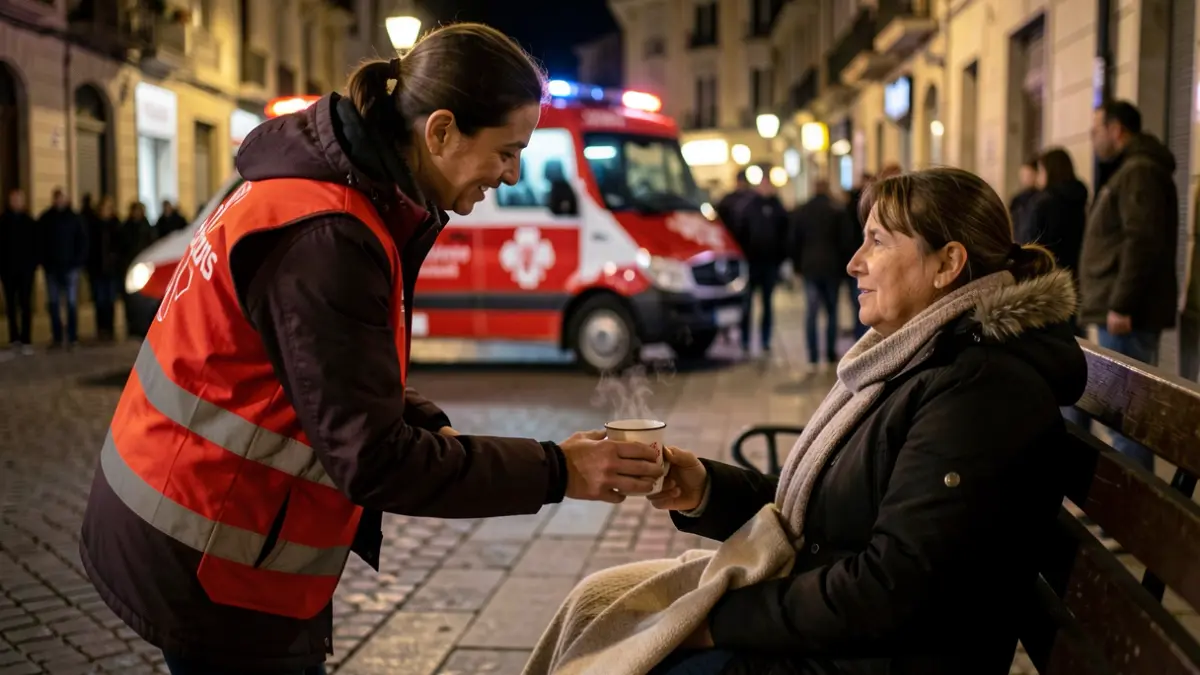
The eight vans of the Bizkaia Food Bank have almost doubled the distance traveled in just five years to collect and distribute products among vulnerable people at risk of exclusion. In 2025, they recorded 229,000 kilometers, compared to 125,293 kilometers in 2021. Routes and collection points have also expanded during this time, increasing the workload for the organization, whose 172 members are all volunteers.
This situation is expected to intensify due to the implementation of the Law against food waste and the rise of 'fifth-range foods'. These are pre-cooked, ready-to-eat dishes with a shorter expiration date, requiring quicker removal from supermarket shelves.
“"It demands great speed both in collection and distribution, because, of course, the cold chain must not be broken."
Luis Crovetto, the organization's president, stated that this new consumption habit demands a quicker response when collaborating supermarkets request it, as maintaining the cold chain is crucial. This new approach to ensure food arrives in optimal condition has highlighted a weakness: the need for more drivers due to increased travel. Currently, about thirty volunteers perform these tasks, but more are needed to cover routes from Monday to Saturday. No personal vehicle is required, only a driver's license and a willingness to help.
This increased logistical activity is necessary to collect food with approaching expiration dates and deliver it where it is most needed. Furthermore, vehicles have had to be adapted to maintain the cold chain during transport, and Third Sector entities collecting products from the central warehouse in Basauri have also had to invest in freezer containers. The eight vans (two of which cannot access Bilbao city center since the implementation of the ZBE) run their routes through a dozen collaborating supermarkets. A catering company also donates its surplus. Crovetto appealed to the commitment of the people of Bizkaia to help resolve this dilemma.
“"It will be especially valuable to strengthen food collection and distribution routes and ensure that no one is left without the support they need."
The president emphasized the need for a commitment of “what you can and when you can,” without requiring a five-day-a-week dedication. The drivers' “working hours” are in the morning, approximately from eight AM to twelve PM. During this time, drivers (always two per van) cover their route, collect the merchandise, and transport it to Basauri for unloading. It is essential to increase the number of trips and drivers to effectively manage the growing quantity of processed foods with limited expiration dates received from supermarkets.