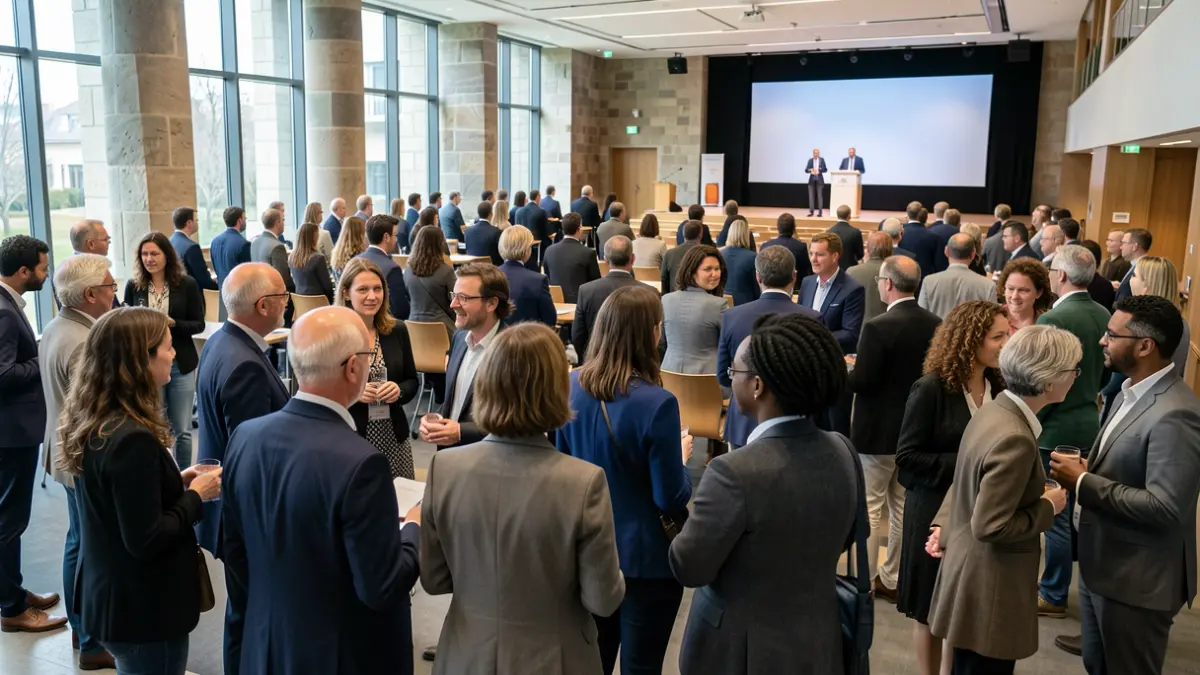
Garabide, Plazarak, the Sociolinguistics Cluster, and Taupak, along with project sponsors, today presented the details and program of the BIHAR International Congress at Ficoba. Under the slogan "The world emerging from languages," the Congress will center on narratives and discourses surrounding language revitalization, connecting them with themes such as identity, community activation, shared imaginaries, and the contributions of technology.
The congress will take place between Bilbao, Irun, and Hendaye from September 23rd to 26th, combining academic perspectives, social activism, and cultural and artistic expression. It will gather international experts, agents, and artists representing approximately 40 linguistic communities.
The congress will commence on September 23rd at the Euskalduna Palace in Bilbao. Subsequently, on September 24th and 25th, the core of the program will be held at Ficoba in Irun, with cultural events also taking place at the Borderline Factory in Hendaye. On September 26th, the congress will conclude with the socialization of its declaration, taking into account Europe Day for Languages.
Gorane Ayesta, the project coordinator, explained that the program will include lectures, round tables, workshops, and cultural proposals with the participation of experts, activists, and artists from various linguistic communities worldwide. The full program and participant information are available on the website bihar.eus.
Key sponsors of the project include the Basque Agency for Cooperation and Solidarity of the Basque Government, the Department of Culture and Language Policy, Euskarabidea, the Provincial Council of Gipuzkoa, the Provincial Council of Bizkaia, the Municipalities of Bilbao and Beasain, and the Basque Cultural Institute. Representatives from these institutions have emphasized the project's importance and their commitment.
Francisco Javier Cortés, director of eLankidetza, highlighted the strategic importance of language revitalization and diversity from a cooperation perspective. Aitor Aldasoro, Deputy Minister of Language Policy of the Basque Government, emphasized the significance of building new narratives about languages and learning from other experiences. Javier Arakama, managing director of Euskarabidea, defended the value of protecting linguistic diversity and preserving heritage.
Garbiñe Mendizabal, Director General of Linguistic Equality for the Provincial Council of Gipuzkoa, views language revitalization as a commitment to justice, democracy, and diversity. Isaac Amezaga, Director General of Euskera for the Provincial Council of Bizkaia, has highlighted collaboration, exemplarity, and giving visibility to the Basque language. Johañe Etchebest, director of the Basque Cultural Institute, pointed out the link between language and culture, reminding that language lives in usage, creation, and relationships. Iosu Iguiñiz, representative of the Euskera Service of the Irun City Council, emphasized the opportunity the congress offers to make the city and the Basque language more visible.
The organizers aim for BIHAR to be a turning point for renewing discourses on language revitalization and strengthening collaboration between communities. The congress is the result of a participatory international process and will conclude with the presentation of a declaration and a network to foster future cooperation.