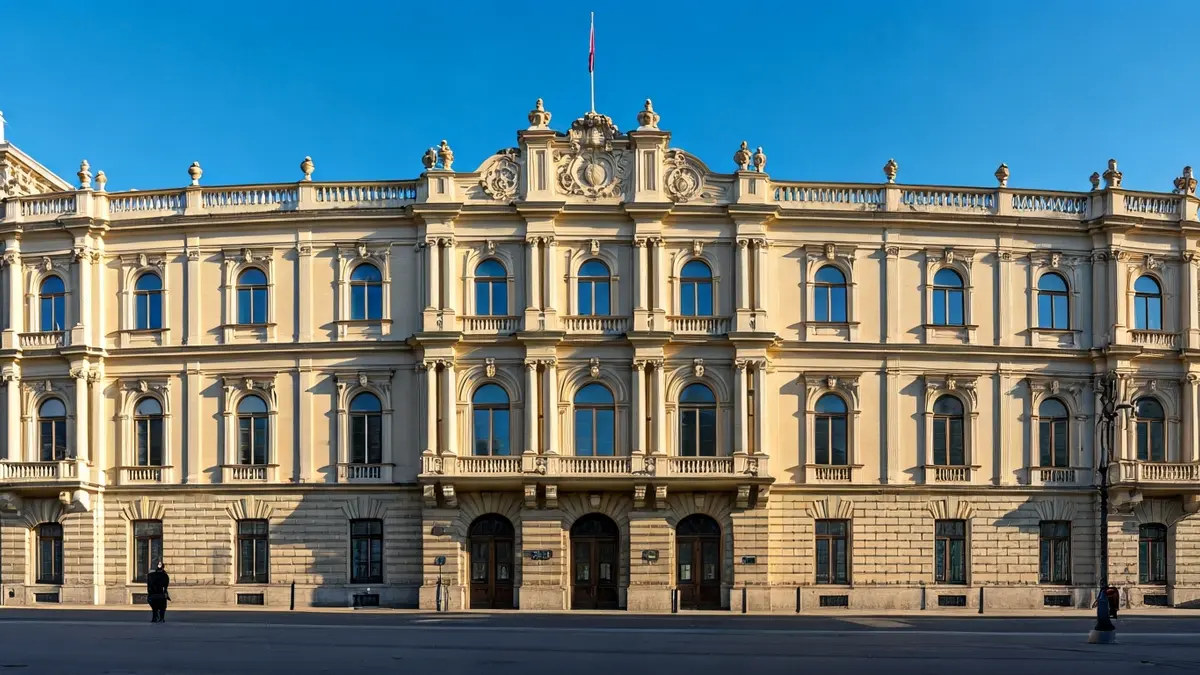
Vitoria-Gasteiz not only boasts emblematic buildings such as the imposing New Cathedral, the majestic Old Cathedral, or the elegant Villasuso Palace, but also harbors a treasure that dazzles both with its facade and the secrets it holds within: the Museum of Fine Arts of Álava. This museum offers free admission and is open from Tuesday to Saturday, morning and afternoon, and on Sunday mornings.
Housed in an early 20th-century palace (the Fray Francisco Palace), this museum offers a fascinating journey through Spanish art from the 18th to the 20th century, with a special focus on Basque art from 1850 to 1950. The palace's former spaces, such as the office or the chapel, have been transformed into rooms exhibiting extraordinary works, complemented by a modern extension that allows for an even richer and more varied collection to be displayed to the public.
Among the most notable pieces in the Museum of Fine Arts of Álava, visitors can admire: a portrait by Joaquín Sorolla, paintings that inspired Cristóbal Balenciaga, works by masters who taught Dalí and Picasso, and valuable relics preserved in perfect condition.
Díaz Olano, who was a teacher at the Vitoria Secondary Education Institute, lent the work to decorate the building's hall on the occasion of a royal visit to the Alavese capital.
The painting Restaurante by Ignacio Díaz Olano, created in 1897, depicts the contrast between bourgeois luxury and the misery of the humble. Inspired by a scene his patron witnessed at the Café de la Paix in Paris, the artist divides the canvas between interior opulence and exterior desolation. His work Rezo del ángelus en el campo, painted in 1899, pays homage to rural labor and religious tradition, with numerous sketches made in Estarrona using local inhabitants as models.
Fernando de Amárica, after his first trip to Paris, painted Ciudad con sol and Ciudad con lluvia in 1905 and 1906, respectively, both depicting the Plaza de la Virgen Blanca from a high vantage point at the Church of San Miguel. Aurelio Arteta, one of the most important contemporary Basque artists, portrays the horrors of the Civil War in a triptych commissioned by the Basque Government in exile. Among Sorolla's portraits, an intimate and somber depiction of his friend Luis López Ballesteros stands out.
José Garnelo y Alda, a master who taught Picasso, Dalí, and Vázquez Díaz, captures the dynamism of German dancers in his 1922 work Escuela Dalcroze Hellerau. A painting by Darío de Regoyos from 1893 portrays the childhood of the future king Alfonso XIII with his mother María Cristina on Ondarreta beach, featuring a unique “mobile beach” that allowed them to bathe in privacy.
The portrait of Doña Carmen Arconada, by Ignacio Zuloaga, features an imposing red dress reminiscent of Cristóbal Balenciaga's style, who was inspired by Zuloaga's paintings. Ramón de Zubiaurre, in his 1910 painting Autoridades de mi aldea, successfully captures the “soul” of Basque folklore. Carlos de Haes, considered the “father” of Spanish landscape painting, revolutionized the genre with works such as his depiction of the Picos de Europa in 1876. Josep María Sert, Europe's most sought-after artist, alludes to the picaresque novel in his 1920 work La siesta de los segadores.
The Martioda reliquary, belonging to the powerful Basque noble family Hurtado de Mendoza, was commissioned at the Spanish court in Brussels in the 17th century. This piece, reflecting the era's fashion for displaying relics as a symbol of status, is housed in the chapel of the Zulueta Palace, a location chosen due to the noble families' custom of having private chapels in their residences. There is nothing similar in Europe.
The Museum of Fine Arts itself is an architectural gem. The building is a small palace constructed by the renowned architects Javier Luque and Julián Apraiz, who also won the competition for the construction of the New Cathedral. Ricardo Augustin and Elvira Zulueta commissioned this palace as their residence. Following Elvira's tragic death, Ricardo abandoned the palace, which remained empty until it was acquired by the Provincial Council of Álava for just 3,600 euros. Of Renaissance inspiration, its grand hall, majestic staircase leading to the garden, and elegant rooms are noteworthy. Since the 1970s, it has also housed the legacy of Fernando de Amárica, with a collection of approximately 250 works.