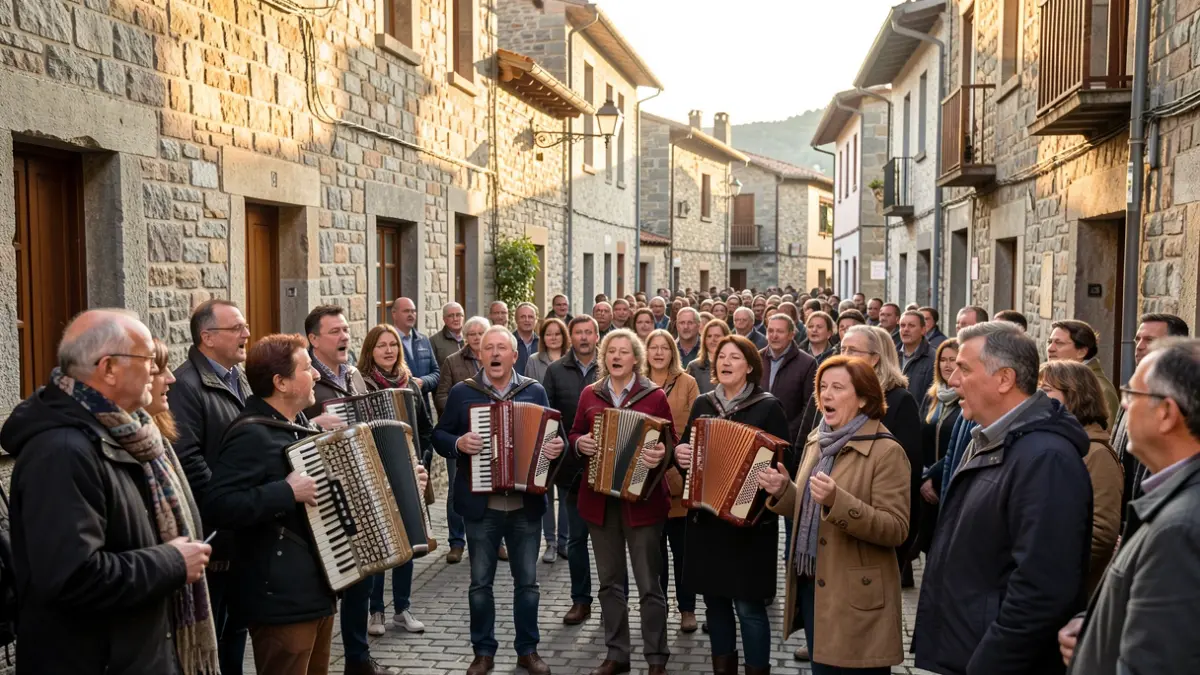
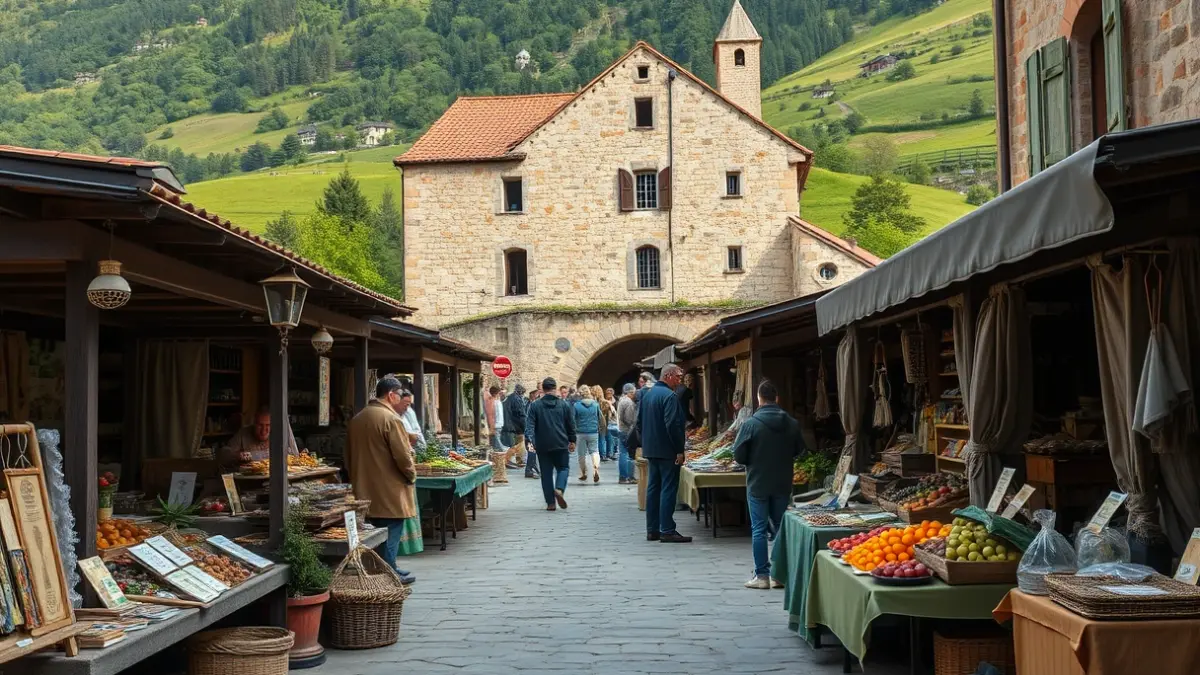
The Estíbaliz Fair of Grievances, which was revived by the Araba Medieval association in 2018, is preparing to celebrate its seventh edition in 2026. This event has successfully renewed the festival and pilgrimage of Estíbaliz, offering visitors stalls with artisan crafts, gastronomy, and culture from local producers and agents, operating from 9:00 AM to 4:00 PM. The fair is complemented by various activities that enrich the program of Estíbaliz Day.
Furthermore, this year marks the 50th anniversary of the first Fair of Grievances. In the mid-1970s, Félix G. Petite directed a large group of performers to theatricalize this tradition. His staging was based on a dramatized legend by the chronicler Manuel Díaz de Arcaya, which depicted the conflict between two young and noble warriors, Hortuño and Egidio, for the love of a lady.
The origin of this festivity dates back to the 12th century, a time when an important market with deep roots among the population was held. This event coincided with the Judgments of God or Grievances. However, according to a member of Araba Medieval, there is a debate between legend and history surrounding May 1st. Historians do not agree on the veracity of these events.
“"Traditionally, this date has been called 'Day of Grievances'."
A document that came to light in the 16th century indicated that, approximately since the year 1000, May 1st in Estíbaliz was a time to resolve problems that had arisen. A mass was held early in the morning, and those who did not make peace would engage in a duel. It was a first-blood duel: the first to draw blood emerged victorious. This was the way to settle all these matters at a single time and place.
Regarding the weapons used, it is unclear whether unusual weapons were employed or if they simply fought with fists. This suggests, according to sources, that the intention was not for the loser to die, but for the harm to be as minimal as possible.
During the 19th and 20th centuries, Estíbaliz became isolated from most of the population. During that period, only one person, the Pater, a farmer who used the building, remained there. It was the intellectuals of the early 20th century who managed to get the City Council and the Provincial Council involved in the restoration of Estíbaliz. From then on, the building underwent a significant transformation. Although the medieval skeleton of the temple has been respected, many of its current elements are the result of the restoration carried out in recent decades.