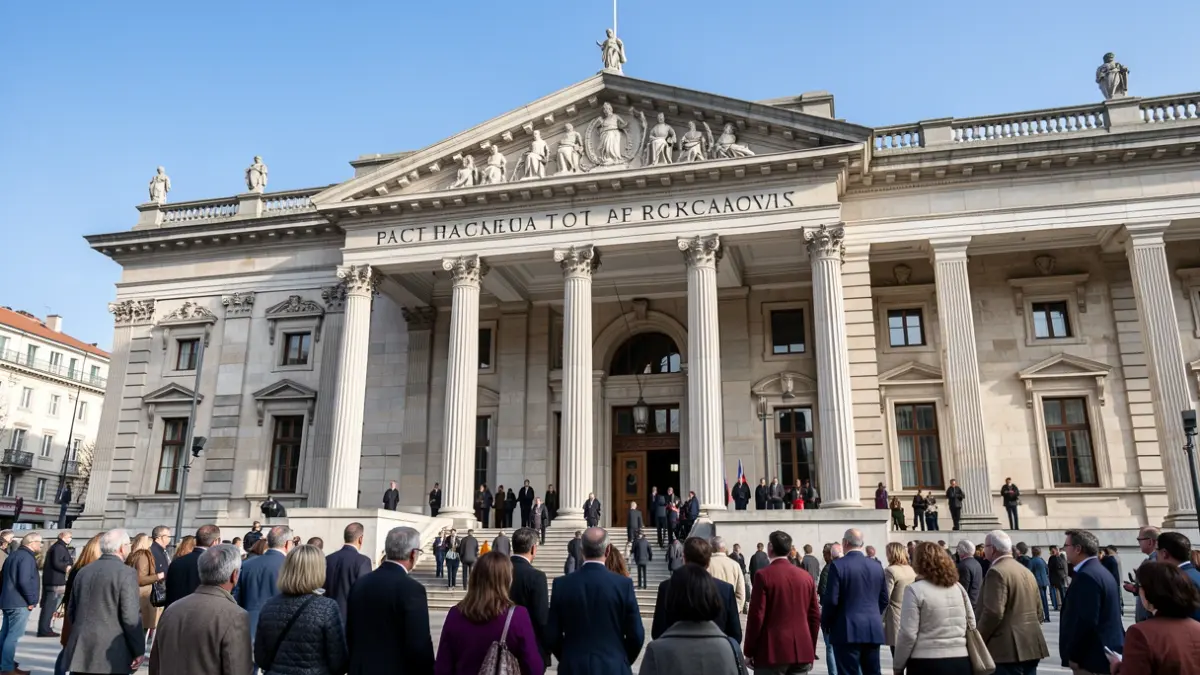
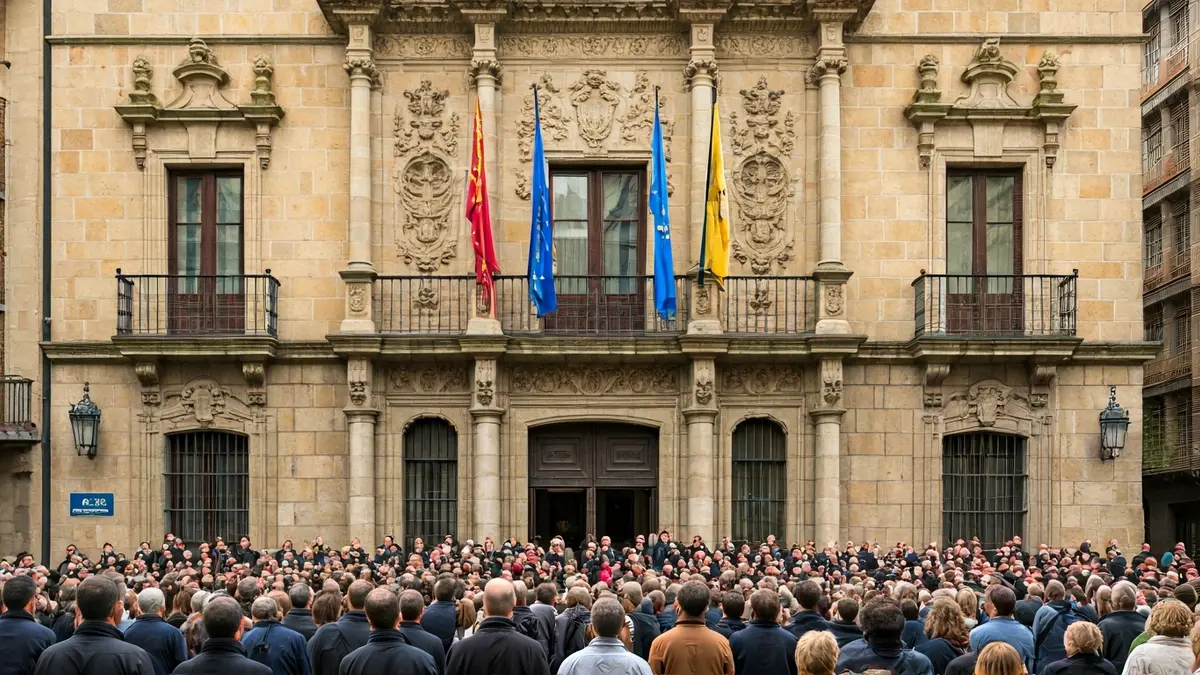
Dozens of people gathered in the center of Gasteiz for a meeting organized by the Ateneo Republicano de Araba ERAIKI alongside other collectives. The event combined music, poetry, historical memory, and political messages surrounding April 14.
Performances included the Banda Republicana, the Coro Republicano, and singer-songwriter José Anlerreñaga Urko. The choir performed, among other songs, Ay, Carmela, while the band also played Himno de Riego, one of the most recognizable symbols of republicanism.
The convening organizations presented the event as a space for memory, culture, and solidarity, but also as a public defense of republican values.
Throughout the afternoon, messages in favor of peace and against war were heard, along with references to the international situation. Speeches mentioned conflicts such as the Palestinian and Saharan, alongside other scenarios of violence and forced displacement. The manifesto read during the gathering defended the necessity of a republic and criticized the monarchy, demanding accountability from those in state responsibilities to citizens and rejecting the inviolability and opacity of the Crown.
Poetry played a significant role in the event's development, with several texts focusing on war, pain, and memory. One denounced the destruction left by armed conflicts, and another recovered verses by Rafael Alberti in defense of peace. One of the most symbolic moments was the reading of a poem honoring republican women executed during the Francoist dictatorship, highlighting the repression suffered by many women and the memory of those murdered or silenced.
Interventions also included explicit references to gender-based violence, condemning recent femicides and calling for a stronger collective commitment against this violence. Additionally, organizers used the event to call for participation in the republican march scheduled for June 13 in Madrid, encouraging attendees to sign up for buses prepared for that mobilization. The event concluded with a group photo on the steps of the Palacio de la Provincia and a pintxo-pote.