The Álava festivities are set to conclude on May 1st with the traditional Day of Our Lady of Estíbaliz, which will feature a comprehensive program of activities in the vicinity of the sanctuary. The day before, on Thursday, April 30th, the musical program will continue in the Plaza de la Provincia with an 80s-themed party starting at 9:00 PM.
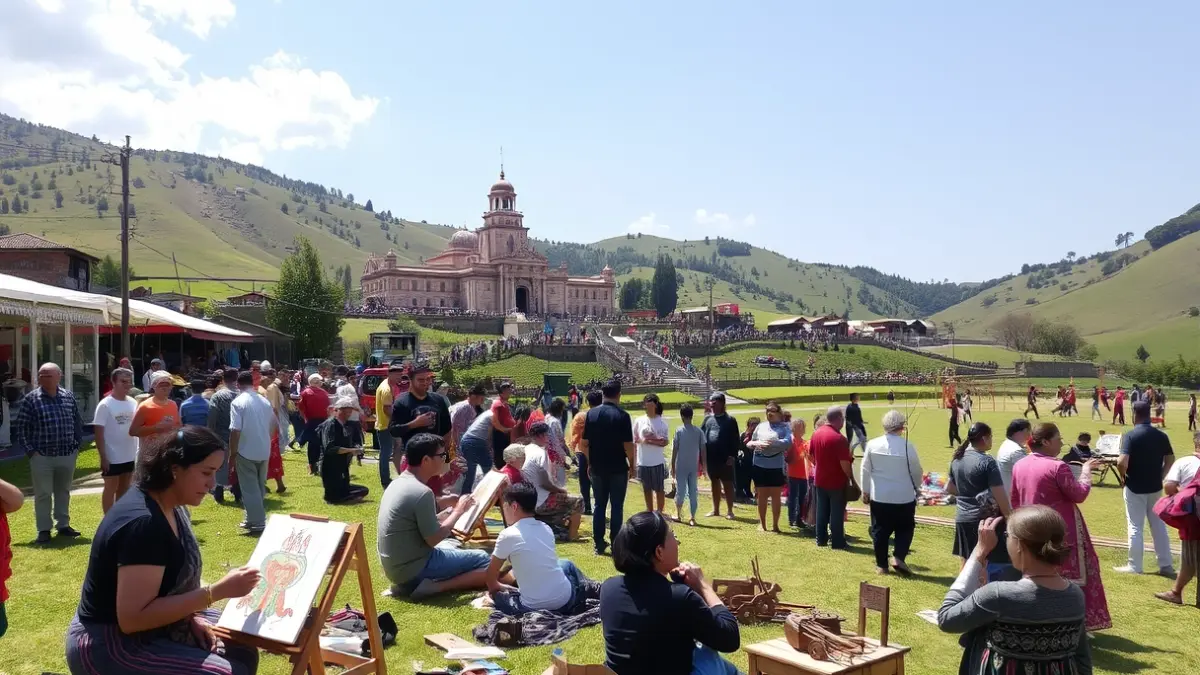
The program for the Day of Estíbaliz includes activities for all ages. In the morning, the XXXI Open-Air Rapid Painting Contest will begin at 9:00 AM, alongside face painting and wooden toy workshops for children. At 11:00 AM, the XXXII Culinary Contest based on Álava potatoes and a fencing exhibition will take place. Simultaneously, a concelebrated mass will be held at the sanctuary with the participation of the Lumina Taldea choral group.
In the afternoon, highlights include a Herri Kirolak exhibition and the XXXIII Championship of Aurresku and Loose Dance of Euskadi. Additionally, at 2:30 PM, there will be a free distribution of popular food, consisting of stewed meat with potatoes. Throughout the day, visitors can also enjoy the Feria de los Desagravios, featuring craft, gastronomy, and cultural stalls, complementing the Day of Estíbaliz program. This fair celebrates its seventh edition and marks 50 years since its first celebration, having been relaunched by Álava Medieval.
This festivity has its origins in the 12th century, when a deeply rooted market was held among the population, coinciding with the Judgments of God or Desagravios.