Vitoria-Gasteiz will once again become a meeting point for professionals, specialists, and public officials linked to urban commerce on November 18 and 19, with the celebration of the twentieth edition of Urban Commerce. The event, organized by the Vitoria-Gasteiz City Council and sponsored by the Department of Tourism, Commerce and Consumption of the Basque Government, reaches a particularly significant anniversary this year: twenty years of promoting reflection, knowledge, and the exchange of experiences regarding the challenges and opportunities of commerce in cities.
“Under the theme ‘The commerce to come. Streets that matter’, in this commemorative edition, we propose looking to the future without losing sight of the path traveled. Two decades in which commerce, cities, and consumers have undergone profound transformations, and in which Urban Commerce has consolidated itself as a reference space for anticipating trends, initiatives, and debating the role of local commerce in the life of our city,” highlighted the councilor for Economic Promotion, Employment, Commerce, and Tourism, María Nanclares.
For her part, the Minister of Tourism, Commerce, and Consumption of the Basque Government, Cristina González, emphasized that “at the XX Urban Commerce, we will focus on some of the sector's major current challenges: how to ensure local commerce remains the consumer's choice, what opportunities technology and artificial intelligence offer, how to attract and retain customers, and how cities can build more vibrant, diverse, and attractive commercial streets”.
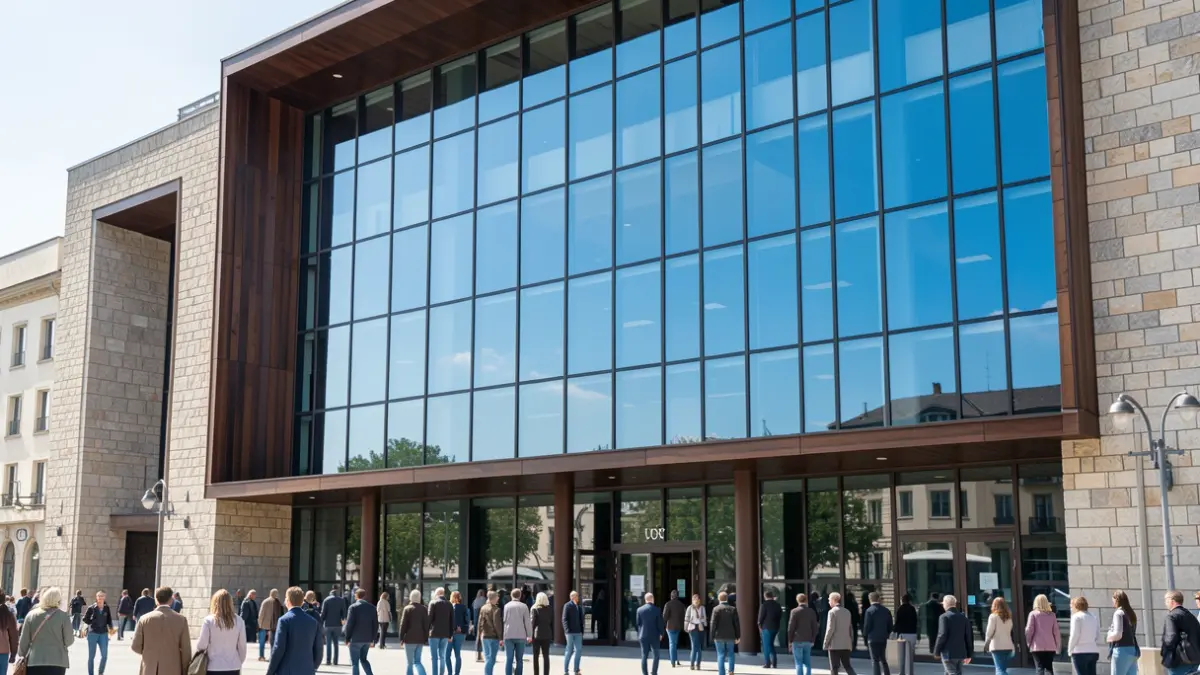
The program will unfold over two days at the Europa Congress Palace and will feature participation from renowned professionals, representatives from different cities, and managers of commercial establishments who will share their experiences and learnings.
“"20 years looking ahead. 20 years of Urban Commerce."
The opening of the event, on November 18, will have a special commemorative character titled ‘20 years looking ahead. 20 years of Urban Commerce’. In this opening, Agustín Rovira and Luis Lara will review the evolution of commerce and cities over the last two decades, contextualizing the challenges that will shape their future.
Following this, Juan Graña, founder of Neurologyca, will deliver the inaugural lecture, titled ‘From appreciation to choice: the uncomfortable truth about local commerce’. His intervention will address one of the fundamental issues for the sector: why, despite consumers expressing appreciation for proximity commerce, they do not always choose it in their purchasing decisions.
This reflection will continue in the session ‘Autopsy of a lost purchase?’, where Diana Carolina Henao, a consultant in User Experience (UX) and applied AI, will analyze where and why sales opportunities are lost and what factors influence the final purchase decision.
The program will also give a voice to commerce itself with the panel 'Four reasons to choose a local store,' featuring four establishments with different proposals and models who will share what allows them to connect with their customers, differentiate themselves, and maintain their relevance in an increasingly competitive context.
Technology and its practical application in businesses will have a prominent role on Wednesday afternoon. Iván Fanego, Fractional CMO of Appcritic.es and Fanego.io, will conduct the session ‘Countertop AI: useful technology for selling, managing, and retaining customers’, focusing on the possibilities artificial intelligence offers for solving everyday establishment needs, optimizing tasks, and improving customer relationships.
This intervention will be followed by ‘The digital adoption clinic: what works and what doesn't’, a space where various commercial experiences will allow sharing real successes, difficulties, and learnings about incorporating digital tools into the daily activities of businesses.
The second day, Thursday, November 19, will broaden the perspective towards the urban environment and the conditions that make attractive and competitive commerce possible.
Architect and urban planner Adriana Ciocoletto, a partner at Col·lectiu Punt 6, will open the morning with the presentation ‘Vibrant centralities for a citizenry that is no longer homogeneous’, addressing how to adapt commercial streets to an increasingly diverse population, considering different ages, needs, and ways of experiencing the city.
Next, the panel ‘Four cities, four dilemmas’ will bring together experiences from Santa Coloma de Gramenet, Pontevedra, Santa Cruz de Tenerife, and Pamplona. Their representatives will share specific problems and solutions for maintaining the commercial vitality of their respective urban environments.
Generational change and the human factor will also have their space in ‘Who will make future urban commerce possible?’, with the participation of Teresa de la Sota, founder and CEO of Castaño de Indias, and Violeta Palomero, owner of Floristería Munain. Both will reflect on talent, new skills, and the role of people in a commerce increasingly conditioned by technology.
The experience of other urban environments will also be featured in the conference ‘Innovative commerce and the city. The case of Barcelona’, by Pablo de la Rica, manager of Retail & Foodservice Knowledge at AECOC, who will present initiatives capable of inspiring new forms of commercial innovation.
The event will conclude with the intervention of Manuel Amat Payá, from La Tiendología, titled ‘Attitudinal intelligence, disruptive talent’, focusing on attention, prescription ability, and commercial talent as differentiating elements for connecting with a diverse clientele.