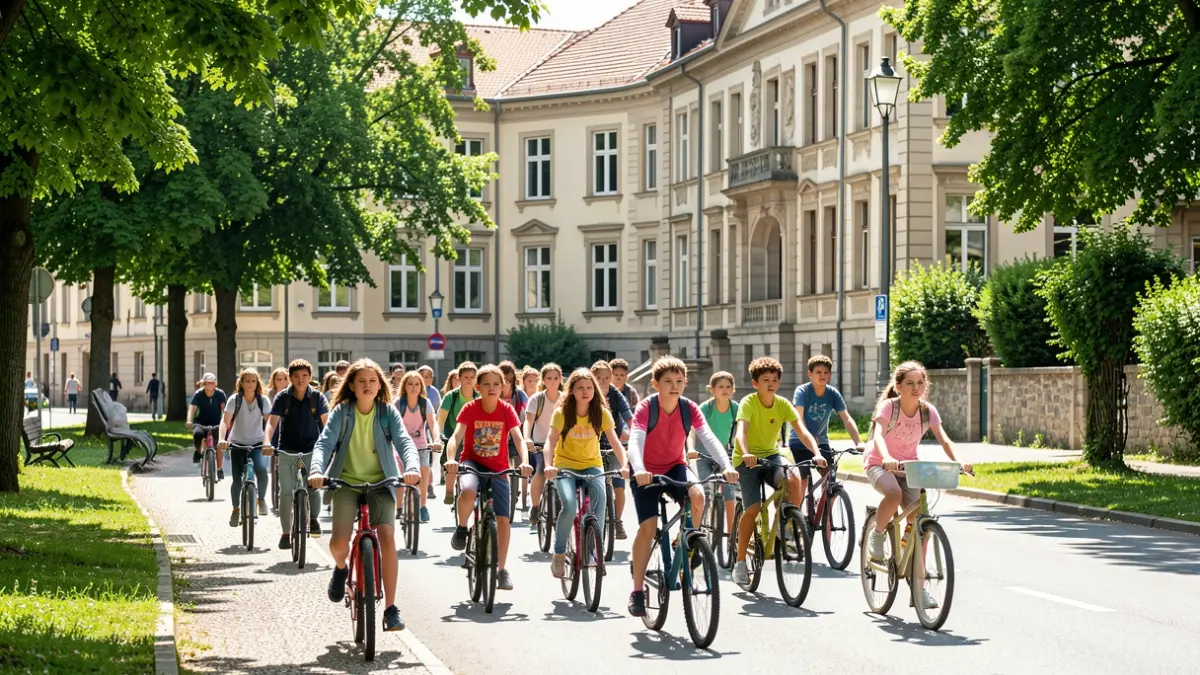
The Environmental Studies Center (CEA) in Vitoria-Gasteiz has introduced the new ‘Mugitzen Gara’ program, designed to foster sustainable mobility within the city's educational community. This initiative will see the active participation of 16 schools.
Commuting to educational centers is a daily aspect of life with significant educational and transformative potential. Every day, thousands of children and young people in the city undertake journeys that involve the use of public space, decisions about transportation methods, road risks, and community interactions.
Addressing this area from schools directly connects with the Sustainable Development Goals, specifically SDG 3 (‘Good Health and Well-being’), SDG 11 (‘Sustainable Cities’), and SDG 13 (‘Climate Action’).
The Vitoria-Gasteiz City Council prioritizes reducing motorized traffic, expanding pedestrian and cycling networks, calming traffic in school zones, and reclaiming public space for people. The Councilor for the Environment, Borja Rodríguez, emphasized that 'educational centers are key actors in achieving these goals, as your communities generate thousands of daily trips and have the capacity to influence habits, demands, and concrete proposals for improving public space'.
Through ‘Mugitzen Gara’, the CEA will promote active and autonomous mobility for the school community, encouraging educational centers' participation in public space governance and the development of the Vitoria-Gasteiz Sustainable Mobility Plan, from a perspective of transformative education for ecological transition.
The program aims to foster student autonomy in their commutes, with a particular focus on Primary Education. Students will develop competencies, knowledge, attitudes, and habits related to active mobility, road safety, and responsible use of public space. The goal is to reduce private vehicle use for school travel, encouraging walking, cycling, scootering, and public transport.
The ‘Mugitzen Gara’ program is structured over a two-school-year cycle. For this initial academic year, 2026-2027, the objectives include understanding the reality of school mobility and public space around the centers, generating robust data, identifying problems and needs, and building a shared vision.
Borja Rodríguez expressed gratitude for the participation in ‘Mugitzen Gara’ from the involved educational institutions: Carmelitas Sagrado Corazón, Calasanz Escolapios, Urkide, Zabalgana, San Prudencio, Niño Jesús, Sagrado Corazón-Corazonistas, Paula Montal, Presentación de María, Inmaculada Concepción schools, and Koldo Mitxelena, Francisco de Vitoria, Miguel de Unamuno, and Egibide institutes.