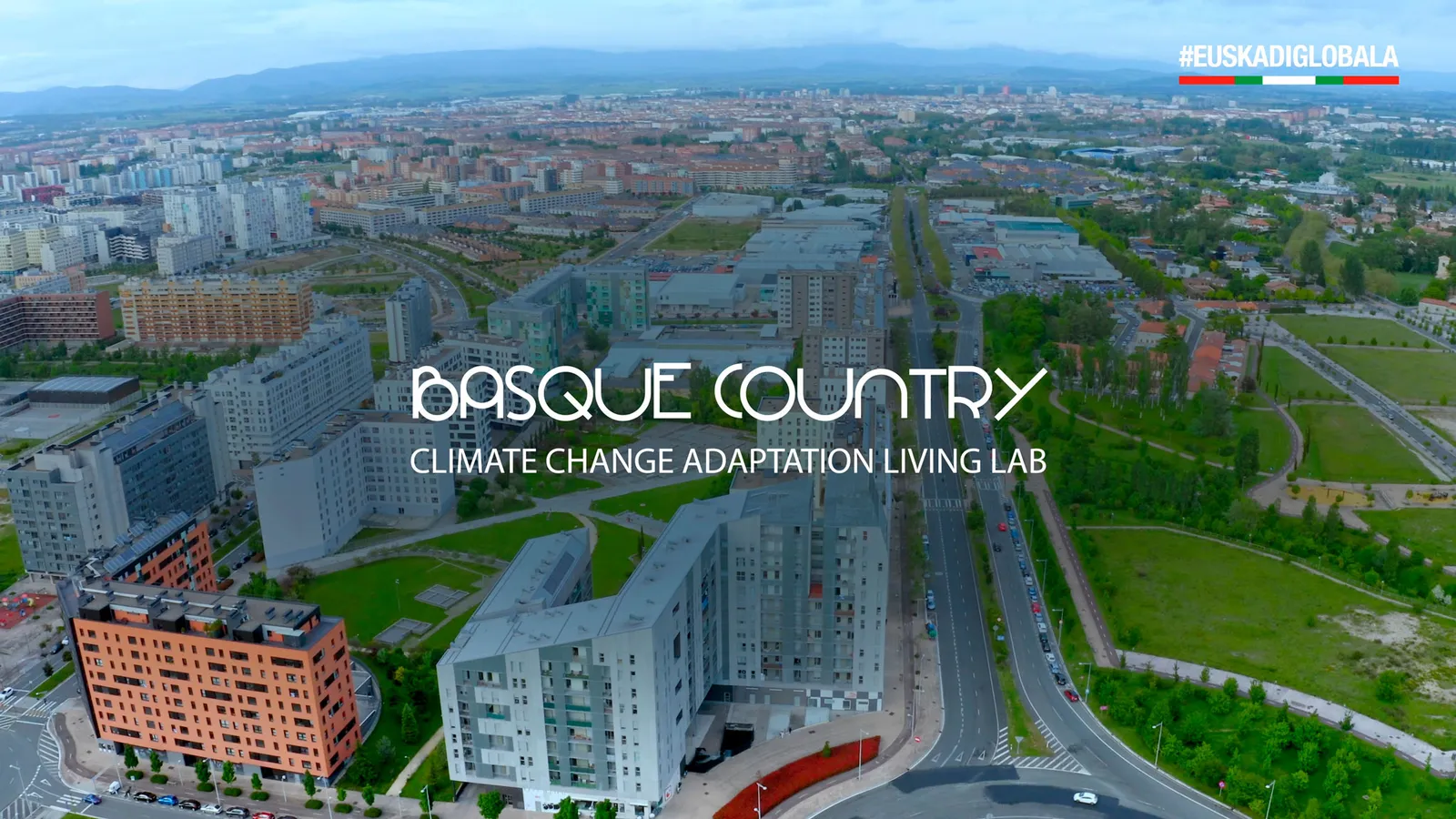
The Basque Country has launched six pilot projects for climate change adaptation in the municipalities of Zarautz, Bakio, Txingudi, Nervión River Estuary, Astegieta, and Legazpi, with an estimated investment between 50.2 and 51.7 million euros. The 'Euskadi Climate Change Adaptation Living Lab' initiative, promoted by the Basque Government, aims to reduce the vulnerability of the territory and its industry to climate change, creating new opportunities for the engineering, technology, and environmental services sectors.
These demonstrative projects will address risks such as floods, coastal storms, sea-level rise, and temperature increases, combining solutions from engineering, technology, and environmental restoration. Some actions are already underway, others are in the initial phase, and some are yet to begin.
The technological and scientific capabilities of Basque companies, including hydraulic and coastal engineering, environmental consulting, sensors, digital modeling, and water management, are crucial for protecting infrastructure, cities, and production spaces. This Living Lab will enable the evaluation of these solutions and their application elsewhere.
In Zarautz, protection against waves, floods, and erosion will be strengthened with an investment of 4.5 million euros. In Bakio, riverbank wetlands and forests of the Estepona river are being restored with a budget of 3 million euros. In Txingudi, modeling systems and early warning tools are being developed to manage floods and predict sea-level rise, with an investment between 9.8 and 11.3 million euros.
In the Nervión River Estuary, with an investment of 26 million euros, a high-resolution digital twin will be created to simulate flood scenarios and evaluate adaptation measures. In Astegieta, the old meander of the Zadorra river will be restored for 4 million euros, and in Legazpi, the Latxartegi square and park will be transformed into a climate refuge for 2.9 million euros.
The Euskadi Climate Change Adaptation Living Lab is a collaborative network between public administrations, municipalities, scientific-technological agents, and companies, and it foresees the integration of new projects in the future to address new adaptation challenges and promote the technological and business capabilities of the Basque Country.