Despite a long history in martial arts, Unai Telmo Zabala (Zumaia, 1981) only recently began practicing jiu-jitsu, about five or six years ago. While his profession is a sound and lighting technician, he discovered this discipline in his free time and says it has "completely captivated" him.
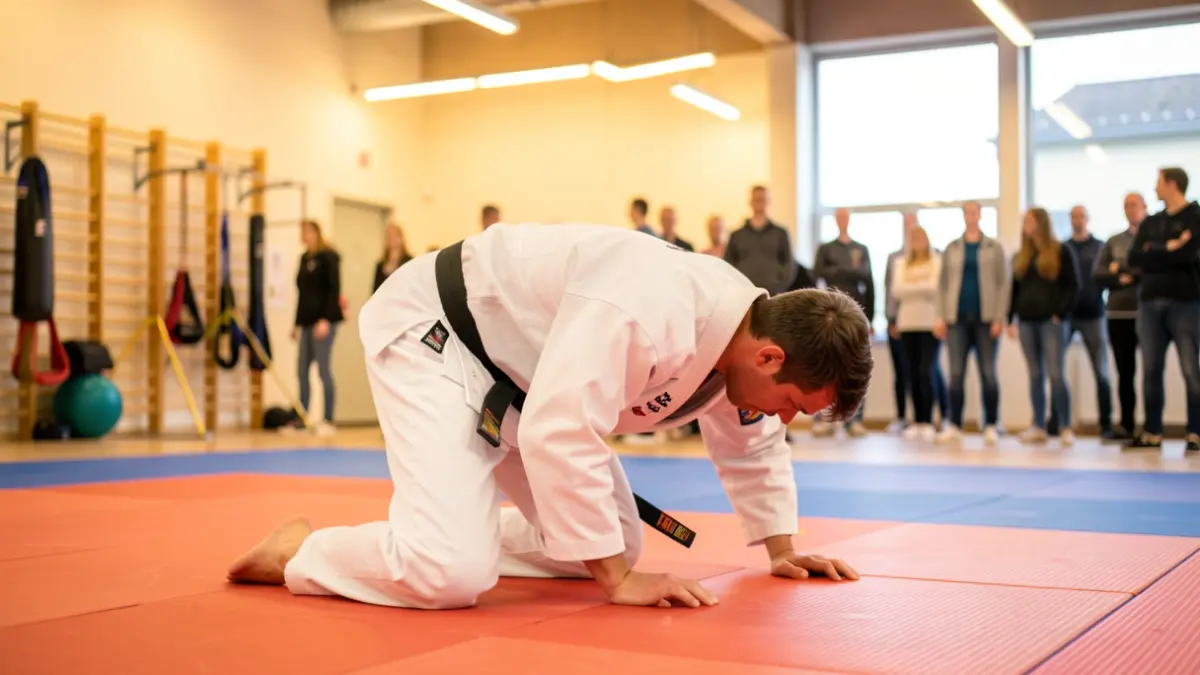
Jiu-jitsu is a martial art practiced on a mat, and while it shares similarities with judo or karate, it has its own distinct characteristics. The fight starts standing but quickly moves to the ground, where the goal is to control the opponent through joint locks or chokes. According to Zabala, this discipline teaches a "great lesson in humility."
Despite mentioning joint locks and chokes, Zabala emphasizes that jiu-jitsu is a "soft art" and not violent. He admits that injuries can occur, but they are usually the result of force overpowering technique, something that should be avoided in training.
He has also participated in competitions, although he has no intention of competing at higher levels. His first participation was close to his 40th birthday, in the master category, and he believes he still has a long way to go, seeing that competitors up to 70 years old also compete.
Currently, Zabala is a jiu-jitsu instructor. Last September, he opened his Gracie Barra academy in Zumaia, as part of a chain originating in Brazil. He has about 60 students there, both children and adults, and he is "delighted".
Zabala highlights the "good atmosphere" created during the sessions, where people from all walks of life gather, and everyone is on equal footing on the mat. He invites interested citizens to try it, confessing that this discipline has "given him peace" and helped him "guide his life." He also emphasizes its impact on children in building self-confidence.