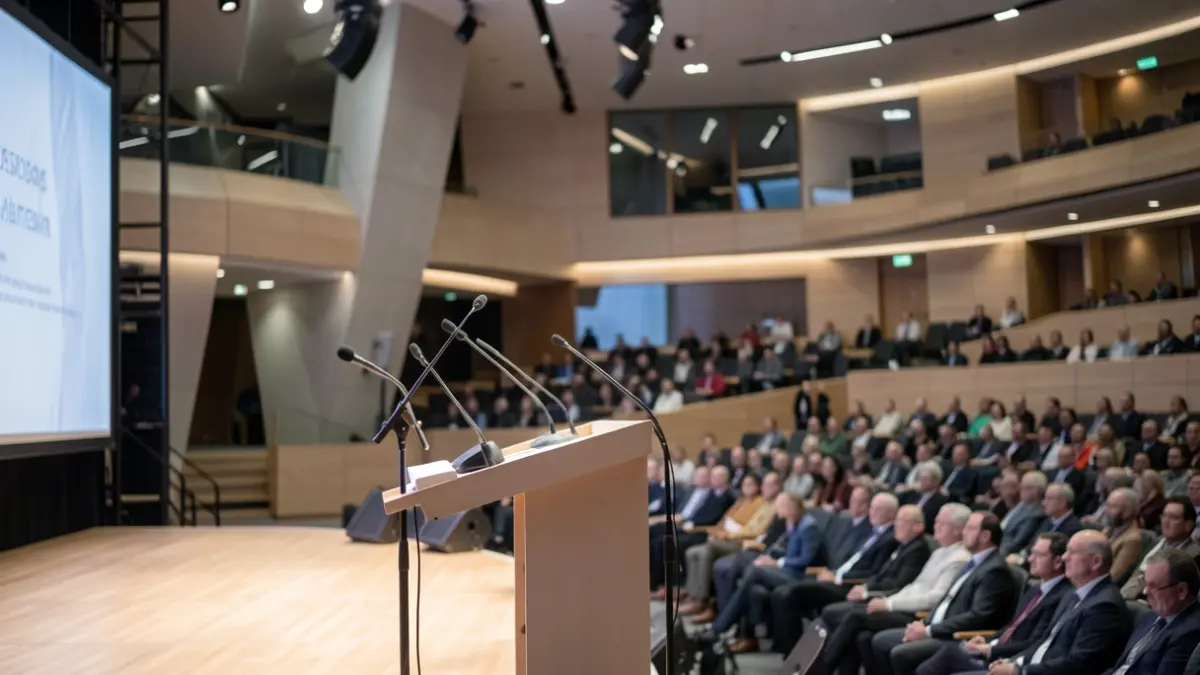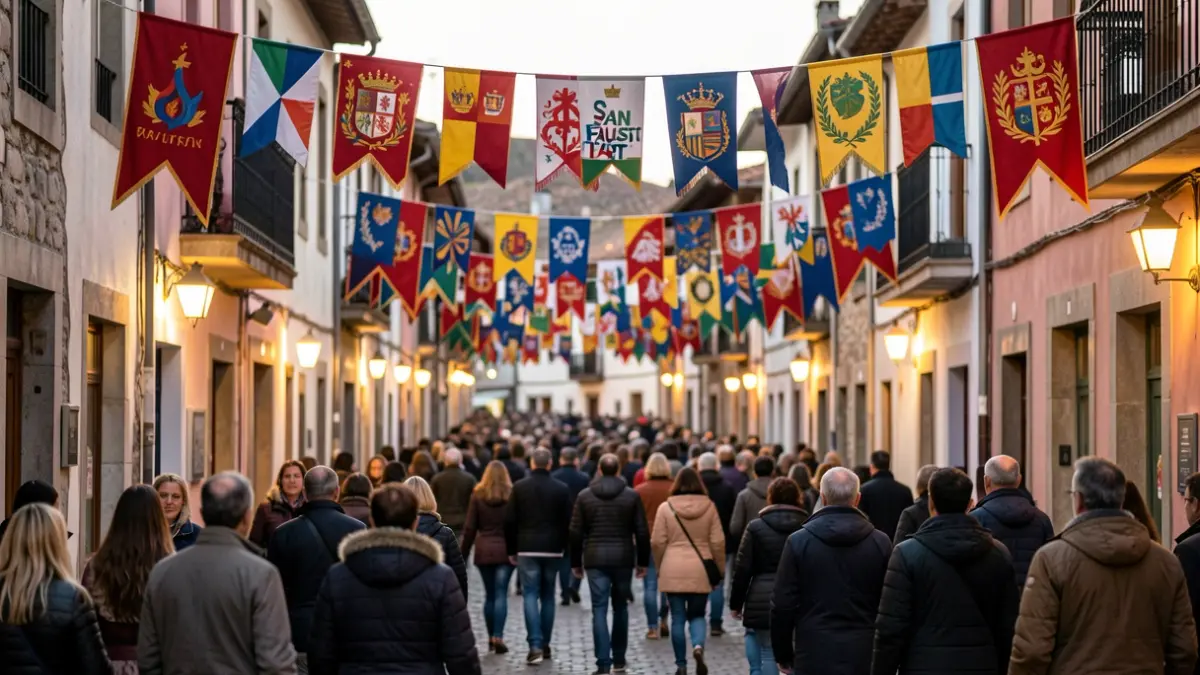
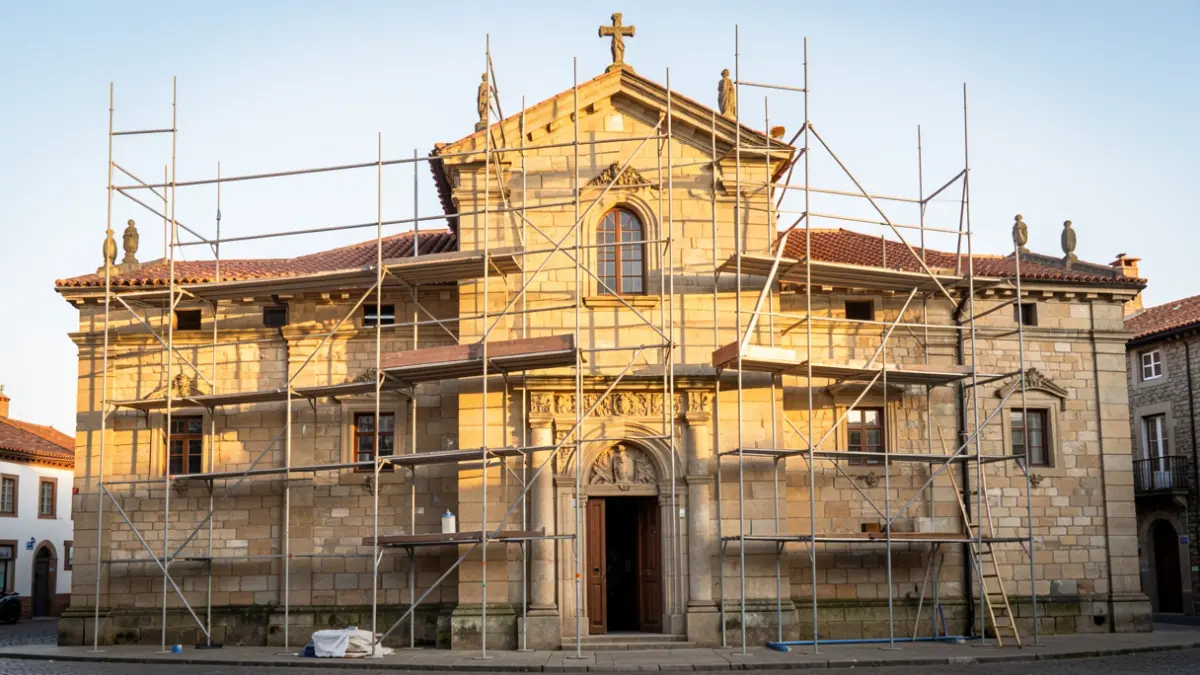
The Zarautz City Council has announced that the renovation works on the ground floor of the central building of the Santa Clara Convent are nearing completion. This new sociocultural facility will expand the current offerings, providing opportunities to host activities that were previously limited by inadequate installations, such as small congresses, larger exhibitions, or courses.
This first phase will enable the commissioning of the entire ground floor of the central building, over 3,000 m2, offering spacious halls and multipurpose areas for the new programming. The project has also included the creation of accessible restrooms with access from the church, significantly improving conditions for all events held in this space.
This rehabilitation follows years of dedicated work and management. As Mayor Xabier Txurruka stated, "it has been nearly 9 years since we initiated the first conversations with the nuns of Santa Clara regarding the possibility of acquiring the convent and its adjacent land. The agreement materialized with the departure of the four Clarisas to the convent in Oñati. In July 2021, the City Council Plenary unanimously approved the purchase, and the municipal government commissioned the development of a basic rehabilitation project with the aim of establishing a modern sociocultural facility for all Zarautz residents."
In the spring of 2023, the participatory process Santa Klara Lab was launched, aiming to define the future uses of this monumental complex in collaboration with the citizens. Based on the collected criteria, the foundational program for the rehabilitation project was developed.
Investment close to 4.5 million euros. In 2024, during the project development phase, the demands of scientific rehabilitation required by heritage protection tripled the initial budget forecasts, jeopardizing the project's viability. At that point, the City Council commissioned a partial intervention project, representing an investment of approximately 4.5 million euros, for which the initial subsidy of 3 million from European funds was maintained.
Along with the building complex, the City Council also acquired the adjacent convent gardens from the Clarisas. The purchase of the plot, combined with the allocation of free spaces in the Salberdin area, has facilitated the urban transformation now known as Amalur parkea, which has become the green lung of Zarautz, spanning over 25,000 square meters in the municipality's geographic center. Furthermore, following the construction of the new Euskotren station, Amalur parkea now features a new urban axis with the underpass connecting this park to Gaztainpe, significantly improving north-south mobility in the town.
The intervention at the Santa Clara Convent has been a long, complex, and truly enriching process. The project for the entire convent began some time ago, and this first phase has focused on the energy rehabilitation of the building and the conditioning of the ground floor.
"It has been a rigorous experience, marked by the need for constant adaptation to external constraints. Among these are the temporal and economic limits set by the European Union's Next Generation financial aid and the heritage conservation requirements established by the Gipuzkoa Provincial Council. All of this has demanded a significant effort in coordination, adaptation, and decision-making," notes Iratxe García de Vicuña, head of the Technical Office of the Zarautz City Council.
Very positive and educational experience. "Despite the difficulties, we consider the work on the first phase of the Santa Clara Convent to be a very positive and educational experience. It has allowed us to gain a deeper understanding of the complexity involved in intervening in a historic building and the importance of finding a balance between current needs, energy efficiency, and respect for the existing heritage," indicates the mayor.
Xabier Uranga, the architect leading the project team, also agrees on the complexity of this rehabilitation process: "We were facing a building of great historical value, with many layers and modifications made over centuries. Therefore, from the outset, we understood that this intervention was not simply a technical work, but a process that required listening to the building and understanding its history."
Respecting the architectural and historical value of the convent. "The objective - according to Uranga - has been to respect the architectural and historical value of the convent while simultaneously adapting the space to contemporary needs. Seeking this balance has been one of the main challenges of this project. I am particularly pleased to think that a building that has remained closed and with limited use will once again become part of the cultural and social life of Zarautz."
Beyond becoming a landmark within the town's network of sociocultural facilities, the complex of buildings comprising the church and convent of Santa Clara is, in itself, one of the main elements of our town's historical and artistic heritage, alongside buildings like Torre Luzea, the Narros Palace, or the monumental archaeological complex of the parish church of Santa María la Real. "The work done to combine the heritage value of the building with the needs of the new use that the Zarautz City Council intends to establish in the building is noteworthy," states the architect from the Historical Artistic Heritage Service of the Gipuzkoa Provincial Council. "It has been a long process, based on a deep study of the building, incorporating historical studies, stone analysis... The response provided has successfully balanced the new demands with the building's heritage values, among which I would highlight austerity as a key value." Josu Maroto emphasizes "the collaborative effort between the City Council, the Provincial Council, and the project drafting team, as well as the dedication of the companies that have carried out the work. We hope this first phase will have its continuation."