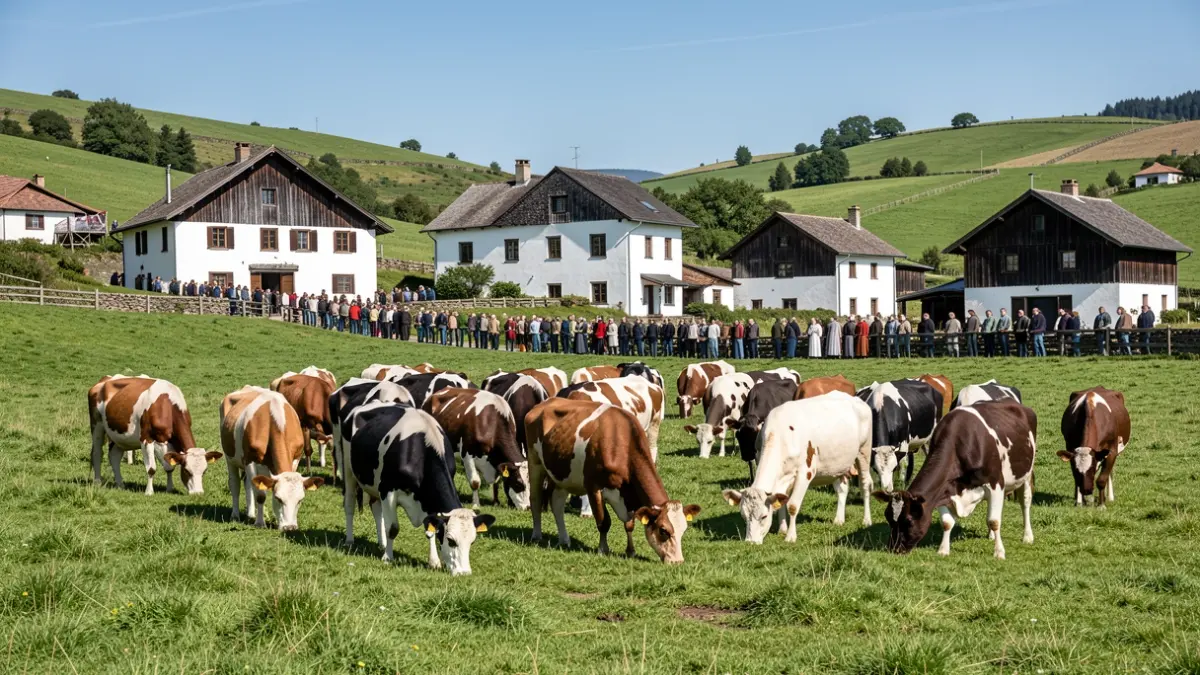
Asier Albiter's passion is not new; born in the Ibañarrieta neighborhood and currently residing in Zumaia, he began his involvement with young bulls at the age of 10. After spending his youth as a bull- todaer and assistant, three years ago he decided to launch his own ranch, Albara. Today, they have around 60 head, including 30 mothers and several calves.
According to Albiter, brave cattle are very calm and grateful animals when they are in their habitat and are cared for daily. Although the ranch's main objective is to take them to local festivals, they offer guided tours to introduce rural life and the animals, and occasionally conduct direct meat sales.
In the late 20th and early 21st centuries, bullfighting events experienced a significant decline due to bureaucracy and safety regulations. However, a resurgence has been observed post-pandemic; data indicates that popular bullfighting festivals will increase by 13.2% between 2020 and 2026. Furthermore, new towns such as Zegama, Ibarra, Urnieta, and Antzuola have joined the circuit, with the spectacle being repeated year after year, showing particular enthusiasm among young people.
Regarding controversy, Albiter believes that while the majority's decisions must be respected, the rights of minorities should also be guaranteed during festivals. He notes that half of the spectators are women and that people from diverse backgrounds gather, indicating the spectacle's appeal transcending different cultures.
The rancher reflects on our relationship with nature, criticizing the current trend of "petting," which he argues strips animals of their natural and wild character. He states that Basque society has become completely urbanized and advocates for the sensation of "dancing with nature" he felt in his bull- todaing days, within a framework of respectful coexistence.
In Gipuzkoa, most land is privately owned, and each owner decides its use. Albiter has bet on brave cattle, making it clear: "If there were no 'sokamuturrak,' we wouldn't have brave cattle. All these animals would go to the slaughterhouse."
Bovine livestock are currently an endangered animal, and if 'sokamuturrak' were to disappear, the breed would be even more at risk. Therefore, the rancher emphasizes that these animals need a real place in our lives and market, stating, "They primarily live thanks to 'sokamuturrak'."
At the Albara ranch, each brave bovine participates in about five events per year, spending 10-15 minutes in the street. This involves approximately 25 hours of work, and in return, they live freely in meadows and mountains for the remaining 364 days of the year, developing their natural behavior with their kin.
The life expectancy of these animals is notable: thanks to 'sokamuturrak,' these cows live up to about 15 years, aging alongside the rancher. Albiter acknowledges that if sold as pets or without work, they might live around 20 years, but contextualizes the reality of livestock farming: "Cows, pigs, or chickens destined for milk or meat live much less. Brave cattle reach old age; other animals do not."
Asier is ready to face what's next with enthusiasm and strength. His most intensive work will begin in the coming weeks, with his bulls appearing at festivals in towns such as Mutiloa (event revived on June 27th), Antzuola (July 19th), Urduña (July 25th), and in August in Itziar, Zegama, and Lapuebla de Labarca, among others.