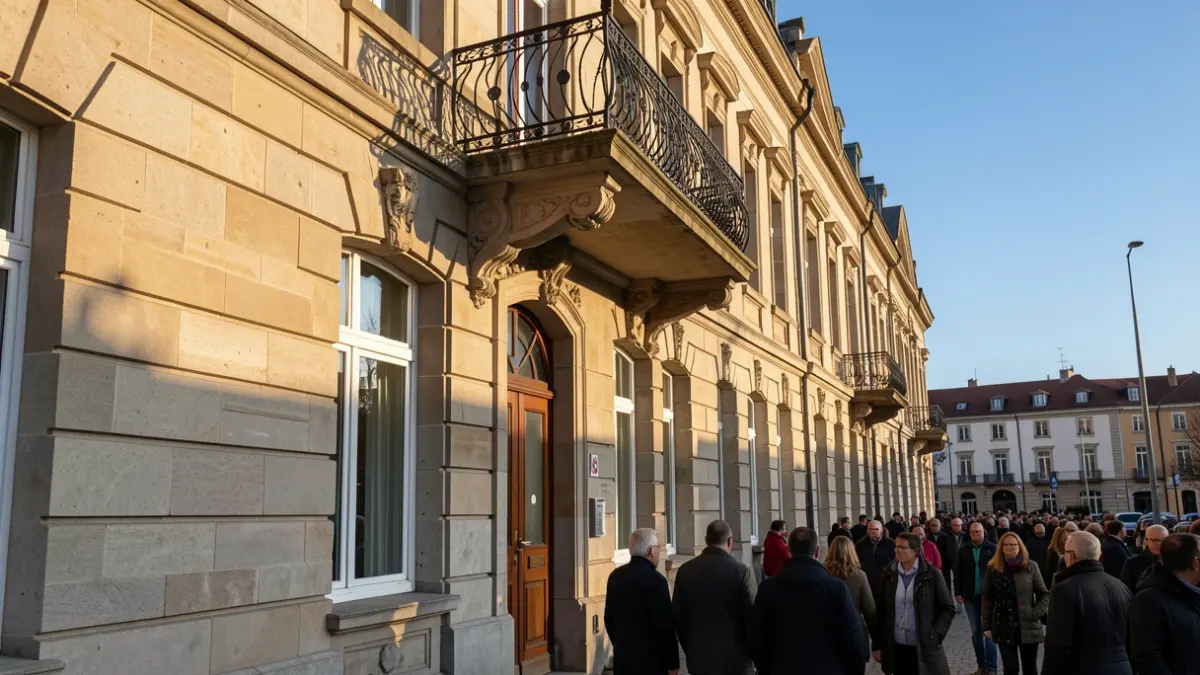
The Administrative Chamber of the High Court of Justice of the Basque Country has invalidated a section of the Lekeitio City Council's parking ordinance. This regulation prevented summer visitors from parking in the town center during the summer season, while allowing residents from nearby towns such as Aulestia, Gizaburuaga, Ea, Ispaster, Mendexa, and Amoroto to do so. Judges acknowledge the council's right to regulate parking, especially in a municipality whose population nearly triples in summer, but rule that the ordinance does not comply with the «principle of equality» due to this differential treatment.
The judges understand that municipal authorities have the right to regulate parking in a municipality whose number of residents almost triples between June and September and where there are not many parking spaces. But, according to the ruling, they consider that the ordinance does not conform to the principle of equality due to the «difference in treatment» it grants to residents of towns close to Lekeitio.
The ruling stems from an appeal filed by two residents of Bilbao who own a second home in Lekeitio and feel discriminated against by the regulation. The Lekeitio City Council (EH Bildu) had recently reaffirmed its intention to ban non-resident vehicles from parking in the center. It had been announced that even summer visitors who own second homes would have to leave their cars in paid park-and-ride facilities on the outskirts or in unregulated areas outside the municipality.
This marks the second judicial decision to annul this controversial regulation. A year ago, a first ruling overturned the municipal decree, but that was due to formal defects in its processing. This time, the judges have addressed the merits of the case, siding with the summer visitors, who insist on the «discriminatory» nature of the total closure of the urban center. The council, for its part, rejects accusations of discrimination and argues that its objective is to guarantee access to basic services for residents and inhabitants of small towns in the area.
The Lekeitio City Council has stated that it has 1,940 public parking spaces, but approximately 3,300 passenger cars (plus other types of vehicles) are registered in the mechanical traction vehicle tax census. Furthermore, the Governing Team argues that «only 844» of the 2,051 private parking spaces in the municipality are owned by registered residents. Finally, it indicates that only 39.8% of the municipality's homes are used as «habitual residence», implying an «enormous number of second homes».
The ruling can be appealed before the Supreme Court. It is unclear what will happen this summer regarding visitors' ability to park in the center. If the council appeals – and does not draft a new ordinance – the challenged rule could remain in force this summer. In that case, the plaintiffs plan to request provisional execution of the judgment.