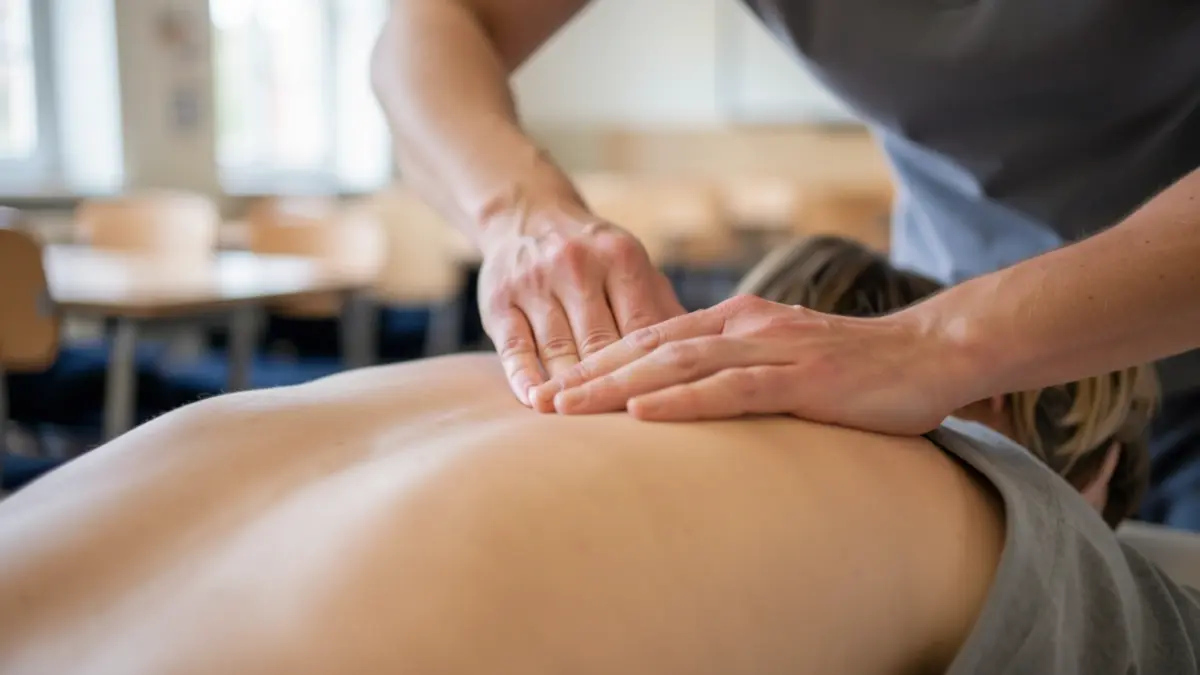
Caregiving tasks are fundamental for societal well-being, but they can negatively impact the health and quality of life of those providing care, as highlighted by Ana Rodriguez Larrad, a physiotherapist, professor, and researcher at the UPV/EHU. Caregivers, particularly those working within families or homes, face physical and emotional overload, with back pain, anxiety, and depressive symptoms being common.
As the population ages, the need for care is projected to increase in the coming decades. Therefore, caring for caregivers is one of society's major challenges, emphasized Larrad during the talk titled The Well-being of Caregivers, The Well-being of Society.
The talk presented strategies explored by research teams to enhance caregivers' health and quality of life. On one hand, the benefits of physical exercise programs on caregivers' strength, quality of life, and emotional well-being were discussed. On the other hand, research investigating the use of exoskeletons to alleviate physical strain in caregiving tasks was presented, noting that while these technologies can be helpful for some individuals, the results vary among users.
Ultimately, caring for caregivers is essential to also ensure the well-being of the individuals they care for. This talk was organized as part of the Bidebarrieta Zientifikoa lecture series, an initiative by the Bidebarrieta Library and the Scientific Culture Chair of the UPV/EHU.