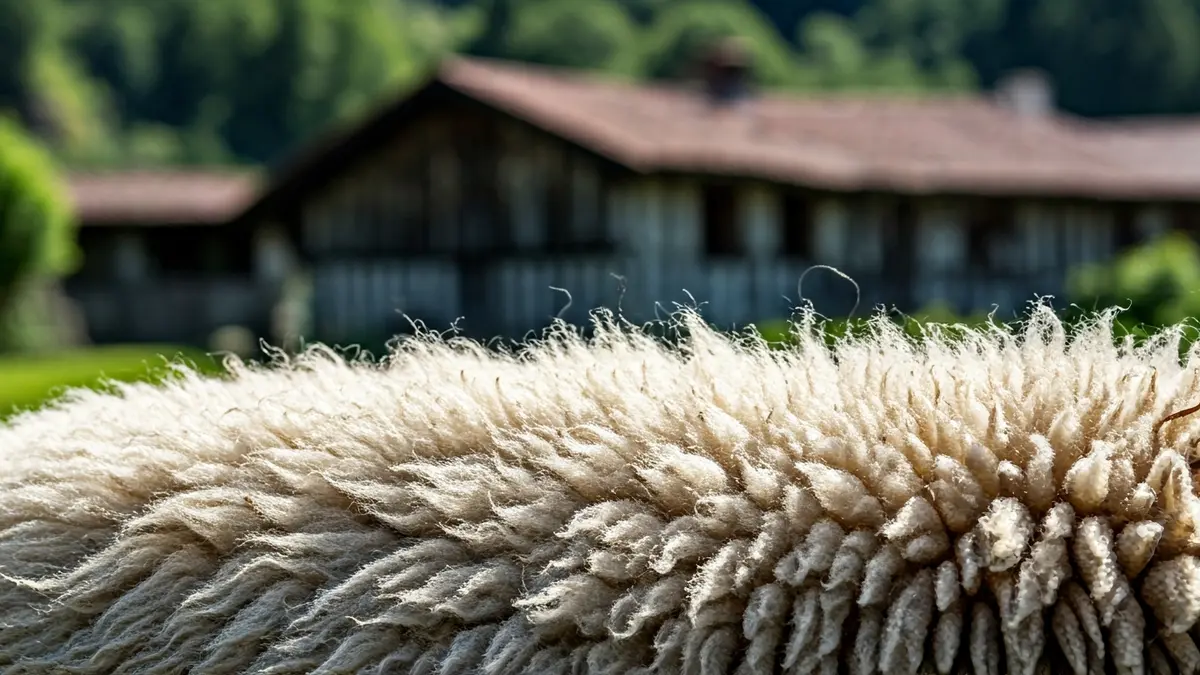
After a remarkable 2025, during which they won several awards, including one of the Hemendik Sariak from Enkarterri granted by DEIA, Mutur Beltz remains unstoppable in 2026, disseminating the virtues of the native Carranzana sheep's wool. In addition to new initiatives like Lur Mantoa, which nourishes crops and regenerates soil, the Tenth Edition of the Good Living Residency will soon take place: a cohabitation among artists from which inspiration arises to create within the pastoral world they aim to preserve from the Karrantza valley.
However, before that, they continue their presence in Bilbao. Laurita Siles, who launched Mutur Beltz with Joseba Edesa in 2015, is one of the resident artists participating this Tuesday and Wednesday in the open studios of the BilbaoArte Foundation. This will allow attendees to witness her creative process live, alongside those of M.P. Benito, Manu Blázquez, Fátima Conesa, Blanca Castro Ponce, Juana García Pozuelo, Auritz Iñurrieta, Fermín Moreno, Antoine Nessi, Gareth Phillips, Amaya Suberviola, and Fernando Villena. The public opening hours are from 5:00 PM to 8:00 PM.
This event follows two workshops given by Mutur Beltz last month at the Guggenheim Museum, as part of the exhibition Arts of the Earth, for which they collaborated with artist Asunción Molinos Gordo in creating a piece. These two creative sessions shared how Mutur Beltz was conceived and how it is revolutionizing wool treatment, earning accolades such as the National Crafts Award in 2024.
Working with wool does not only mean manipulating a fiber, but entering into contact with a chain of gestures that begin with animal care and go through shearing, washing, carding, spinning, and design.
The association explained that “each step contains accumulated knowledge, local economy, and landscape” from the perspective of the endangered native black-faced Carranzana sheep they work with, fostering biodiversity and seeking to ensure rural areas envision “a future.” To achieve this, “primary production and cultural production” merge “in the same process, from the stable to the exhibition space, from research to mediation, activating wool as a living material capable of generating social, cultural, and economic value in the territory.”
Against a model where “much local wool becomes waste,” Mutur Beltz proposes rethinking its potential from proximity, activating a network of farmers, ranchers, designers, artisans, and cultural mediators, and asking “what economy we want to sustain and what landscape we are willing to care for.” Each year, they collect almost two tons from about twenty shepherds, paying them “the highest price in the State.” This vision of Joseba and Laurita “is changing the paradigm of wool treatment; when we arrived at the washhouse, they didn't want it, and now small initiatives are emerging.”