
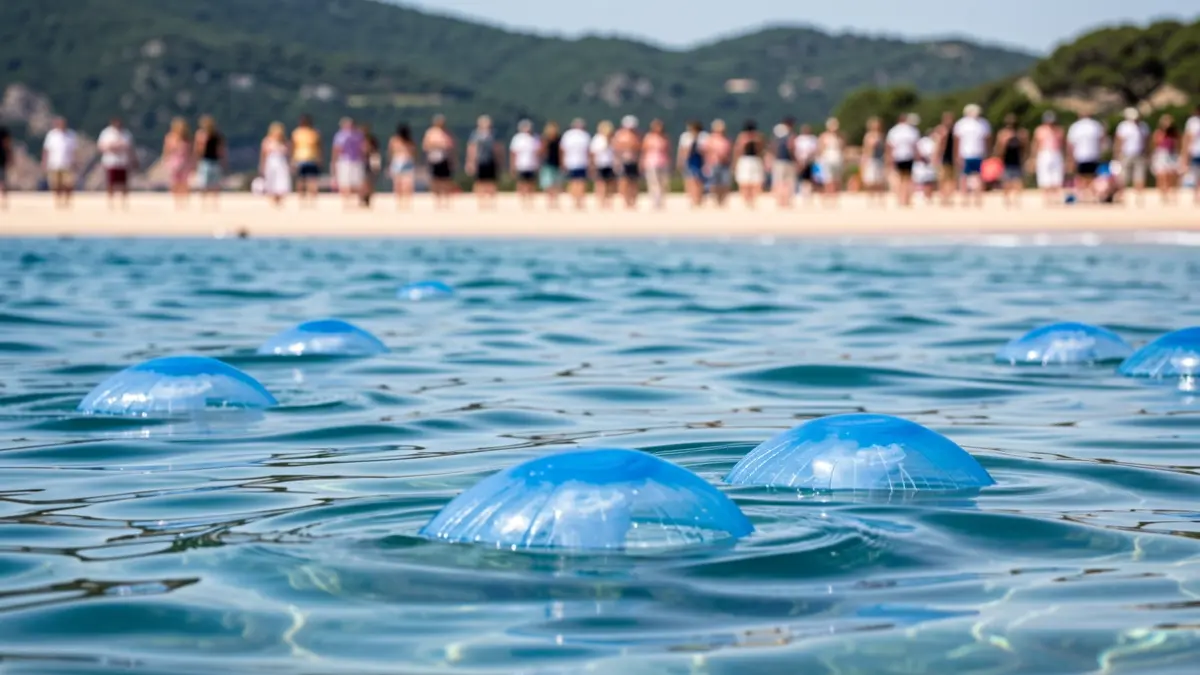
A beachgoer from the 1980s would be astonished by today's coastline. Beyond urban development, new regular "inhabitants" would surprise them: Physalia physalis (Portuguese man o' war), toxic algae, and other invasive species.
The 2025 Report on the State of the Climate in the Basque Country indicates that the sea surface temperature in the Bay of Biscay has risen by approximately 0.25 °C per decade since the 1980s. In 2023, anomalies exceeded 1 °C above the 1991-2020 average, with subsequent data showing even higher figures.
Indeed, the Bilbao coastal buoy recorded a historic maximum temperature of 25.4 degrees Celsius in July 2026. This trend confirms the "Mediterraneanization" of the Cantabrian Sea, according to experts.
In addition to rising water temperatures, the Asian alga Rugulopteryx okamurae, known for its foul odor, is spreading along the coast. Last year, thousands of tons were collected from Tregandín beach in Noja, with similar incidents occurring on the Gipuzkoa coast.
The Portuguese man o' war, Physalia physalis, has also become common. It is not a jellyfish but a floating colony whose tentacles contain nematocysts with a toxin cocktail capable of causing severe burns and neurological problems. Intensified winds, shifting the Azores anticyclone northward, facilitate their arrival.
Furthermore, microalgae of the genus Ostreopsis have proliferated during the summer. When waves break, their toxins become integrated into marine aerosols, causing respiratory problems, coughs, and eye and skin irritation, even for those walking along the promenade without entering the water.
Scientists are coordinating the Ostreobila project to study these microorganisms and develop early warning systems. The current state of the Cantabrian coast differs greatly from that enjoyed by past generations, and current scientific efforts are hoped to prevent further ecosystem degradation.