
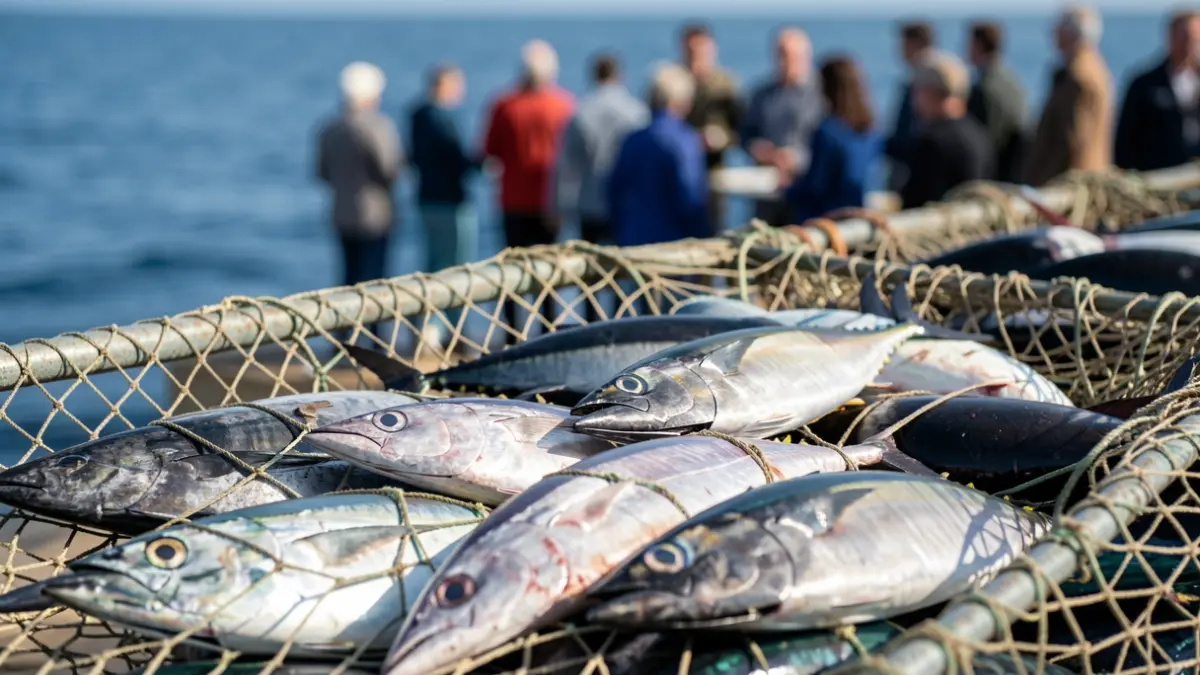
Scientific partners and industry representatives met in Brussels to review the project's achievements. ITUNNES has bolstered the biological knowledge supporting the assessment of tropical tuna populations (yellowfin, listado, and bigeye) and fisheries management.
The project established a collaborative network using standardized protocols to generate new information on key biological parameters such as age, growth, reproduction, trophic ecology, and population structure. It has also enhanced scientific capacity and cooperation between researchers and the fishing sector.
“"ITUNNES demonstrates the value of bringing together science, industry, and international partners around common goals and standardized approaches. The knowledge generated through the project will contribute to strengthening tropical tuna stock assessments and supporting science-based fisheries management."
ITUNNES has developed the BioTuna Shiny application to facilitate access and visualization of the generated biological information. It has also produced coordinated protocols and strategies, scientific results, training activities, and a policy report with recommendations.
The conclusion of ITUNNES marks not an end to collaboration, but an opportunity to leverage the network, knowledge, and tools developed. Sustaining this cooperation among scientists, industry, and international partners will be crucial to ensure future fisheries management decisions continue to be based on robust and comparable scientific information.