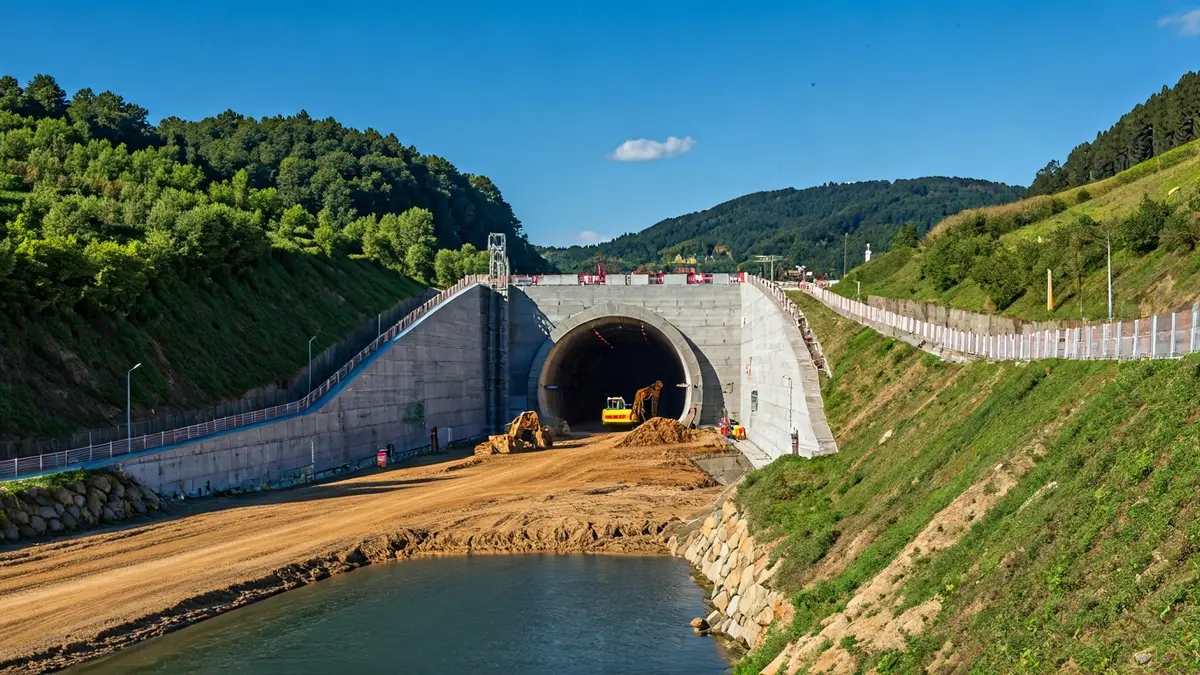
Groups against the construction of the tunnel under the Estuary announced this Tuesday that the project will lead to a medium and long-term increase in traffic and pollution. They highlighted that pollution will rise from the moment construction begins, due to the movement of trucks and earth at the two tunnel entrances in Portugalete and Getxo.
“"We are facing a project whose damages are accepted as inevitable."
Etxeandia appeared before the Basque Parliament to demand that the Provincial Council conduct a study of alternatives before starting the works, which are scheduled to begin this summer. He argued that mobility issues in Metropolitan Bilbao stem not from a lack of infrastructure, but from an inefficient model where most cars carry only one person, advocating for more public transport and cycling.
A report unveiled in late 2023 already showed that the Provincial Council itself acknowledged the tunnel would create a "pull effect." This contradicts the institution's own plans to reduce polluting emissions and discourage private vehicle use, despite the tunnel's aim to ease traffic on La Avanzada and the Rontegi Bridge. It is estimated that after a decade of the subfluvial tunnel's operation, traffic will be 21% higher than current levels, and 38% higher after 20 years.
Opposing platforms filed an administrative appeal months ago, claiming the subfluvial tunnel's construction will negatively impact the health of residents in the construction area and violate new European air quality regulations by increasing pollutant concentrations. The Bizkaia Provincial Council is currently processing public tenders to award the four lots into which the subfluvial project has been divided. The project requires an investment of 542 million euros, with work estimated to last at least six years.