The work, conducted by researchers from the UPV/EHU's LCTG group, the LAB union, and the BC3 center, aims to foster debate on the current energy model. The study has demonstrated that there are opportunities to achieve net self-sufficiency by establishing renewable and predominantly public installations. "The study aims to promote discussion to provide a solution to the current severe energy situation," explained Ortzi Akizu, a member of the UPV/EHU's LCTG research group.
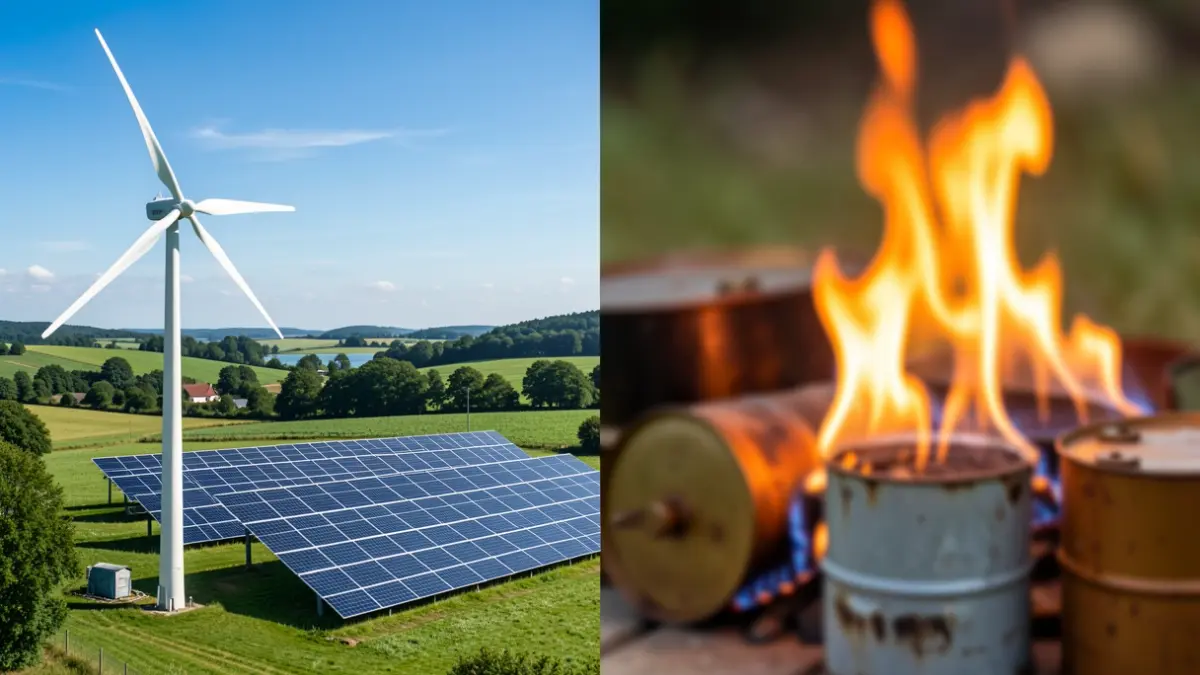
According to the research, Euskal Herria is one of the regions in Europe with the highest dependency on fossil fuels, which account for 79% of the energy consumed. Furthermore, the main supplier is the USA. In response, researchers have analyzed a model for energy transition to achieve net self-sufficiency in the territory from a consumption-based perspective.
The analyzed data indicates that by 2050, energy consumption could be reduced by 51% through sector-specific measures, such as an 80% reduction in energy losses and transformations, 61% in transport, 30% in industry, and 50% in residential thermal consumption. Consequently, Euskal Herria's energy footprint would decrease from 128 TWh to 63 TWh.
To supply this reduced consumption, local renewable energy generation would need to increase by 386%, installing a capacity of 37 GW, primarily on rooftops and non-productive land for wind and photovoltaic installations. Solar panels should be installed on all rooftops, and 2.1% of Euskal Herria's surface area should be used for wind and photovoltaic installations.
Researchers suggest that this transition could be primarily carried out publicly, allocating 2.6% of the national budget until 2050, ensuring that 65% of new installations are publicly owned. The study also examines the territory's capacity to achieve these goals, emphasizing that the transition will not be just if it is not public and renewable.
“"The LAB union considered it necessary to develop a new proposal to change the energy model underlying unsustainable consumption, and UPV/EHU and BC3 have joined in this initial effort. Now, with this research as a first step, it is time to generate dialogues to promote the energy transition in society, both from company to company, within public institutions, and among individuals."