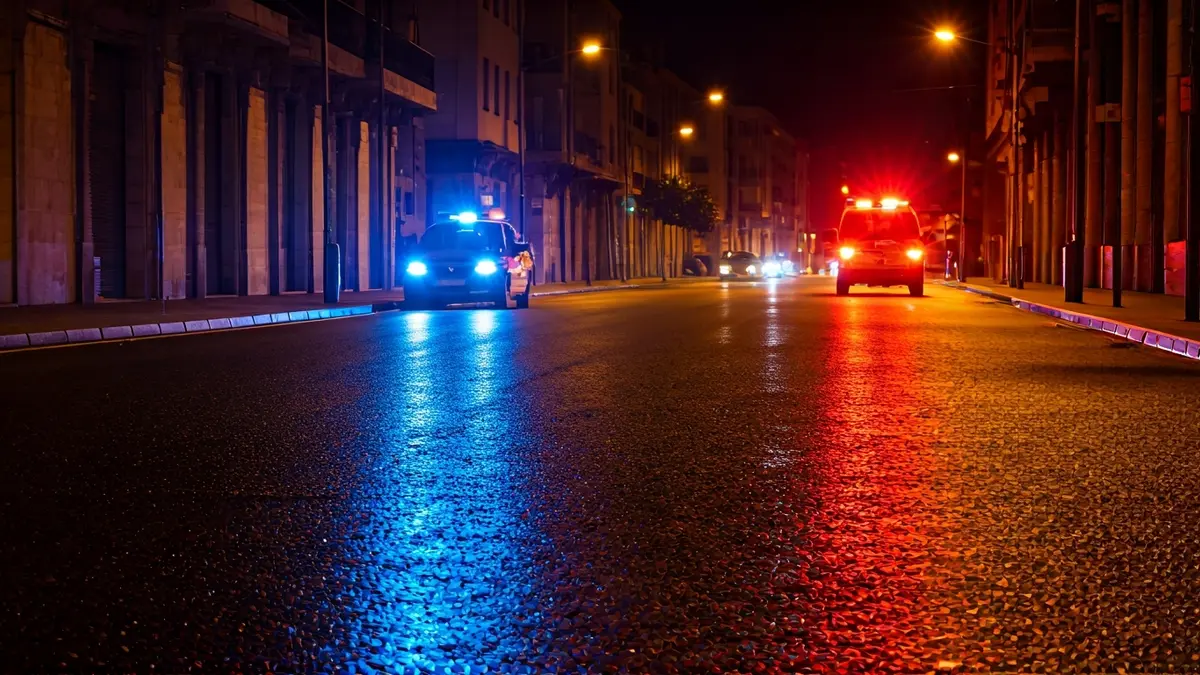
In recent years, Euskadi has seen the emergence of a new type of crime, which arrived later than in other regions such as Madrid or Barcelona. This phenomenon has become more pronounced when the Ertzaintza and local police forces have fewer resources. Aitor Otxoa, head of organization for the ErNE union, points out that the nature of violence has changed, and now police forces must adapt to this new reality, primarily by increasing the number of personnel.
“"When there is a fight, if instead of two patrols, four arrive, perhaps that problem will not get out of hand because numerical superiority can reduce the intensity of the issue."
Otxoa emphasizes the demand for exquisite treatment of officers, even with those who have caused conflicts, and notes that current recordings complicate police work. Therefore, he considers the inclusion of bodycams crucial. Officers often receive multiple calls related to the same person, which can lead to errors with serious judicial consequences. In response, he stresses the need for more non-lethal means, such as taser guns or pepper spray-like gases. Although Euskadi's local police forces already have these resources, the Ertzaintza's citizen security units, such as Bilbao's, lack them, unlike the Bizkor unit.
According to Aitor Otxoa, officers encounter situations where individuals seek direct confrontation with the Ertzaintza, even recording it as an achievement. To address this problem, ErNE focuses its efforts on four pillars: larger staff, greater presence, better training, and improved resources. Assaults on officers, both verbal and physical, seem to have become normalized, causing concern among police forces. The main reasons, according to Otxoa, are the lack of officers on staff and the absence of effective intermediate weapons between the baton and firearms, such as taser guns or pepper spray, which are widely used in Europe.
“"It is not about militarizing police work or introducing aggressive elements, but precisely the opposite: offering alternatives to avoid the use of greater force."
Otxoa regrets that in Euskadi there is a certain fear of expanding these resources, despite their proven effectiveness. Institutional and judicial involvement is fundamental to combat the sense of impunity perceived by criminals. Although the Basque Government is working to reach 8,000 officers, the shortage of personnel remains a significant problem, due to retirements and departures. The Ertzaintza has a deficit of more than 800 officers, which they are trying to remedy with the latest OPEs, aiming to compensate for the 400-500 annual retirements. In Bilbao alone, it is estimated that 100 additional police officers are needed, leading to a significant workload for current personnel.