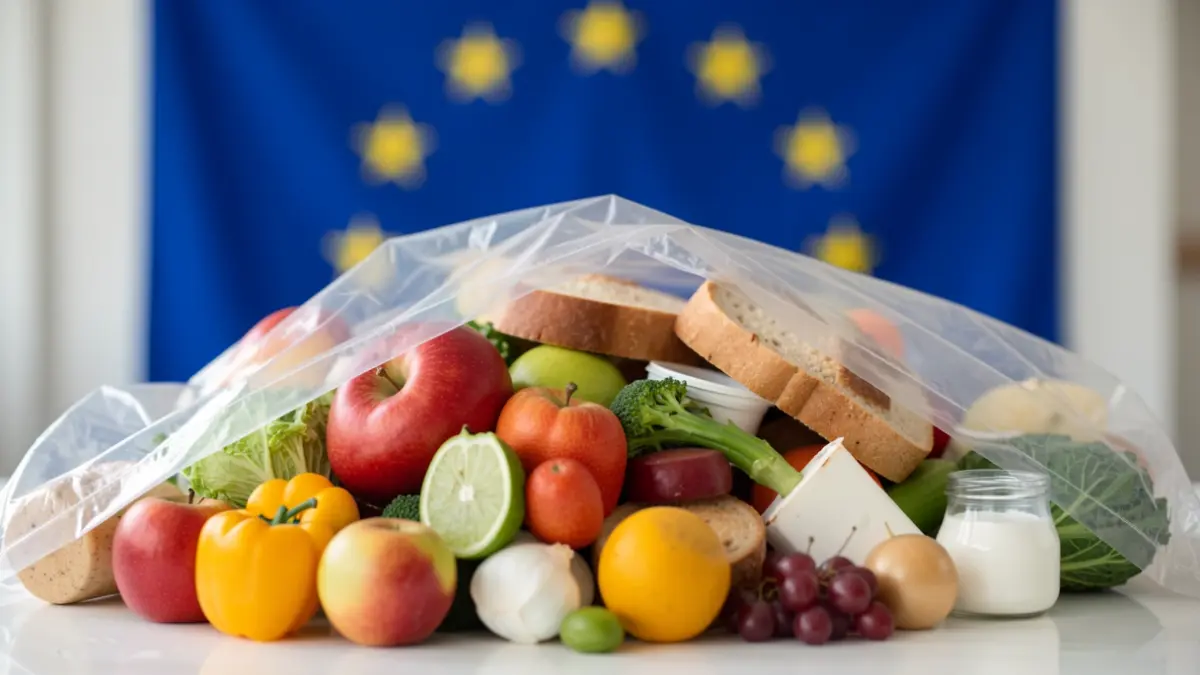
Food waste generation in the European Union is a complex issue affecting all stages of the value chain. Each year, nearly 591 million tons of food (131 kg per inhabitant) are wasted in the EU, with 10.4% from primary production, 20.2% from food manufacturing, 7.0% from retail sales, 9% from restaurants, and 53.5% from households.
The impact of food waste on climate change and environmental degradation is critical. The nearly 59 million tons of food wasted annually in the EU represent an ecological impact of 254 million tons of CO2 equivalent, accounting for 16% of the EU's total food system GHG emissions.
EU legislation defines food and waste. According to Regulation (EC) No 178/2002, 'food' is any substance intended for human consumption. Directive 2008/98/CE establishes definitions for waste, bio-waste, and by-products (co-products).
According to the FAO, food waste is divided into two concepts: 'food loss' and 'food waste'. Food losses occur in the early stages (production, manufacturing), while food waste occurs in the final stages (distribution and consumption).
The objective of reducing food waste aligns with the European Green Deal, aiming for a climate-neutral EU by 2050. Waste prevention and reduction are crucial for mitigating climate change, reducing pollution, and preserving biodiversity, as well as contributing to the goal of reducing greenhouse gas emissions by 55% by 2030.
Several EU initiatives, such as the Zero Pollution Action Plan and the 'Food 2030' research and innovation framework, promote the reduction of waste and food waste. The communication 'Safeguarding food security and strengthening the resilience of food systems' proposes specific measures.
The valorization of by-products offers an opportunity to transform waste into resources, through reuse in other production processes, conversion into biofuels, or use in the fertilizer and animal feed industries.