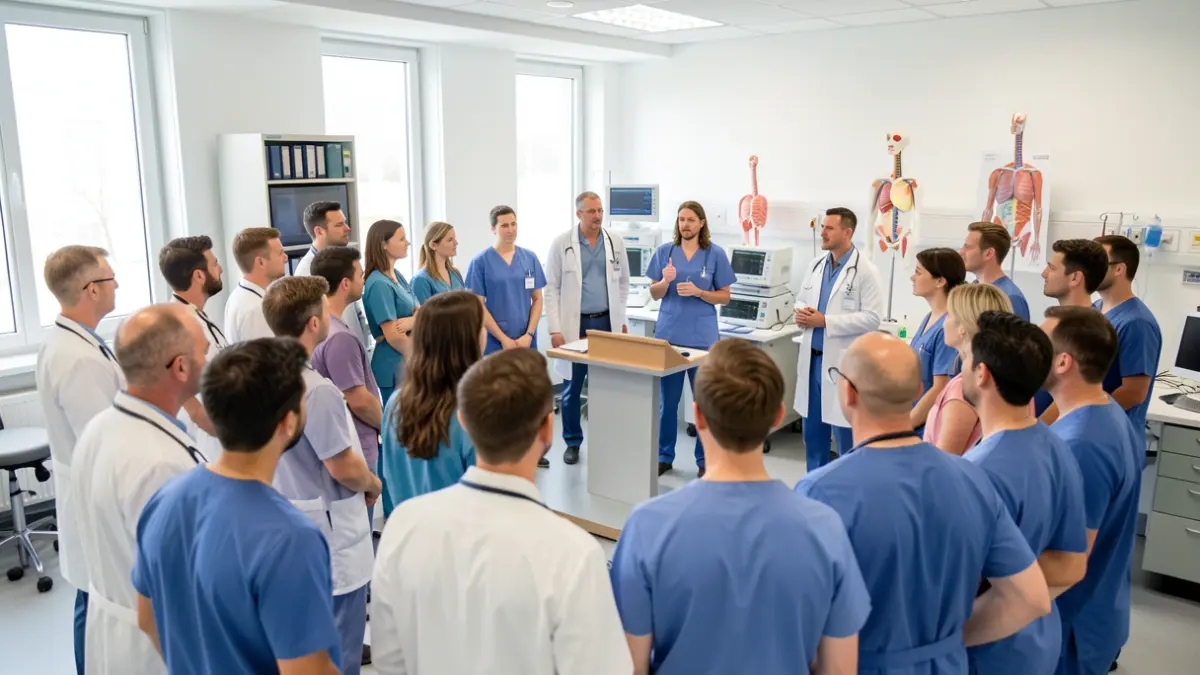
The course, aimed at final-year residents and specialists in their early years of practice, was supported by the hospital's Digestive System Department and the AESPANC (Spanish Association of Pancreatology). Over two days, participants updated their knowledge on the diagnosis and treatment of major pancreatic and biliary pathologies and practiced various endoscopic procedures.
The first day focused on theoretical updates, covering topics such as pancreatic lesions, acute and chronic pancreatitis, puncture techniques, cytohistological diagnosis, and endoscopic procedures. Presentations were delivered by specialists from hospitals in different Spanish autonomous communities, alongside professionals from the Cruces University Hospital itself. International perspective was provided by Dr. Enrique Pérez Cuadrado Robles from the Georges-Pompidou European Hospital in Paris, who discussed biliary strictures and cholangiocarcinoma.
A key distinguishing feature of this training was its strong practical component. Saturday's session combined the resolution and discussion of clinical cases with practical sessions where participants could practice endoscopic techniques using animal models. The practical training was structured into stations dedicated to endoscopic ultrasound-guided puncture, collection drainage, and endoscopic retrograde cholangiopancreatography (ERCP).
Concurrently, clinical cases were addressed concerning pancreatic necrosis, exocrine pancreatic insufficiency, pain management, chronic pancreatitis lithiasis, and pancreatic cystic lesions. This blend of scientific update, clinical case discussion, and technical training enables professionals beginning their careers to approach increasingly complex procedures and fosters knowledge exchange among professionals from different hospital centers.