Bilbao Zerbitzuak, the municipal company in Bilbao responsible for managing municipal markets and the cemeteries of Derio and Deusto, has organized competitive examinations for service officer positions, which include roles as burial and crematorium operators. Recognizing the significant physical demands of this profession, special tests have been incorporated to assess the aptitude of applicants.
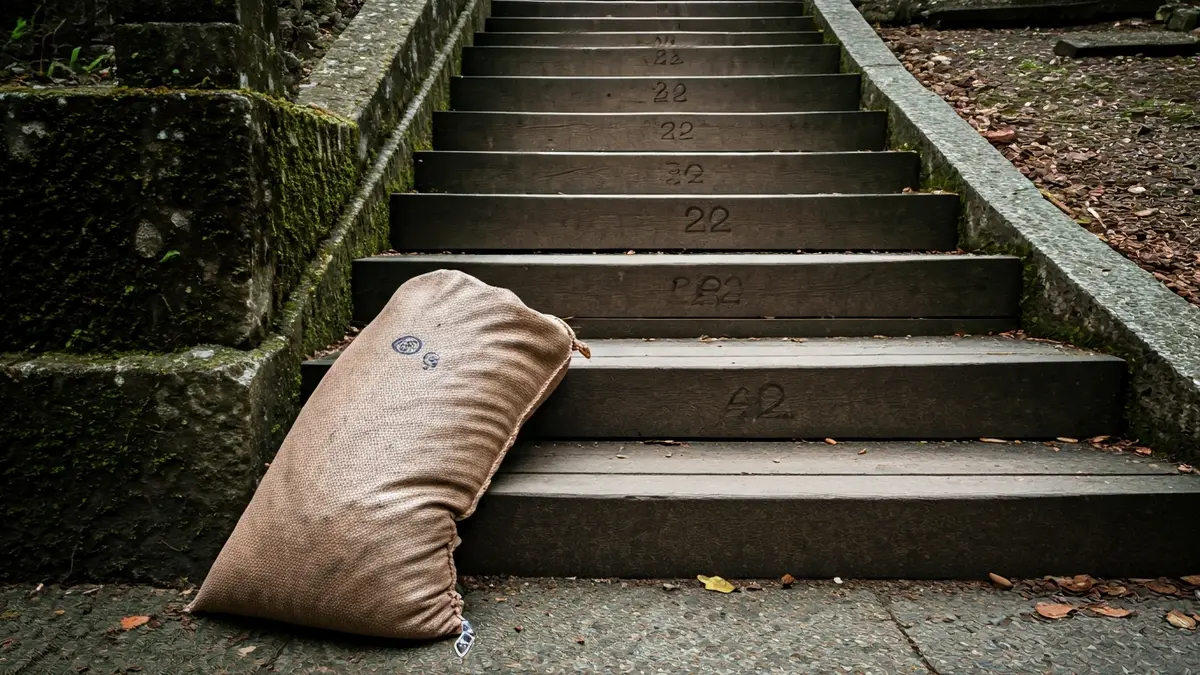
The physical examination, held on March 12, required candidates to lift a 45-kilogram cylindrical sack (35 kg for women) from the ground, hold it against their chest, and ascend a 22-step staircase. They then had to turn around and place the sack back on the starting surface without dropping it. Additionally, they were required to hold a 15-kilogram dumbbell (11 kg for women) with outstretched arms at a 30-degree angle for one minute. A total of 37 candidates, possessing a driving license, an ESO certificate or equivalent, and at least a B1 level in Euskera, were called to perform these exercises. Eight failed, and two did not attend. Consequently, 26 candidates, including two women, were deemed fit and proceeded to a test on March 26 covering 24 topics.
“"It is a very tough job, requiring a lot of physical capacity."
Jose Antonio Fernández, the cemetery manager, explained that despite modern aids like coffin carriers, pulleys for lowering coffins into communal pantheons, and lifting platforms for niches, the work still demands immense physical effort. Gravediggers must manually transport the deceased over long distances, maneuver coffins, and even ascend with them to niches, sometimes under adverse conditions. This is particularly true in a cemetery dating back to 1902, where the construction of some graves is exceptionally challenging. Furthermore, the increasing size and height of the deceased often necessitate families purchasing special coffins. It is common for bodies to weigh over 100 kilograms, to which the weight of the coffin must be added—at least 60 kilograms for wooden ones, and potentially double for more elaborate designs.
Gravediggers handle a minimum of 120 kilograms per burial, though typically it ranges between 150 and 200 kilograms, and they have transported up to 280 kilograms combining the weight of the deceased and the coffin. The manager noted that they have buried individuals weighing over 200 kilograms. Currently, 28 people work in the cemeteries, half of whom are service officers. They perform approximately 1,500 interments annually, with daily variations. Work intensifies in winter, especially in January and February, and during summer heatwaves. They organize into teams of four for burials. Experienced professionals highly value physically strong colleagues with whom they have built trust, and they are reluctant to change team compositions. Some operators even believe the current physical tests are less demanding than they should be, not aligning with the real effort required by the profession, which could lead to injuries. Previously, they were required to lift 60 kilograms up stairs and perform additional exercises, such as running, similar to Bilbao's Samur personnel. At that time, they would collect bodies from homes, a task now handled by funeral homes.
The successful candidate for the service officer position in Bilbao will initially fill a vacancy due to a relief contract situation for an existing staff member. According to the collective agreement, the gross salary for this year will be 41,601 euros, excluding seniority and supplementary remunerations. This current public employment offer will be the last for gravediggers this legislative term, although another is planned for administrative staff. In recent years, most of the workforce has been stabilized.
In this affluent society, where 16% of adults suffer from obesity, new needs have emerged in funerary services. The increasing size and height of the deceased have led to a wide range of special coffins being available to families. While the standard dimensions are typically 1.95 meters long, 60 centimeters wide, and 50 centimeters deep, XL or XXL models can reach up to 2.4 meters in length and 75 centimeters in width. These special coffins can be 40% more expensive than standard ones and require greater effort to handle. The size of the burial plot must also be considered when making a choice. Additionally, ecological coffins, made from biodegradable materials like bamboo or cardboard, are gaining popularity.