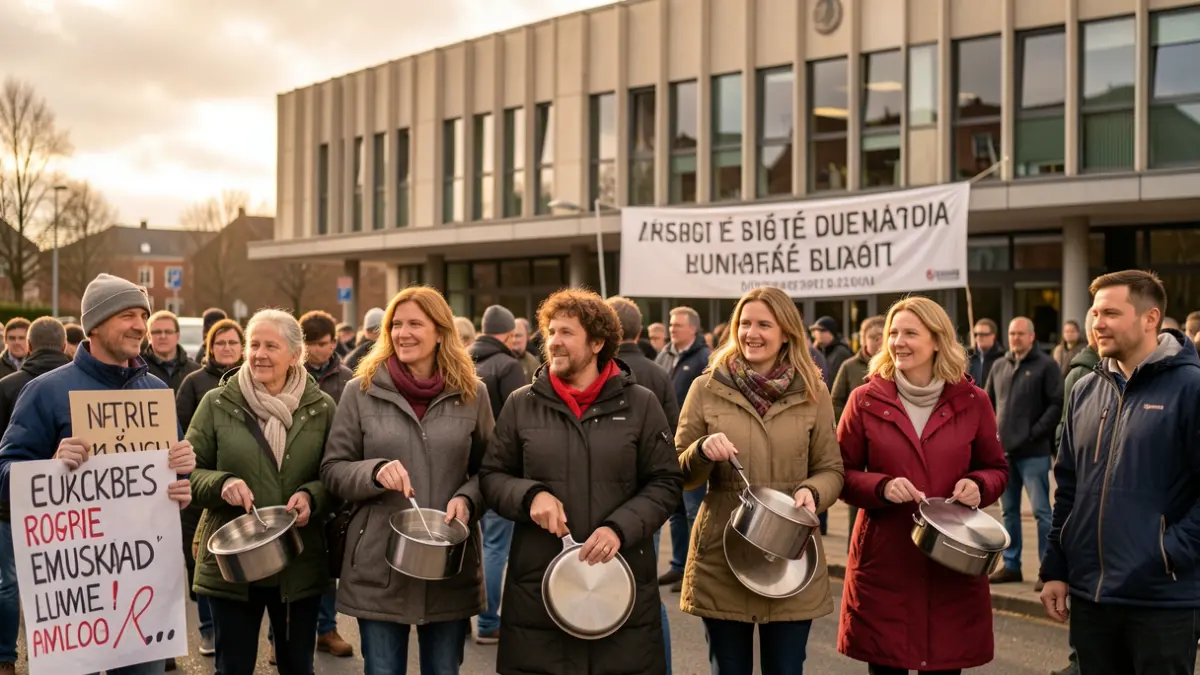
Parent associations (AMPAs) from Basauri's public schools are hopeful about the pilot project for mixed kitchens presented by the Department of Education, but are maintaining pressure to ensure it becomes a reality. Representatives from Soloarte, José Etxegarai, Kareaga, Bizkotxalde, Sofía Taramona, Arizko Ikastola, and Basozelai Gaztelu schools call the advancement "positive," while recalling past "promising" initiatives that "never materialized." Consequently, they staged a loud pot-banging and whistle protest through the town center to demand it becomes "tangible."
The families are requesting the fulfillment of the announcement: Basauri will be the first municipality in Euskadi to implement a mixed model for school canteens, integrating on-site facilities with what has been termed a "zonal kitchen." This initiative will serve 1,600 diners from seven public schools in the town.
Despite these "satisfactory news," the manifesto read by the Basauri AMPAs under the arches of the Town Hall emphasized that "the most important thing" – the quality of raw ingredients – is not being discussed. They demand "fresh, well-cooked food, homemade meals that truly nourish our children so they stop leaving hungry and disgusted."
They consider this change "urgent," as well as the staff ratios, believing that "one person cannot be responsible for 37 primary school students during mealtime and free time." This is why they have organized this new, striking protest action, "because we are tired and we demand what is fair," and because "nutrition is health," they stressed.